
Last updated September 20, 2026
Full 25-point door and opener safety check with every visit - springs, cables, rollers, tracks, and your LiftMaster or Chamberlain opener included
You get a price before we start. It does not change when the truck arrives.
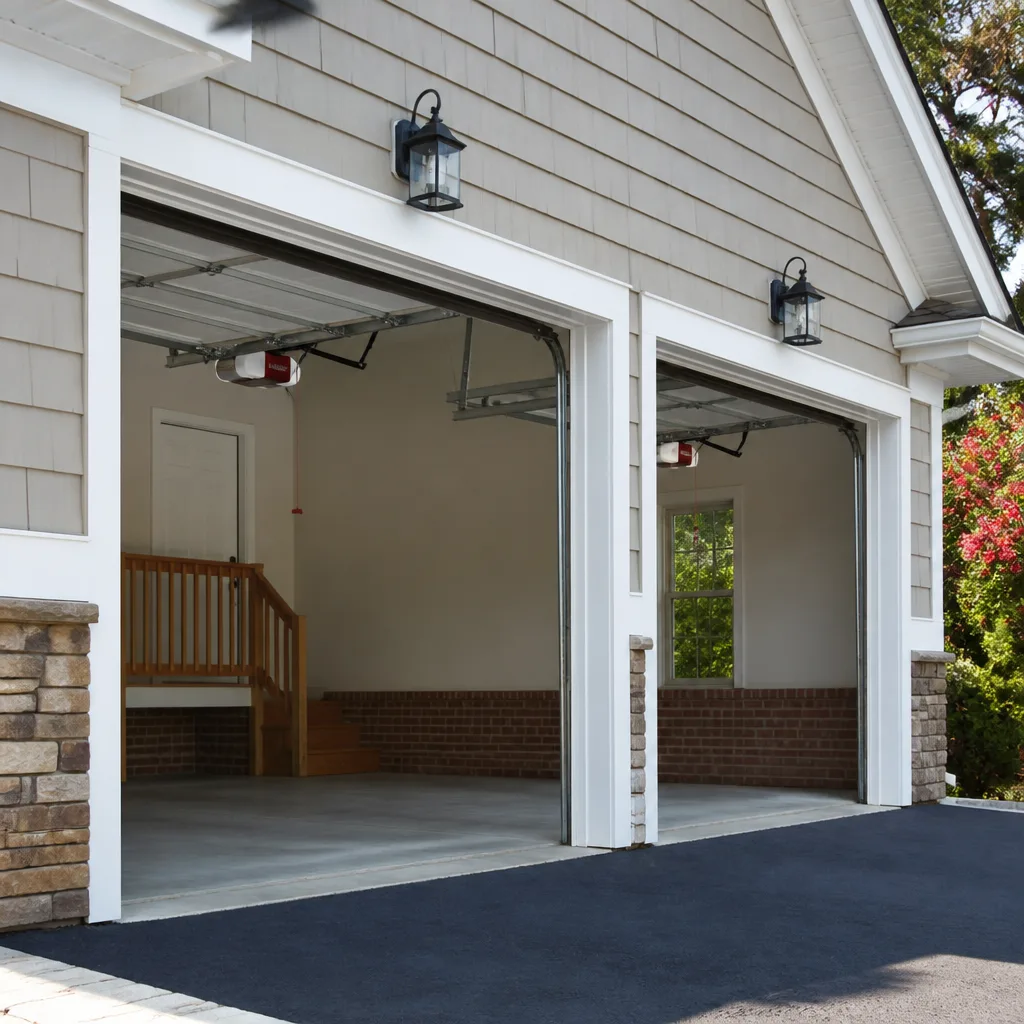
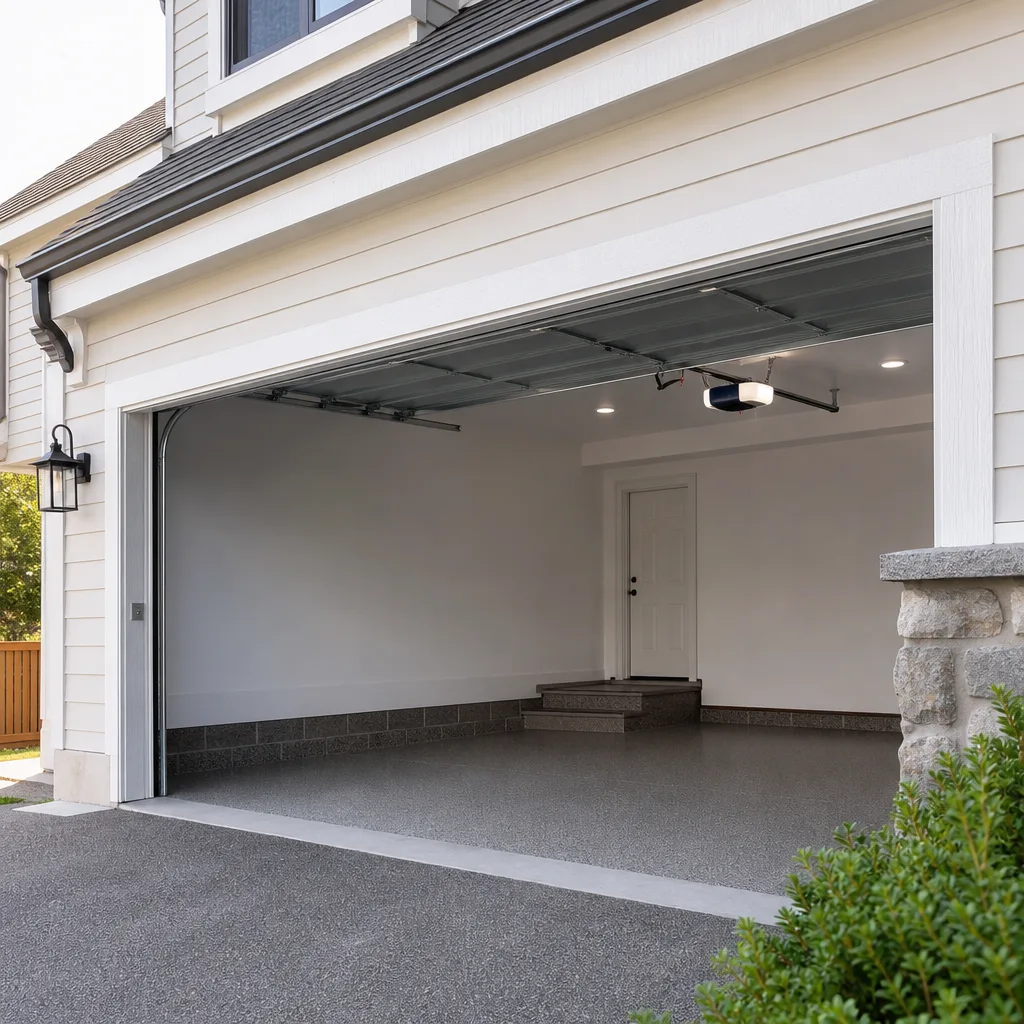
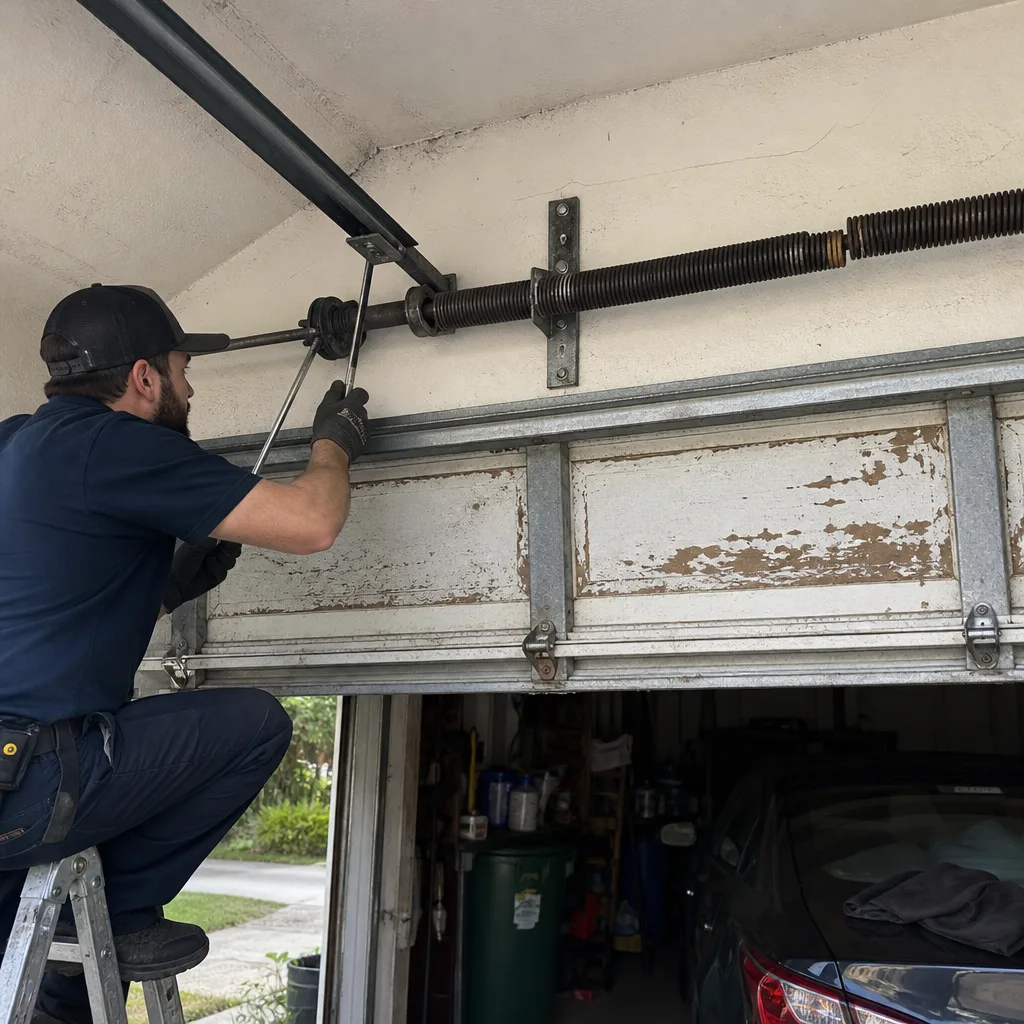 Before
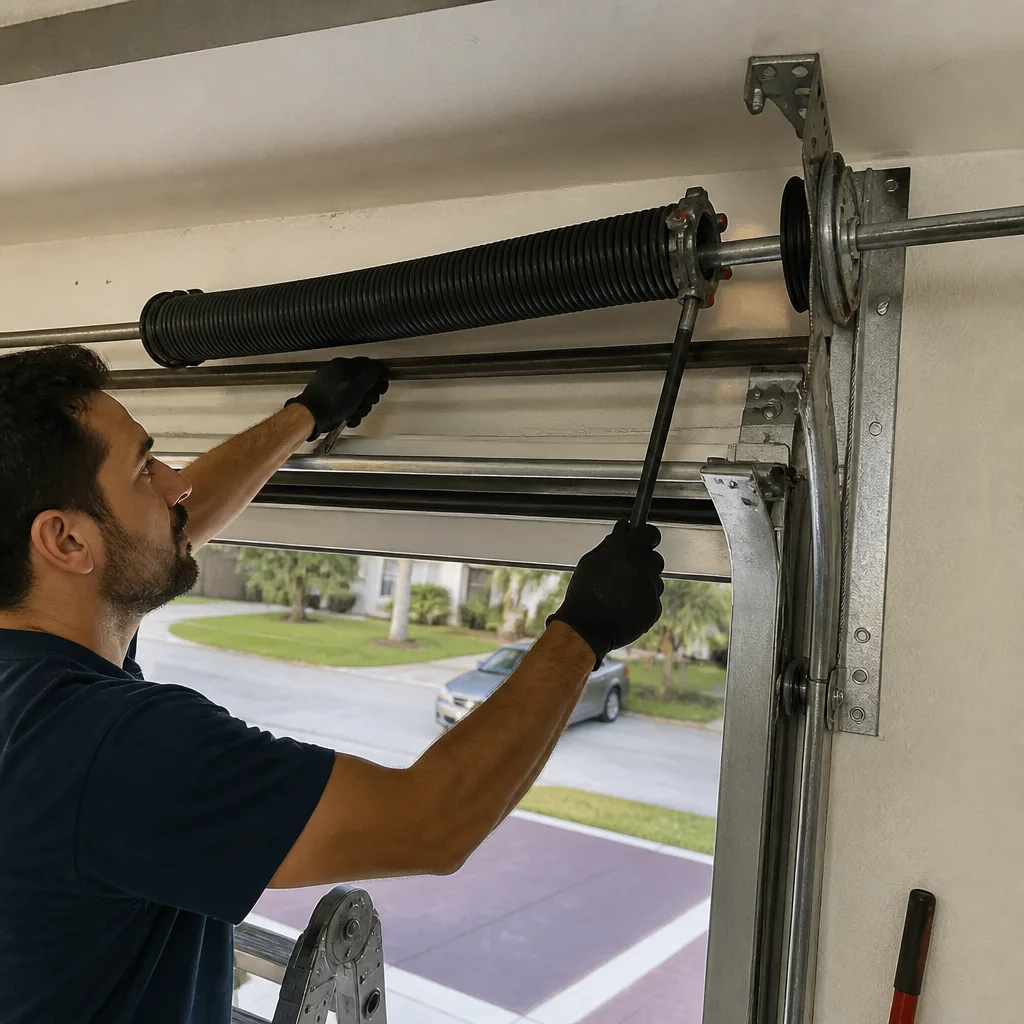 After
After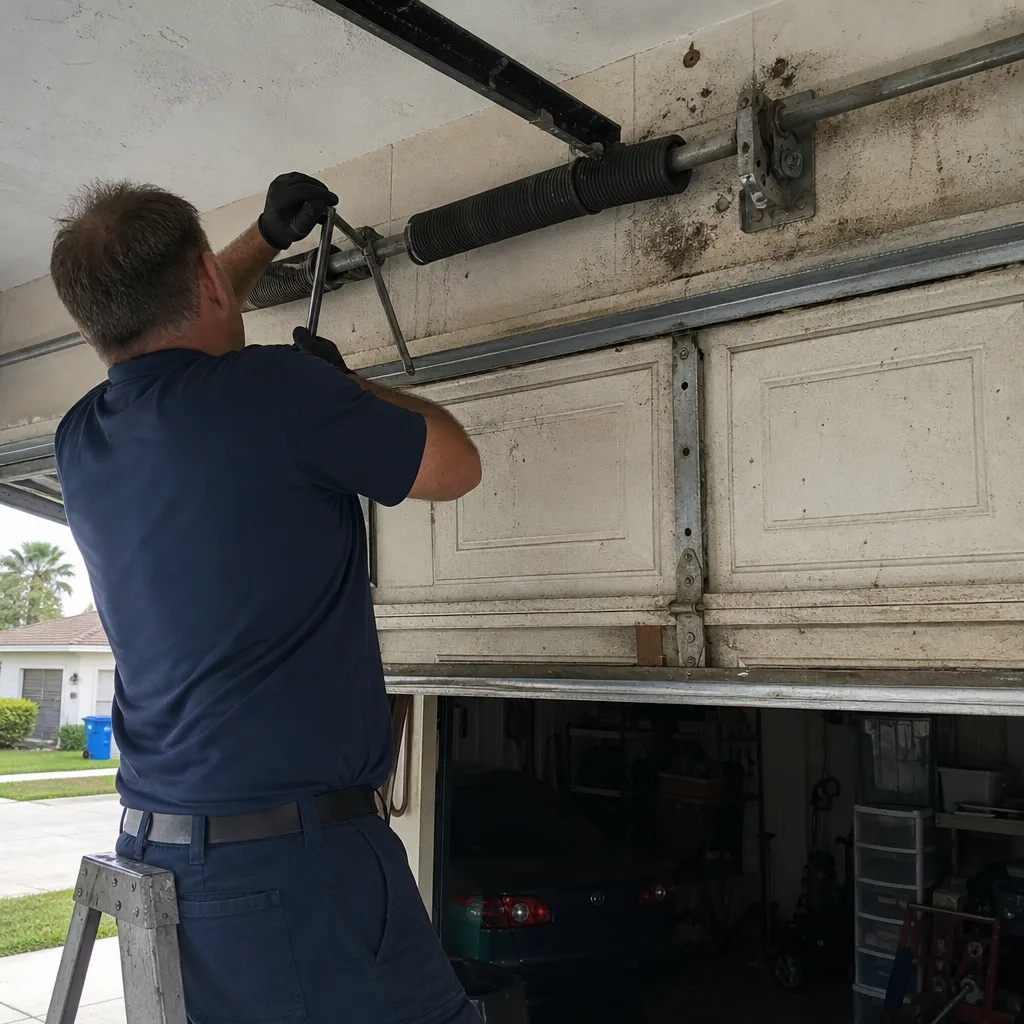 Before
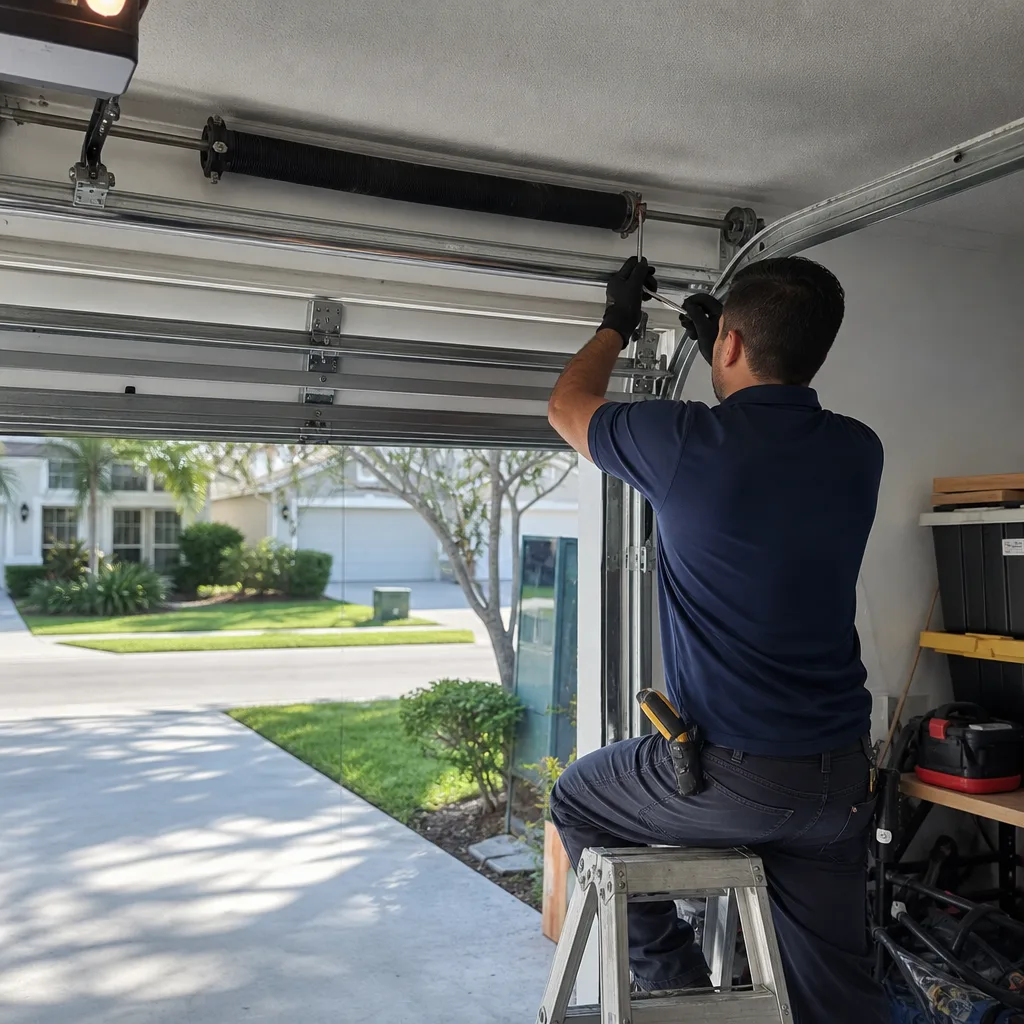 After
After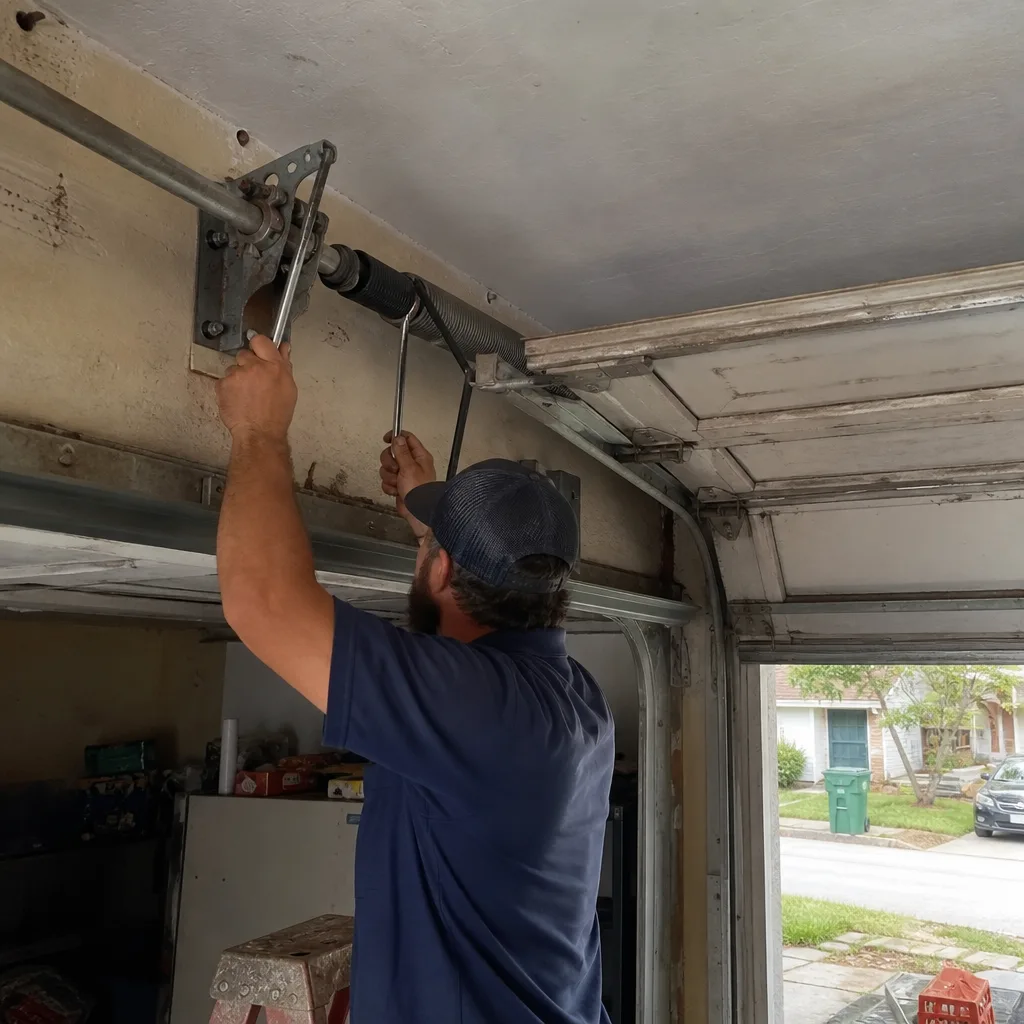 Before
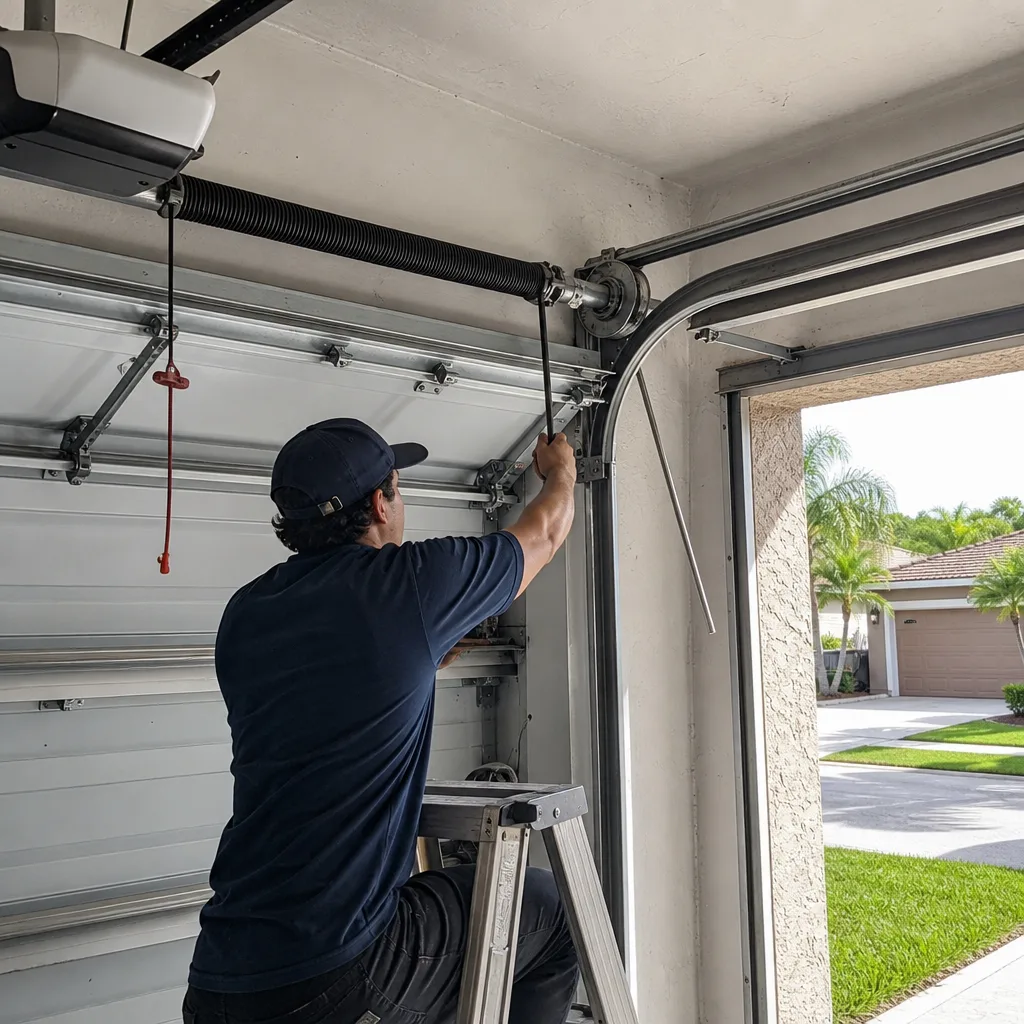 After
AfterGarage Door Permits, Codes & Inspections in FL: What You Need to Know
Here’s a fact most Pembroke Pines homeowners don’t learn until it’s too expensive to ignore: a garage door that wasn’t permitted and inspected is a documented material defect your insurance carrier can point to when denying a wind-damage claim. Florida’s permitting process isn’t a fee collection scheme. It’s the only paper trail proving your door was installed to withstand the wind speeds your house is actually exposed to. If you bought your home between 2015 and 2025, there’s a meaningful chance the garage door you inherited doesn’t have that paper trail. This guide covers what the Florida Building Code requires, when Broward County says a permit is mandatory, what inspectors actually check, and how to fix an unpermitted door before it becomes a claim problem. For related reading, see our Garage Door Warning Signs: A Pembroke Pines Homeowner’s Reference Guide.
Quick Answer
In Florida, a garage door replacement requires a permit when the door, track, or any structural connection is modified or removed. A simple repair that reuses existing hardware typically does not. In Pembroke Pines, which sits in a High Velocity Hurricane Zone, the permit exists to verify the door carries a Florida Product Approval number rated for the wind pressures at your address, and that the installation matches the approved drawings.
Table of Contents
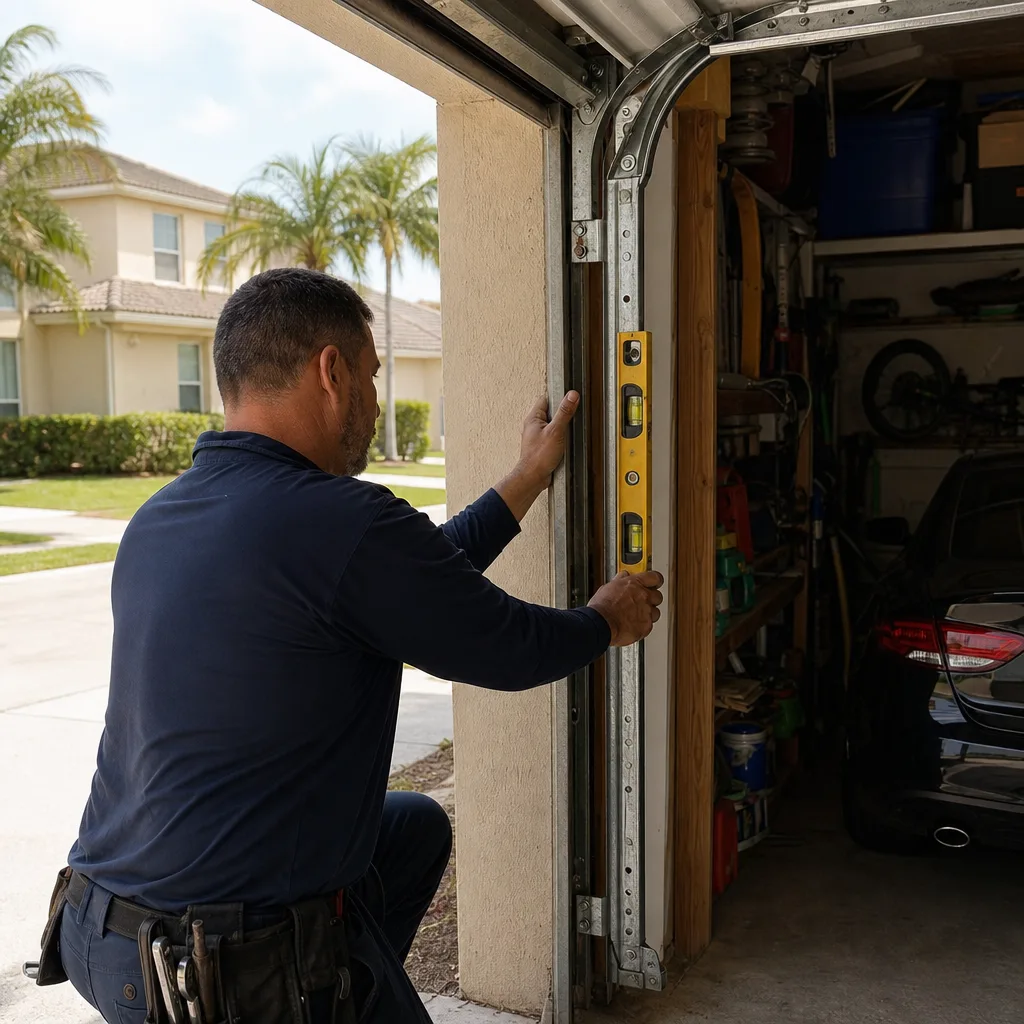
- What the Florida Building Code Actually Requires
- Broward County’s Permit Threshold: Repair vs. Replacement
- Wind Speed Zones and Product Approvals in Pembroke Pines
- The Inspection Sequence: Rough-In, Final, and What Gets Checked
- What an Unpermitted Door Does to Your Insurance and Resale
- How to Retroactively Permit an Existing Unpermitted Door
- What Permits and Inspections Cost in Broward County
BeforeAfterWhat the Florida Building Code Actually Requires
The Florida Building Code (FBC) treats a garage door as a structural component of the building envelope, not a decorative fixture. That’s the single most important thing to understand. Your garage door is part of the wind-load path. When a hurricane pushes on the face of your door, that force transfers through the panel, into the hinges and rollers, into the track, and through the track brackets into the wall framing. Every connection in that chain matters. If one connection is undersized or missing, the door itself can fail and allow wind pressure into the garage, which is historically how roofs get lifted off houses.
Section 1609 of the FBC sets the wind-load requirements. Depending on the edition Broward County has adopted, your garage door must be tested and rated to resist a specific design pressure, expressed in pounds per square foot (psf). The specific number for your house depends on three things: the wind speed zone your address falls in, the building’s exposure category, and whether the garage door is on the windward or leeward side. You can’t look at a neighbor’s door and assume your requirement is the same. A door on a house backing up to open water has a different rating requirement than a door on an interior lot with tree cover.
In practice, what the code requires is simple: the door must carry a Florida Product Approval number (also called an FL number), and that product approval must list your specific wind pressure requirement as an approved application. The installer must follow the manufacturer’s approved installation drawings. The permitted job creates a record that these two things happened. That record is what an inspector verifies, and it’s what your insurer expects to exist when you file a claim.
Broward County’s Permit Threshold: Repair vs. Replacement
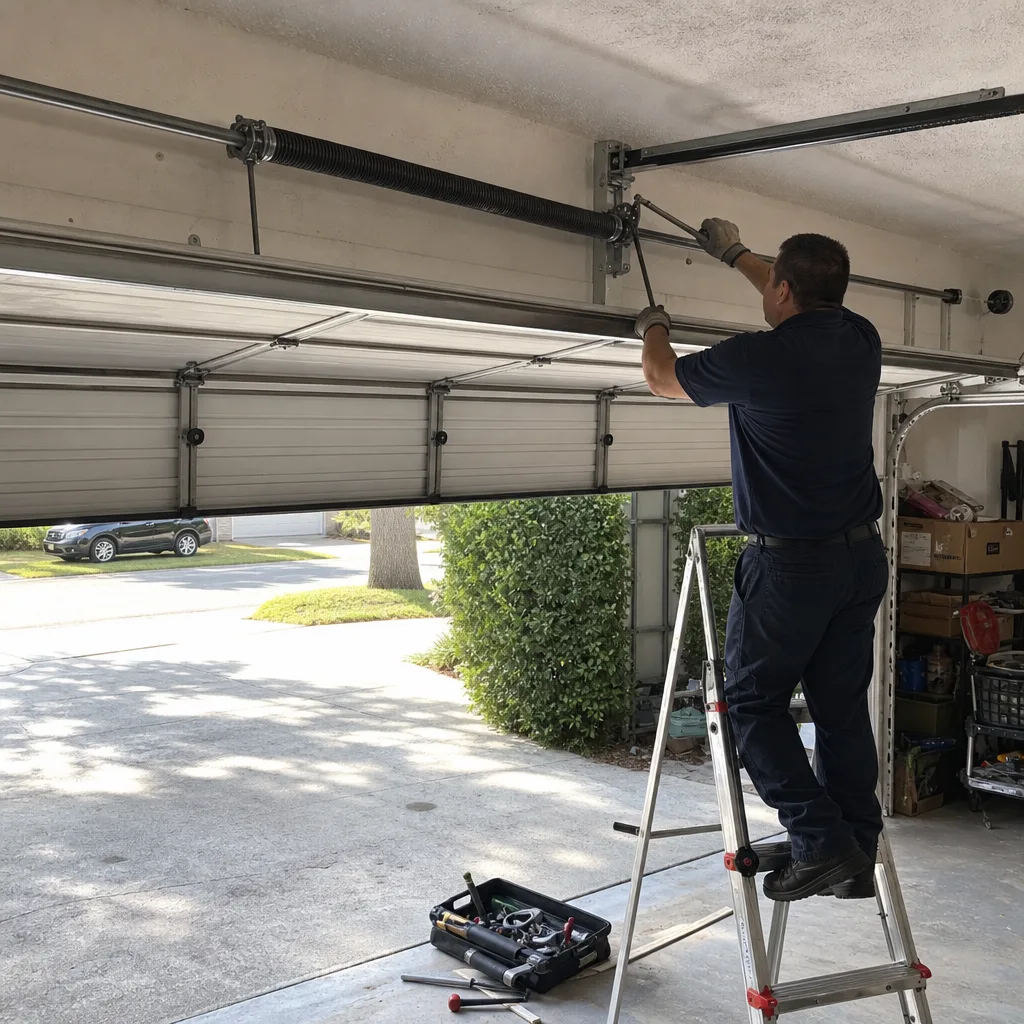
Broward County, like most Florida jurisdictions, draws the permit line between repair and replacement based on whether existing structural connections are disturbed. Here’s the practical version we work with every week in Pembroke Pines.
A permit is required when:
- The entire door assembly is removed and a new door is installed, even if the opening size doesn’t change.
- The track is replaced. The track is the load path; changing it changes the structural connection.
- Mounting brackets, flag brackets, or header attachments are moved or replaced.
- The spring system is converted from one type to another (extension to torsion, or vice versa), because the spring pad and mounting points change.
- The door size or weight changes enough to require different track, brackets, or spring anchoring.
A permit is generally not required when:
- You replace a broken torsion spring with a spring of the same rating and reuse the existing spring pad and anchors.
- You replace a single damaged panel with a matching panel of the same weight and profile, and you don’t remove the track.
- You replace rollers, hinges, cables, the operator, or photo eyes, as long as the track, brackets, and door weight remain unchanged.
- You adjust the spring tension, rebalance the door, or repair a sagging section without removing the structural connections.
The way to think about it: if the inspector can look at what was done and see that the original load path is untouched, you’re repairing. If the work changed how force moves from the door face into the house, you’re replacing, and the county wants to see the permit. The permit is the vehicle for the inspection, and the inspection is the proof the load path is right. This distinction matters because, in our experience, homeowners are told by some contractors that “we don’t need a permit for this” when what they’re actually being told is “I don’t want to wait for the inspection.” If the work crosses the threshold, that shortcut lands on the homeowner, not the contractor.
Wind Speed Zones and Product Approvals in Pembroke Pines
Pembroke Pines sits in Broward County’s High Velocity Hurricane Zone (HVHZ), which is the stricter of Florida’s two wind design regimes. The HVHZ applies to Miami-Dade and Broward counties, and it’s the reason a garage door that’s perfectly legal in Orlando is not automatically legal in Pembroke Pines. The HVHZ requires products to be tested and approved for the specific design pressures of this region, and it requires a Notice of Acceptance (NOA) or Florida Product Approval for the exact door model, the exact track, and the exact attachment method being used.
What you’ll find on the door label, if it’s compliant, is an FL product approval number. This number corresponds to a specific document on file with the state or county that lists the approved design pressures, the required track gauge, the required bracket sizes, and the required fastener schedule. An inspector isn’t just checking that a door has a label. The inspector checks that the label’s approval matches the job. A door rated for 50 psf installed in a location requiring 60 psf will fail inspection even if the installation was flawless, because the product was never approved for that location.
This is the point most generic garage door content misses: the permit process in Pembroke Pines is not about whether the door “works.” It’s about whether the specific combination of door, track, brackets, and fasteners is documented as capable of staying attached to the house at the wind pressures specific to that address. When we install a Clopay or Wayne Dalton door in Pembroke Pines, the permit documents reference the product approval number, the design pressure, and the installation drawing number. That’s what the inspector reviews, and it’s the record the homeowner keeps.
The Inspection Sequence: Rough-In, Final, and What Gets Checked
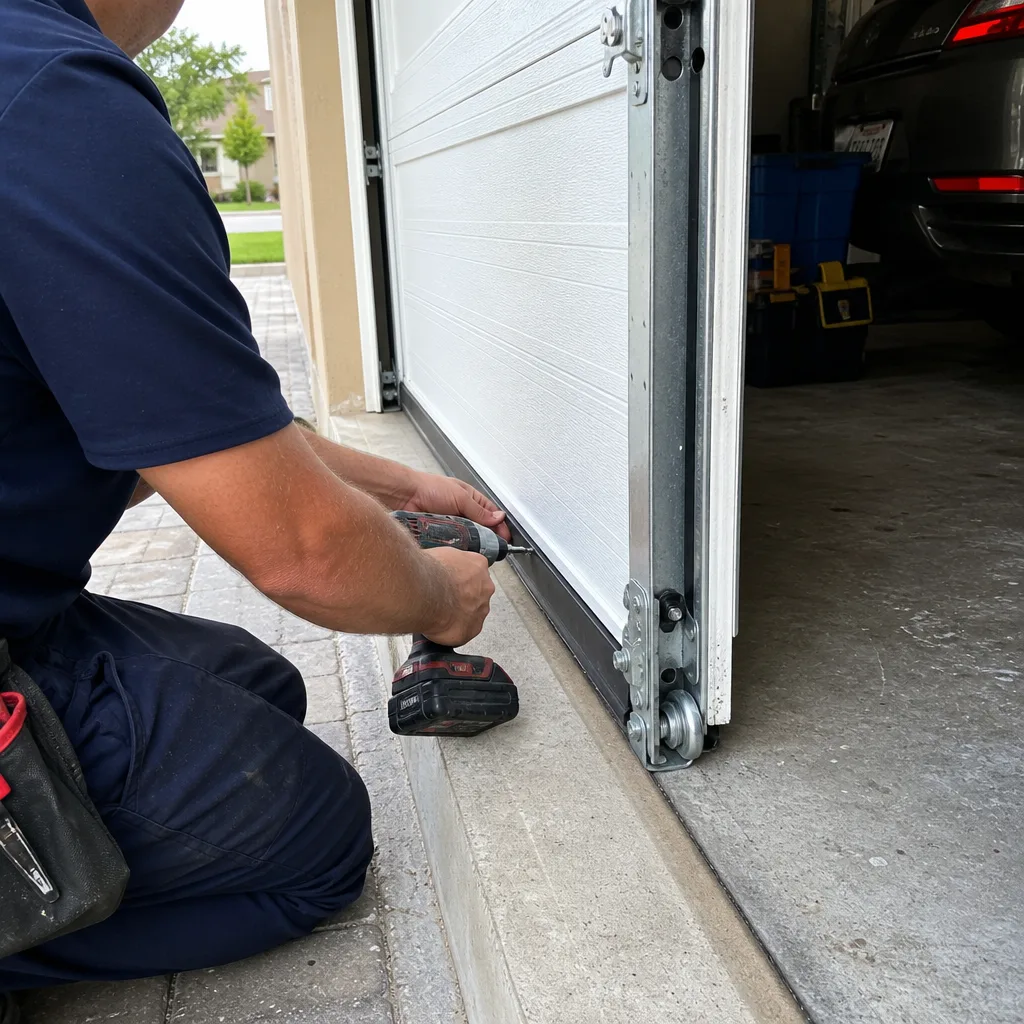
The inspection process in Broward County follows a predictable order. Knowing what happens at each stage will save you from getting failed for something trivial.
Step 1: Permit application and plan submission. Before any work starts, the contractor or homeowner submits a permit application to the City of Pembroke Pines Building Department (or Broward County, depending on the property’s jurisdiction). The application includes the product approval documents for the door and track, the design pressure calculations for the specific address, and a scope of work. The permit is approved and issued, and a permit card is posted on the job site.
Step 2: Rough-in inspection. For a garage door replacement, the rough-in inspection happens after the old door and track are removed but before the new door is fully installed. The inspector is checking the header condition, the condition of the king studs and jamb studs that anchor the track, and the size and type of fasteners that will be used. If the old door’s mounting points are rotted, cracked, or undersized, this is the stage where it gets caught. In Pembroke Pines, where humidity and termite pressure are real factors on a 20-year-old house, we regularly find header rot at the rough-in stage that no one knew about.
Step 3: Final inspection. The final inspection happens after the door, track, spring system, and operator are installed. The inspector verifies that the product label on the door matches the approved documents, that the track brackets are fastened per the approved drawing, that the spring containment cables are in place (required on torsion springs in Florida), that the door balances correctly, and that the photo eye safety system reverses the door when interrupted. The inspector is not checking whether the door opens smoothly. The inspector is checking whether the installed assembly matches the approved engineering.
One thing we tell every Pembroke Pines customer: the inspection is not a formality. We’ve seen final inspections fail because a single bracket was installed with the wrong fastener size, because the containment cable was missing, or because the door label’s product approval didn’t match the permit documents. A failed inspection means a correction and a re-inspection, which costs time and money. Doing it right the first time is cheaper than doing it twice.
What an Unpermitted Door Does to Your Insurance and Resale
Here’s the scenario that separates a garage door company from a documentation company: a hurricane hits, your garage door fails, wind enters the garage, and your roof gets lifted. You file a wind claim. The carrier’s adjuster looks at the garage door installation, finds no permit on record with the City of Pembroke Pines, and asks for the product approval documentation. You don’t have it, because the previous owner never got a permit, and you never knew to ask. The claim is now flagged. The carrier doesn’t have to prove the unpermitted door caused the roof damage. It has to show that an unpermitted, uninspected structural component existed in the load path, which creates a material non-disclosure issue on your policy application. That’s a denial vector.
This isn’t theoretical. In Florida, insurance carriers in wind claims routinely pull permit histories for structural components, and garage doors are structural components. A missing permit for a garage door replacement is a documented material fact. It shows up in the county’s records as work that was never filed, and it shows up in a title search as work that was done without a permit. It is the opposite of a paper trail.
The resale side is equally direct. When you sell your home in Pembroke Pines, Florida law requires you to disclose known defects and unpermitted work. If you had a garage door replaced without a permit and you don’t disclose it, you’ve created a post-closing liability for yourself. If you do disclose it, the buyer’s lender may require the permit to be pulled retroactively before closing, and the buyer may negotiate the cost out of your proceeds. Either way, the unpermitted door costs you. The cheapest time to pull a permit is before the work is done. The second cheapest time is before you list the house.
How to Retroactively Permit an Existing Unpermitted Door
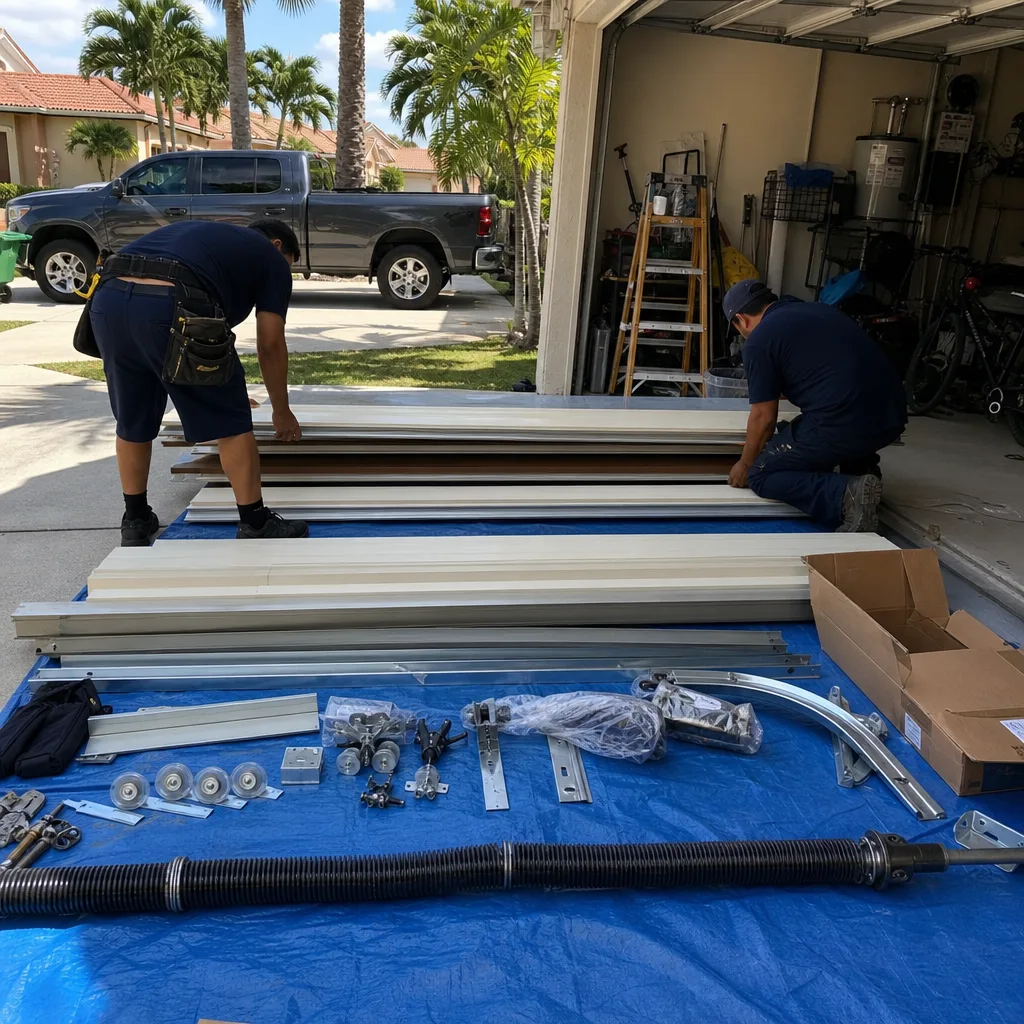
If you’ve discovered that your garage door was replaced without a permit, whether through a home inspection, a title search, or a conversation with an insurance agent, the fix is called retroactive permitting. It’s not a fast process, but it’s straightforward, and it rarely requires the door to be removed.
Here’s the typical sequence in Pembroke Pines:
- Document what exists. Before contacting the building department, you need the door’s product label information: manufacturer, model, and FL product approval number. The label is usually on the interior of the bottom panel or on the end stile. If the door lacks a product approval label, the door may not be retroactively permittable, and replacement might be the only path.
- Hire a licensed contractor or engineer. The building department will accept a retroactive permit application from a licensed contractor who can certify the installation meets code. In some cases, an engineer’s letter is required if the original installation can’t be verified against the product approval drawings.
- Submit the retroactive permit application. The application includes the product approval documents, a description of the work, and an explanation that the work was performed without a permit. The building department reviews the documents and schedules an inspection.
- Prepare for the inspection. The inspector must be able to see the track brackets, the spring mounting, and the door label. In a retroactive inspection, this may require removing drywall or trim around the header to expose the mounting points. The inspector is verifying that the installed door matches the product approval, not taking anyone’s word for it.
- Pass the inspection and close the permit. Once the inspector signs off, the permit is closed and the record is created. The permit history now shows a compliant installation, and you have documentation to provide to an insurer or a buyer.
The cost in Broward County for a retroactive permit is typically the permit fee plus any inspection fees, plus the contractor’s time to document the installation and open up any areas the inspector needs to see. It’s not a massive expense, usually in the low hundreds of dollars plus any corrective work, but it requires the door to actually meet code. If the existing door is not HVHZ-rated, retroactive permitting won’t work. You’ll be replacing the door, and this time with a permit.
What Permits and Inspections Cost in Broward County
Permit fees in Pembroke Pines for a garage door replacement are based on the valuation of the work. What most homeowners care about is the all-in figure, and in our experience, the permit and inspection fees for a typical single or double garage door replacement in Broward County fall in the $150 to $400 range, depending on the door size and the jurisdiction. This is the cost of the permit itself, not the installation. It’s a line item on the job, and it should be itemized on your written estimate.
If a contractor tells you a permit isn’t needed, or offers to “save you the permit fee,” what they’re offering is an unpermitted structural modification. Here’s the breakdown you should see on a legitimate written estimate in Pembroke Pines:
- Permit application fee: $75 to $200, depending on the municipality.
- Inspection fees: One to two inspections, often bundled into the permit fee.
- Product approval documentation: Usually no cost to the homeowner; the contractor supplies the approved drawings.
- Corrective work (if the rough-in reveals problems): Header repair, fastener upgrades, or bracket replacement, quoted before the work proceeds.
The cost of the permit is small compared to the cost of an insurance denial or a resale delay. And it’s the only part of the job that produces a paper record proving the work was done to code. We don’t frame permits as an optional add-on in Pembroke Pines. For a replacement, the permit is part of the job, and the price you’re quoted includes it, in writing, before the first bolt comes out.
How Servo Approaches Permits in Pembroke Pines
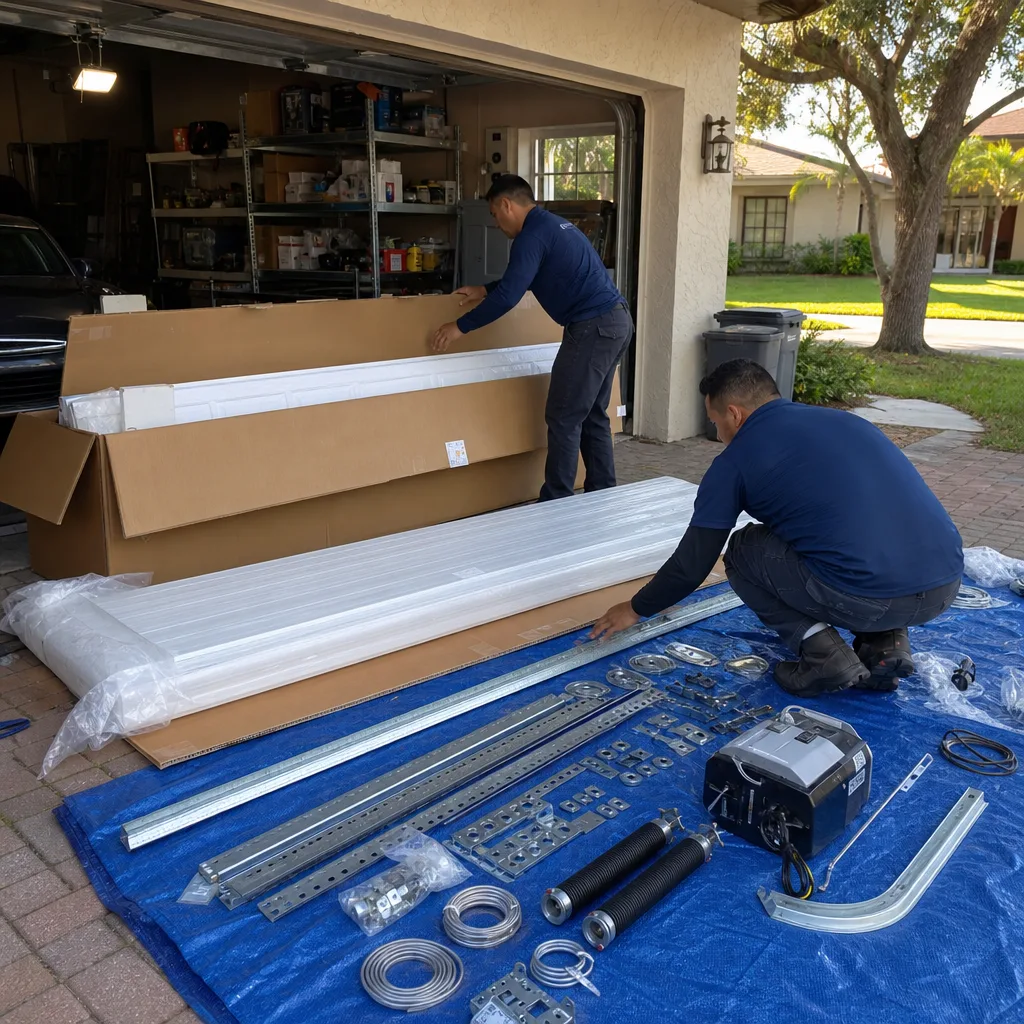
Servo Garage Doors Pembroke Pines operates under a documentation system called The Haven Standard. Clause 1 states that a flat, written price and written scope are delivered before any work starts, and that includes the permit line item. We don’t ask you to “call for a quote.” The price for the door, the permit, and the installation is written down and agreed to before we order anything.
Clause 4 is the reason our technicians photograph every failed component before quoting a replacement. When we open a permit in Pembroke Pines, the photo record of the existing door, track, and mounting points becomes part of the job file. That record is what the rough-in inspector is looking at, and it’s what you keep after the job is done. We service LiftMaster, Chamberlain, Genie, and Clopay products, and every replacement we install goes through the same process: written price, permit, rough-in inspection, final inspection, and a documented photo record of findings and completed work. That’s what leaving looks like.
Common Mistakes to Avoid
- Assuming “the door works fine” means “the door is code compliant.” A door that opens and closes smoothly can still lack a product approval label, have undersized track brackets, or be installed without a permit. Function and compliance are different things.
- Letting a contractor talk you out of the permit. The contractor walks away after the job. You keep the unpermitted door, the insurance exposure, and the resale disclosure problem. The permit is your protection, not the contractor’s.
- Not checking the product approval label before buying a house. If you’re under contract on a Pembroke Pines home, ask whether the garage door was permitted. If it wasn’t, ask for the product approval label. No label means the door may need replacement before it can be retroactively permitted.
- Replacing the door but reusing the old track. Mixing a new door with an old track is exactly the kind of installation that fails inspection, because the track and door must be approved together as an assembly. Reusing the old track usually voids the product approval.
- Patching over the inspector’s access points. A retroactive inspection requires the inspector to see the header and track brackets. If you’ve already drywalled over everything, the inspector can’t verify the load path, and the inspection fails. Open it up before the inspection, not after.
- Skipping the permit on a “quick” replacement before a storm. Hurricanes don’t wait for permits, but installing a door without one immediately before a named storm is exactly when you most need the documentation. The claim that follows a storm will ask for the permit. You want it to exist.
- Using an out-of-area contractor who doesn’t know HVHZ requirements. A contractor from outside Miami-Dade or Broward may not understand High Velocity Hurricane Zone product approvals, and may install a door that’s legal in their market but not in Pembroke Pines. The permit process is what catches that.
When to Call a Professional
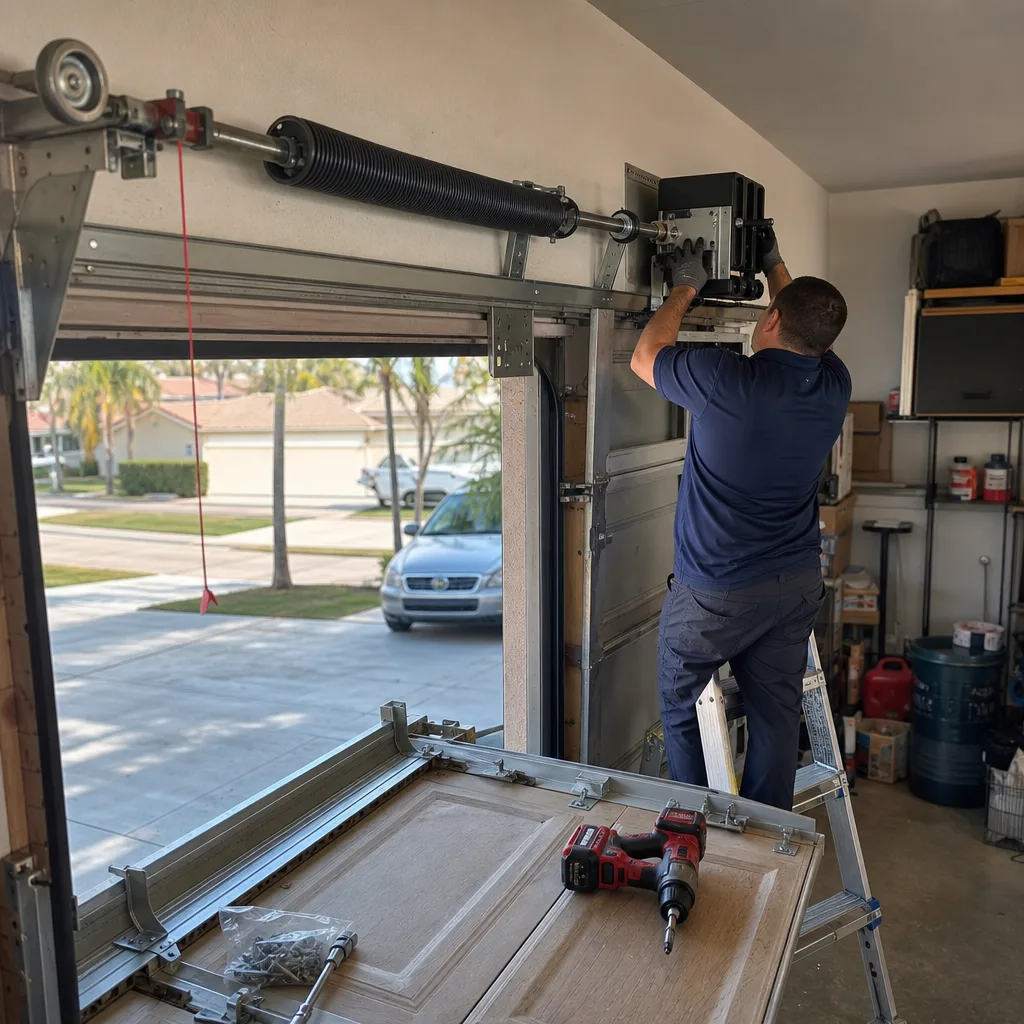
Permitting work is not a DIY project. The building department needs a licensed contractor or engineer to pull the permit, sign the scope, and stand behind the installation. If you’re replacing a garage door, retroactively permitting an existing door, or trying to determine whether your door is HVHZ compliant, get a professional involved before you file anything. If you’re in Pembroke Pines and you’ve been told your door needs a permit, or you’ve discovered an unpermitted door during a title search, our garage door repair service in Pembroke Pines starts with an inspection and a written scope. Servo Garage Doors Pembroke Pines offers free estimates on all permitted work, including garage door installation in Pembroke Pines, and our documentation process is built around The Haven Standard. Call (954) 280-1425 and ask for Marcus. We’ll walk you through the permit path before any work begins.
Frequently Asked Questions
Yes, if the door, track, or structural connections are replaced or modified. A permit is required in Pembroke Pines for a full garage door replacement because the door is a structural component subject to High Velocity Hurricane Zone wind-load requirements. A simple repair that reuses existing hardware typically does not require a permit. If you’re unsure, call us at (954) 280-1425 and we’ll tell you which side of the line your project falls on, in writing, before any work starts.
Garage door permit and inspection fees in Broward County typically run $150 to $400 for a standard replacement, depending on the jurisdiction and the valuation of the work. The permit fee is a line item on your written estimate, and it’s not optional. When we quote a replacement in Pembroke Pines, the permit cost is written into the price before we start.
You can, but you must disclose the unpermitted work, and the buyer’s lender may require the permit to be pulled retroactively before closing. An unpermitted garage door also shows up in a title search and can create post-closing liability if it’s not disclosed. Retrofitting the permit before listing is almost always cheaper than negotiating it during a sale.
A Florida garage door inspector checks that the installed door matches its product approval: the label’s FL number, the track gauge, the bracket size, the fastener schedule, the spring containment cables, and the photo eye safety system. The rough-in inspection verifies the header and jamb studs before the new door goes in. The final inspection verifies the installed assembly. It’s a compliance check, not a function check.
Yes, if the door carries a valid Florida Product Approval label and the installation matches the approved drawings. The process involves documenting the existing door, submitting a retroactive permit application through a licensed contractor, and passing an inspection. If the door lacks a product approval label or doesn’t meet HVHZ standards, retroactive permitting isn’t possible and replacement is required.
In Florida, a garage door is structural because it’s part of the building’s wind-load path. When hurricane winds push on the door, the force transfers through the panels, hinges, rollers, track, and brackets into the wall framing. If any connection in that chain fails, the door can blow in, pressurize the garage, and lift the roof. That’s why Florida code requires product approvals and inspections for garage door replacements, and why insurers care whether the permit was pulled.
The Bottom Line
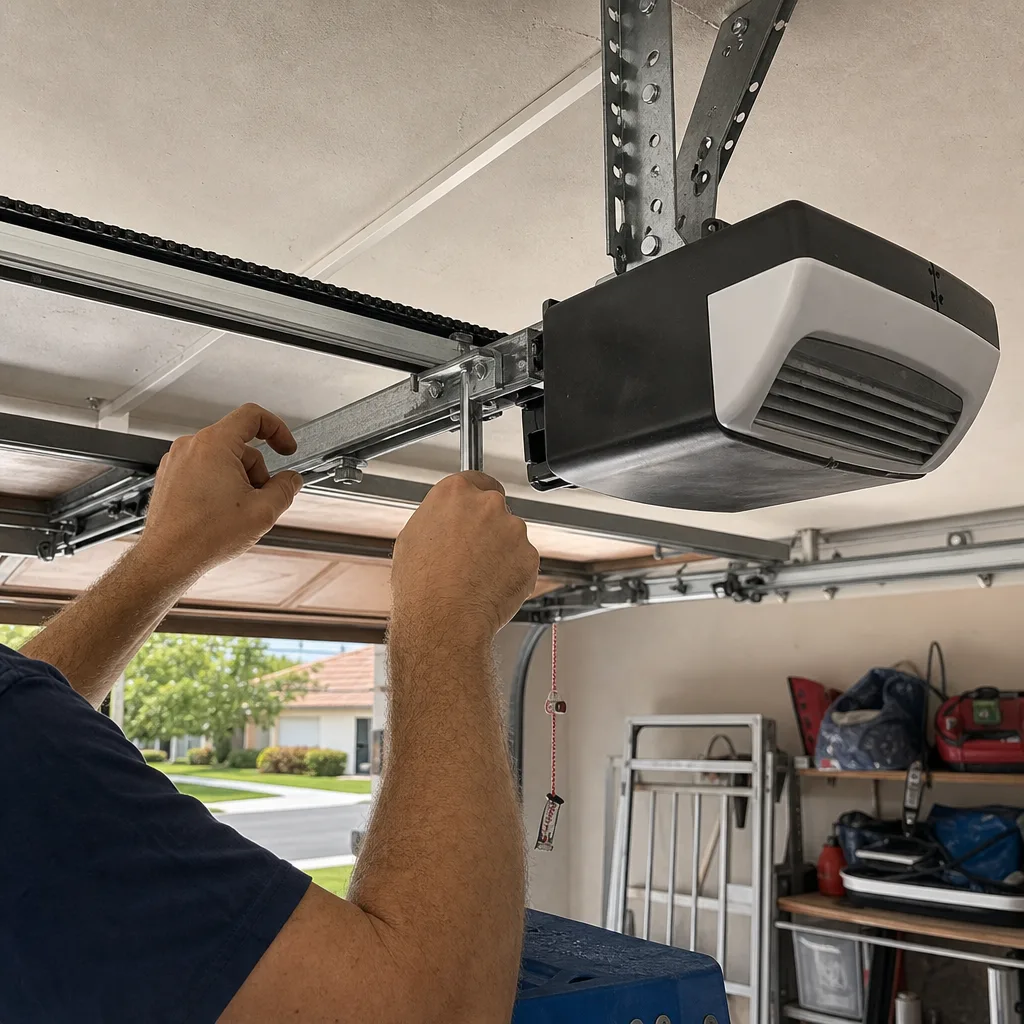
The garage door permit in Florida is not a tax on inconvenience. It’s the evidence system that proves your door was engineered and installed to stay attached to your house in a named storm. In Pembroke Pines, where the High Velocity Hurricane Zone rules apply, the difference between a permitted door and an unpermitted one is the difference between a paper trail and a claim denial. Pull the permit before the work, keep the documentation after the inspection, and if you inherited an unpermitted door, fix the record before the storm season or the listing deadline does it for you. The permit is the cheapest insurance policy you’ll ever buy for your home, and it’s the only one that comes with an inspection. Browse our more guides & resources for additional homeowner tips.
If you’re in Pembroke Pines and need a garage door replacement, a permit consultation, or a retroactive permit for an existing door, Servo Garage Doors Pembroke Pines is independently owned and operated under The Haven Standard. We quote a flat, written price before any work starts, and every job closes with a documented photo record. Call (954) 280-1425 for a free estimate. If you want to understand more about the work we do, read about garage door opener repair and installation in Pembroke Pines as well.
Written by Marcus Deller, Owner at Servo Garage Doors Pembroke Pines, serving Pembroke Pines since 2015.