
Last updated September 20, 2026
Full 25-point door and opener safety check with every visit - springs, cables, rollers, tracks, and your LiftMaster or Chamberlain opener included
You get a price before we start. It does not change when the truck arrives.
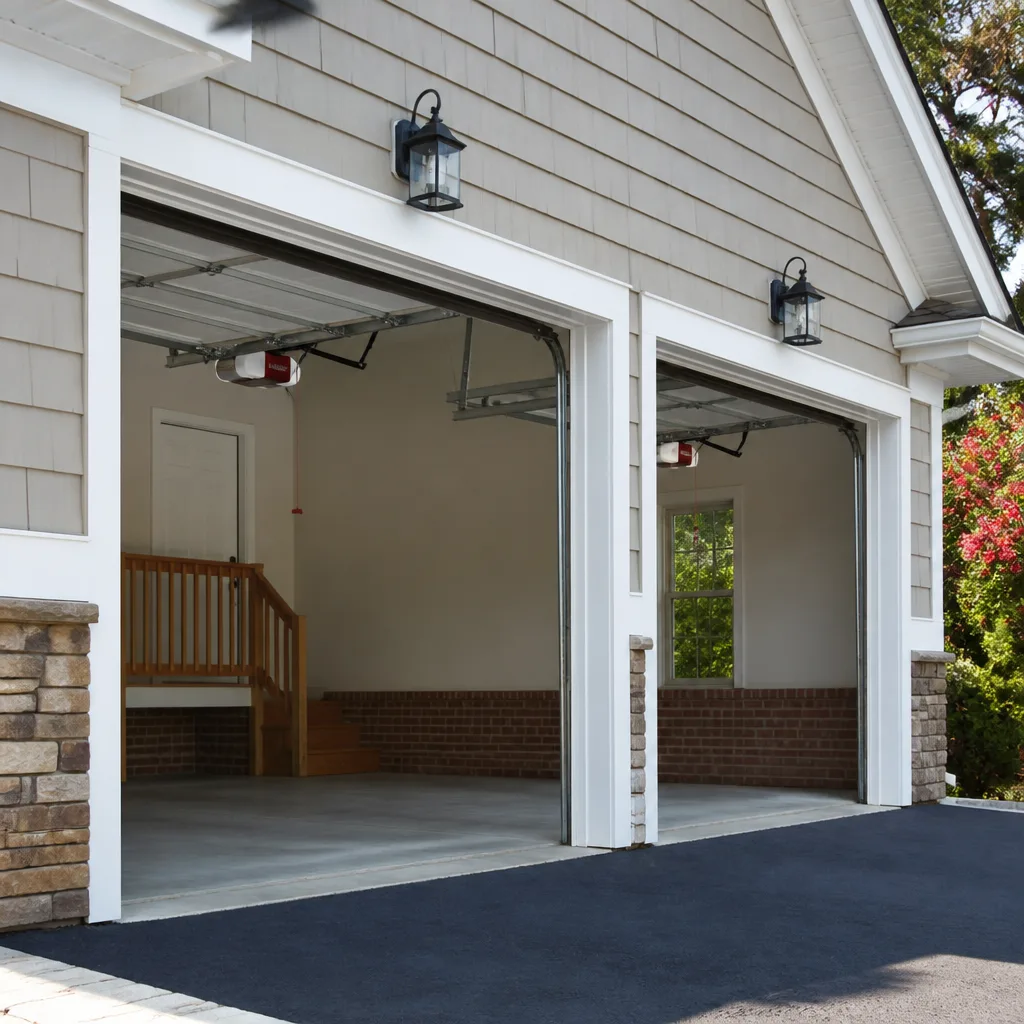
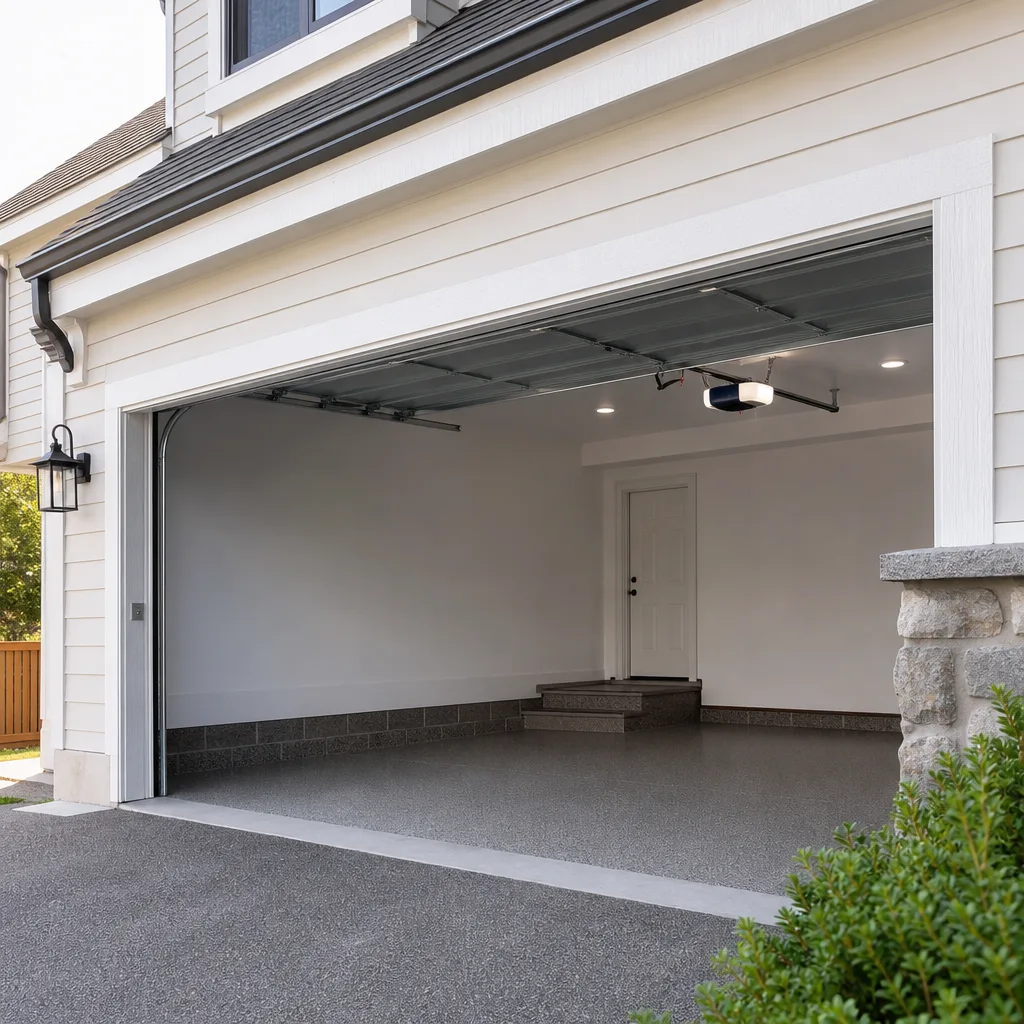
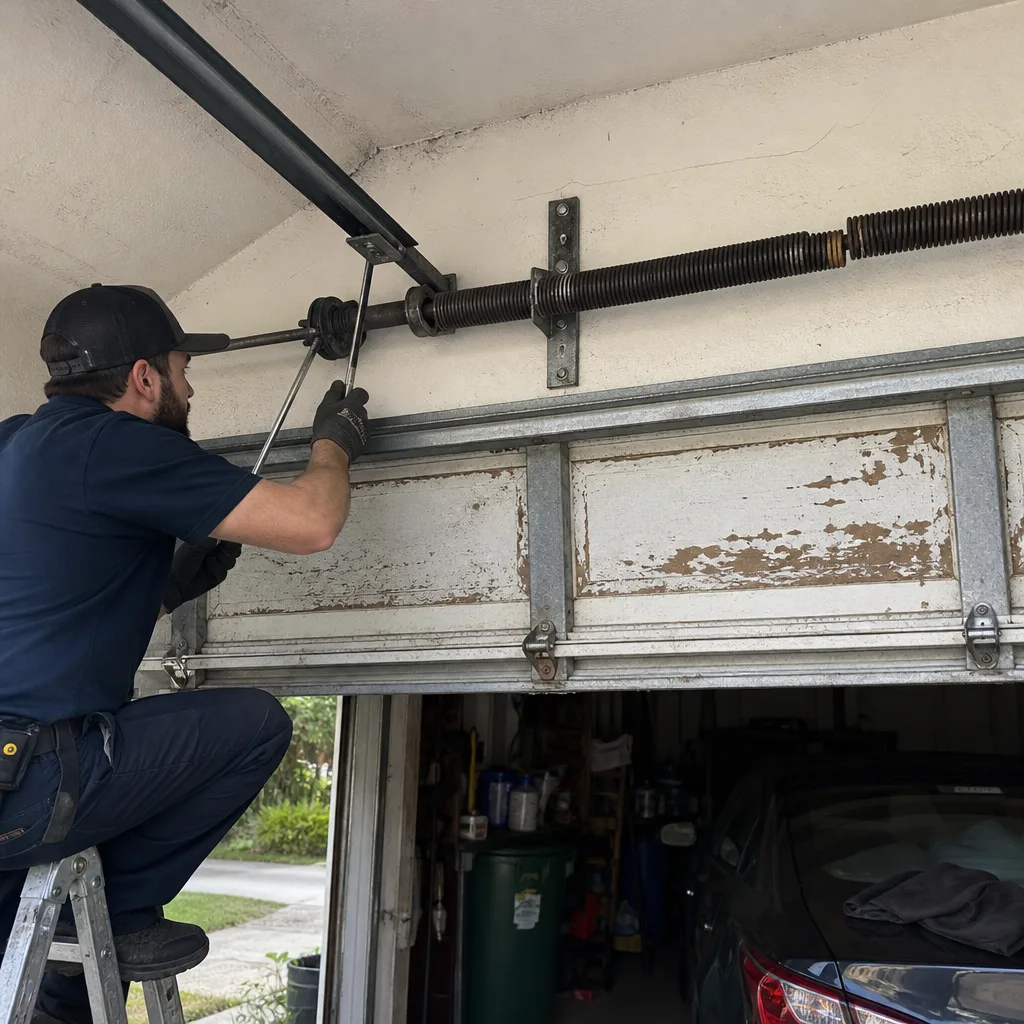 Before
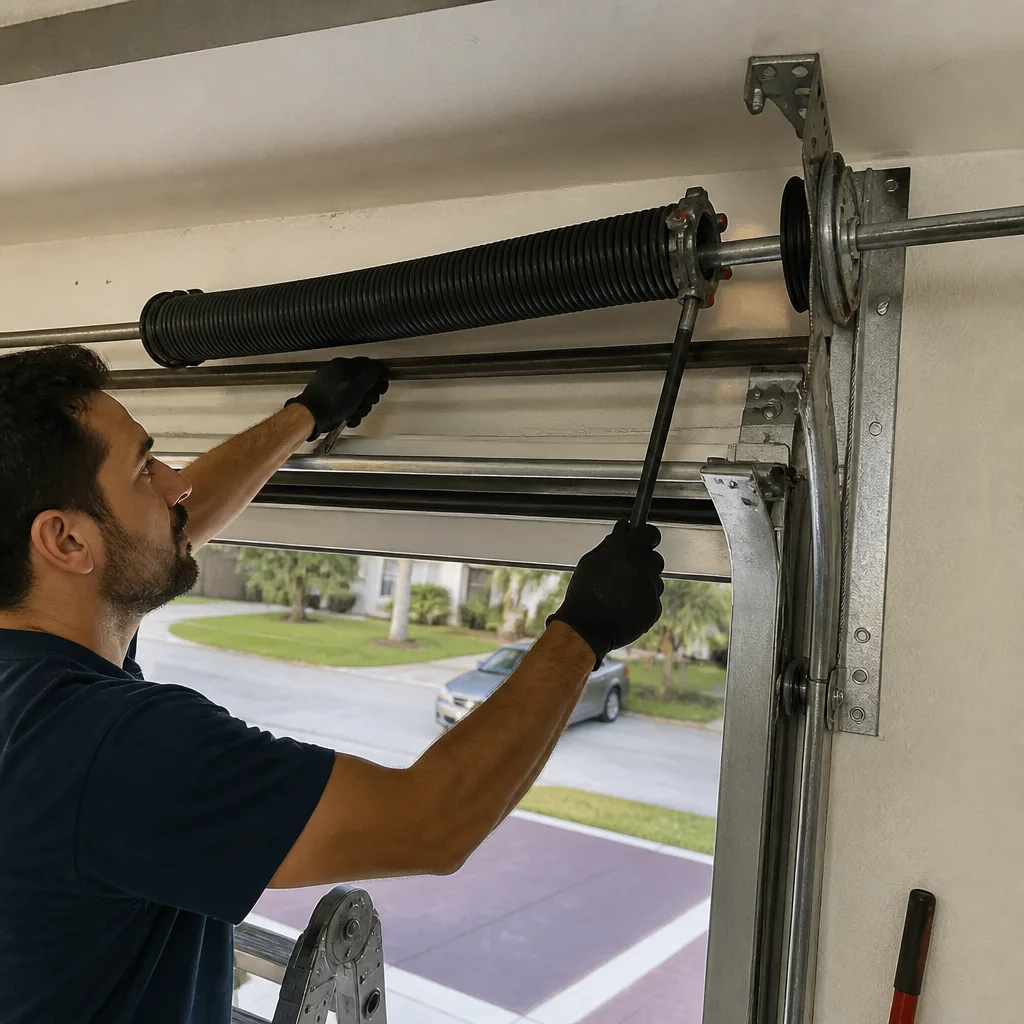 After
After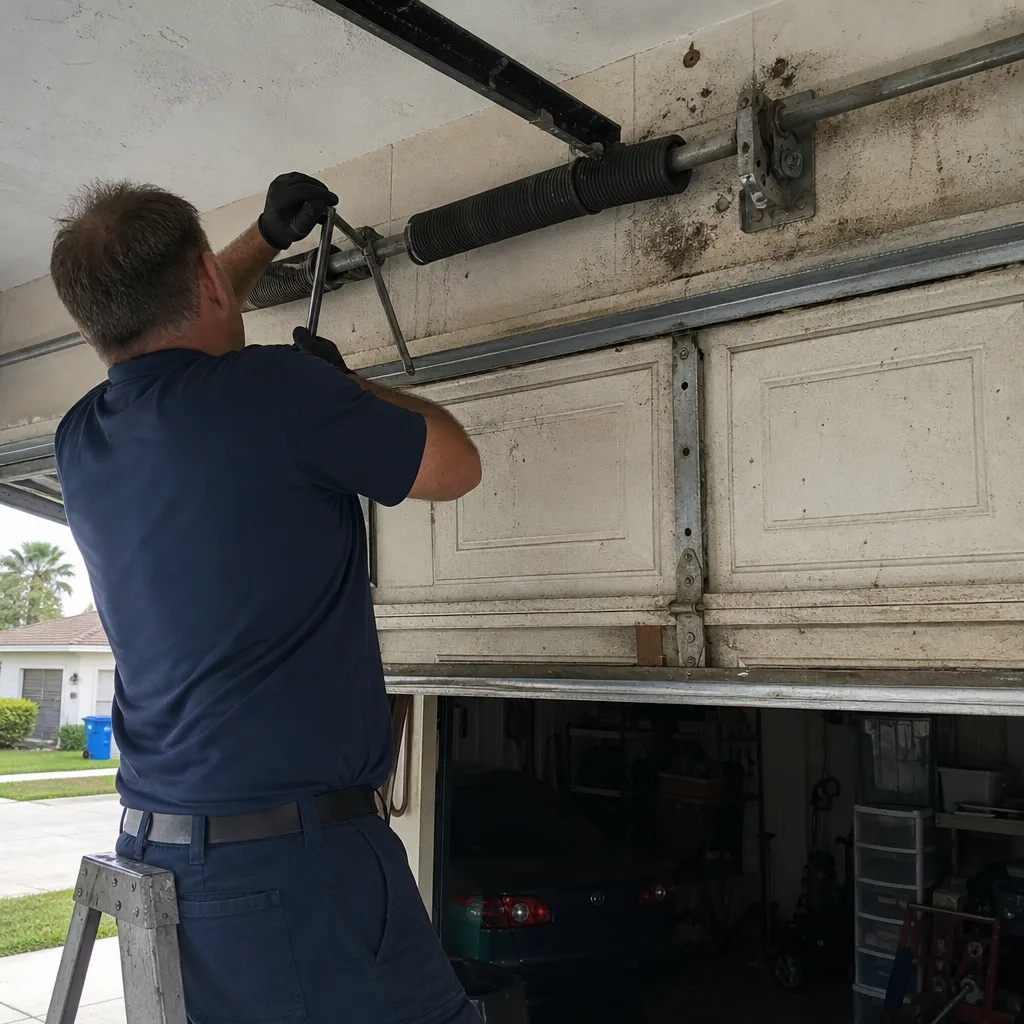 Before
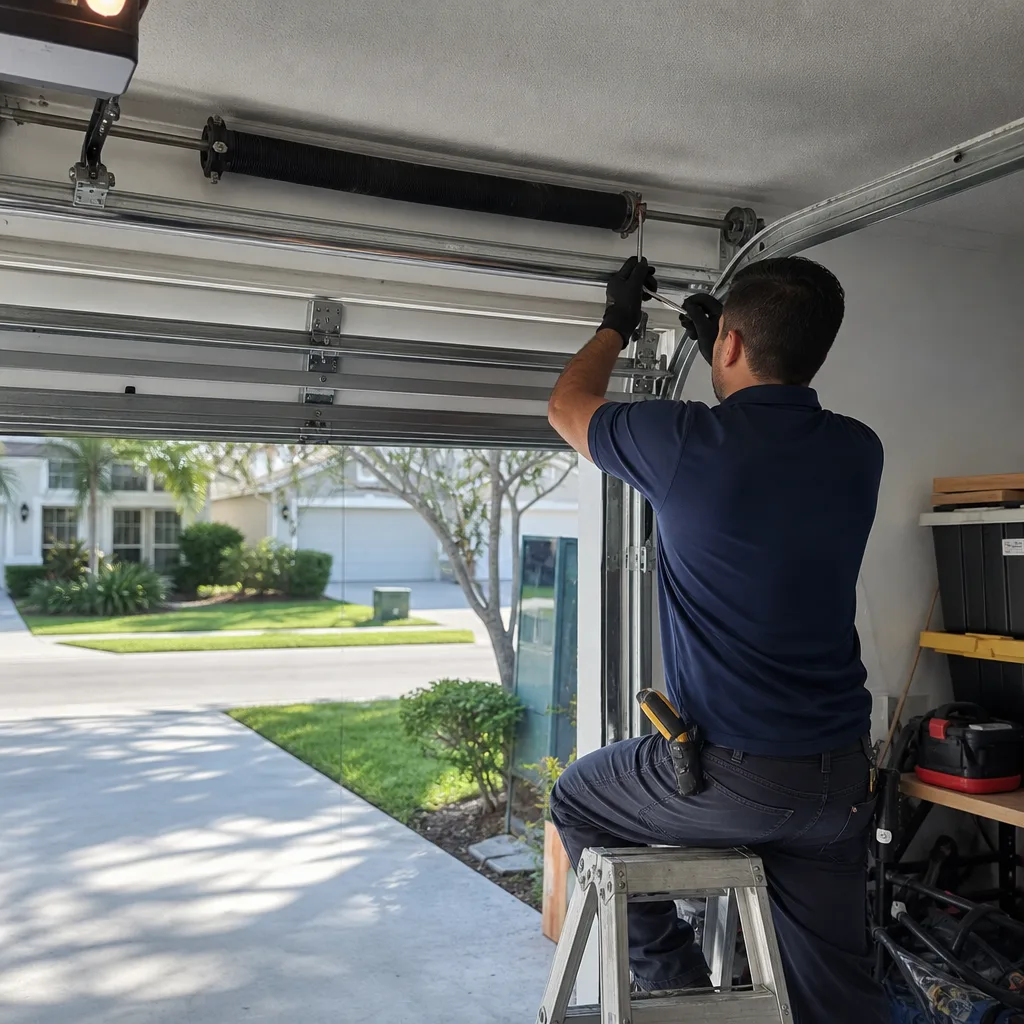 After
After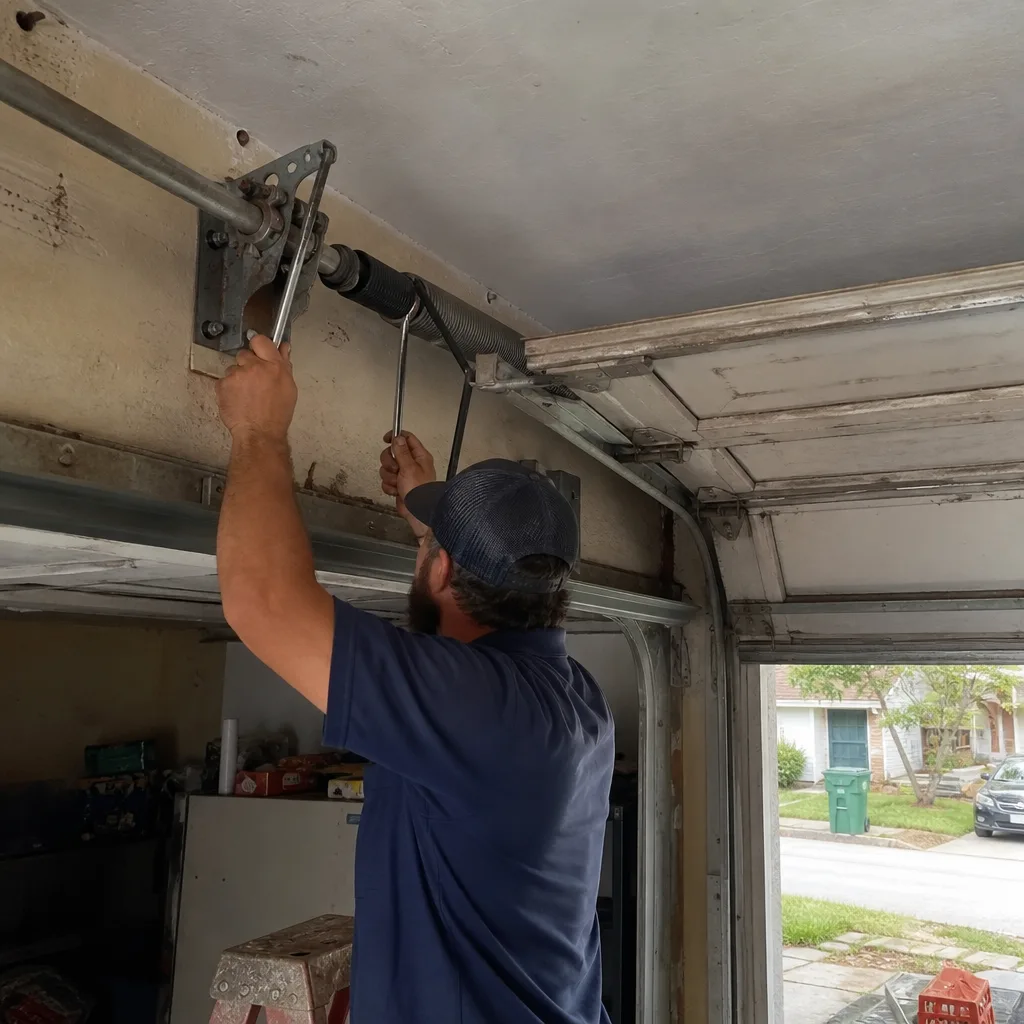 Before
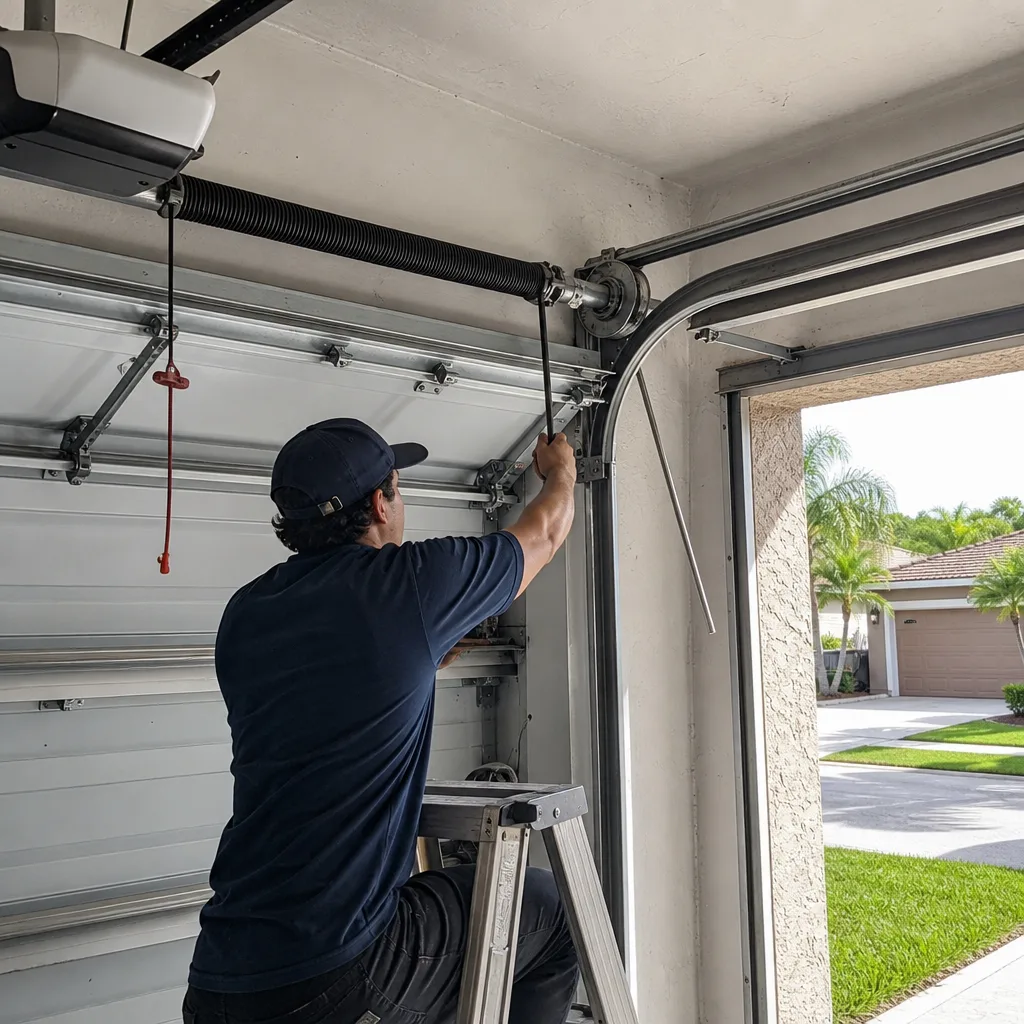 After
AfterHow to Hire a Garage Door Contractor in Pembroke Pines: A Step-by-Step Guide
Broward County pulled permits on fewer than 40% of residential garage door replacements during a recent audit period. That means the majority of doors installed in Pembroke Pines have no inspection record, no documented wind-load compliance, and no paper trail if the installer disappears. This guide walks through exactly how to verify a contractor before you sign anything, which questions to ask before a technician touches your door, and how to read the paperwork that separates a licensed operator from a truck with a business card. For more guides & resources, see our full blog.
Quick Answer
To hire a garage door contractor in Pembroke Pines, verify their Florida DBPR license online first, confirm they use written contracts with permit references and flat upfront pricing, then ask five specific questions before any work begins. The contractor’s paperwork – license number, written scope, photo documentation practice, warranty terms – tells you more about what will actually happen on site than any review platform rating does. Hire the contractor who can produce documentation before you ask for it.
Table of Contents
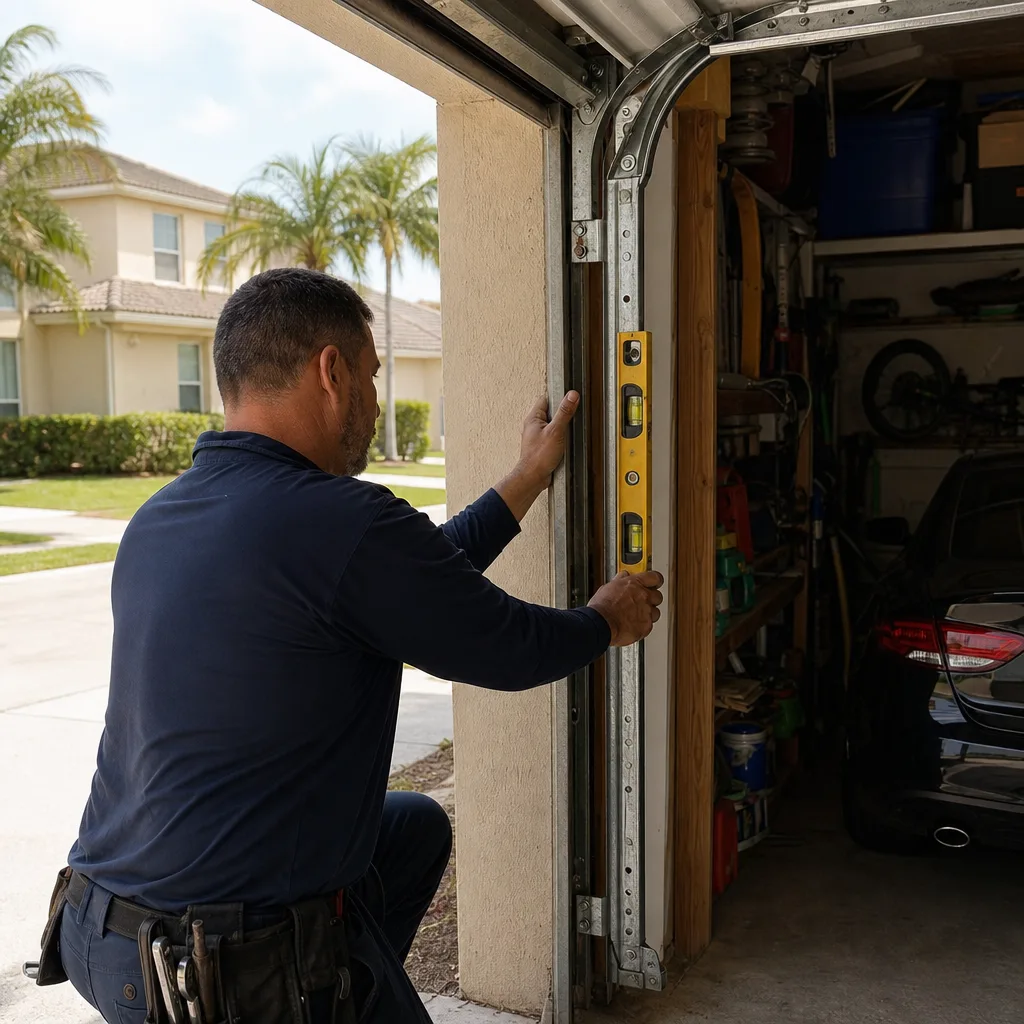
- Step 1: Verify the Florida Contractor License on DBPR
- Registered vs. Certified: What It Means for Garage Door Work
- How to Read a Broward County Permit Record
- The Five Questions to Ask Before a Technician Opens Their Toolbox
- Red Flags That Are Contract-Specific, Not Review-Specific
- Why Photo-Before-Quote Matters Legally
- How Written Pricing Protects You in Pembroke Pines
- Common Mistakes to Avoid
- When to Call a Professional
- Frequently Asked Questions
- The Bottom Line
BeforeAfterStep 1: Verify the Florida Contractor License on DBPR
Before you invite anyone to your property, open the Florida Department of Business and Professional Regulation website on your phone. It takes under three minutes to run a license check, and it should be the first gate every contractor passes. Here’s the exact process:
- Go to myfloridalicense.com and click “Verify a License” on the homepage.
- Select “Search by License Number” if you have it, or search by business name if you don’t.
- Enter the license number printed on the contractor’s vehicle, website, or business card.
- Confirm that the license type matches the work being performed. Garage door installation and repair falls under specialty contractor licensing in Florida.
- Check the license status shows “Current, Active” and not “Delinquent” or “Revoked.”
Any contractor who hesitates to give you their license number, or whose number comes back inactive, should be removed from consideration immediately. In Pembroke Pines and across Broward County, this step filters out a significant percentage of unlicensed operators before you’ve spent a single dollar. We’ve had homeowners in Silver Lakes and Chapel Trail tell us they found multiple “contractors” whose license numbers belonged to other businesses entirely. That’s a hard stop.
Registered vs. Certified: What It Means for Garage Door Work
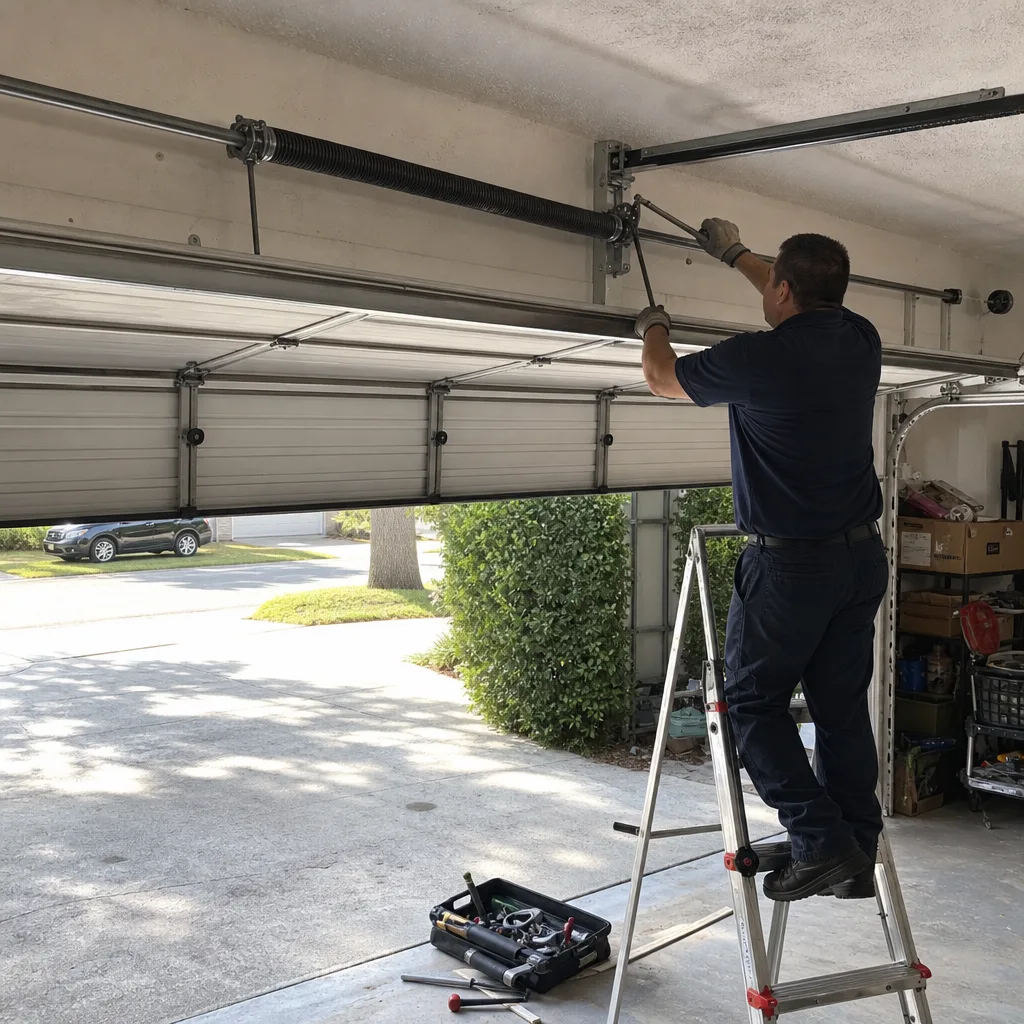
Florida issues contractor licenses in two flavors: registered and certified. The distinction matters for garage door work in Pembroke Pines, and most homeowners never learn it until a problem forces the issue.
A certified contractor holds a license valid statewide. They passed a state-level exam and can work anywhere in Florida without additional local licensing. A registered contractor holds a license valid only in specific local jurisdictions, typically the county or city where they registered. Registered contractors cannot cross into neighboring municipalities without obtaining additional registrations.
For a homeowner in Pembroke Pines, here’s what that means practically:
- If you hire a certified contractor, you’re hiring someone whose license follows them across jurisdictions. That’s relevant if you later move, or if a warranty issue requires service at a property outside Broward.
- If you hire a registered contractor, confirm their registration specifically covers Pembroke Pines. A registered contractor licensed only for Miami-Dade cannot legally work on your door.
- Garage door installers and repair technicians typically work under specialty licenses. When you verify on DBPR, look at the “Qualification” field to see whether they hold the correct specialty class for garage door work, not just a general contractor license.
Neither registered nor certified is inherently “better” – what matters is that the license exists, is active, and covers the scope of work on the contract. A registered contractor who verifies cleanly on DBPR and works daily in Pembroke Pines is perfectly legitimate. But you should know which type you’re hiring, because a registered contractor quoting work in a jurisdiction where they’re not registered cannot legally pull the permit, which leads to the next section.
How to Read a Broward County Permit Record
When a contractor replaces a garage door in Pembroke Pines, the work should generate a permit record with Broward County. You can look up permit records through the Broward County ePermits system or by calling the building department. What you’re checking for:
- Permit number and status: The permit should show as “Issued” before work begins and “Closed” or “Finaled” after inspection.
- Scope description: The permit text should match what you’re being quoted. If the quote says “replace 16×7 single door with hurricane-rated Clopay model,” the permit should reference a replacement door, not a repair.
- Contractor name on the permit: The licensed contractor listed should be the same entity you signed with, not a third party whose license is being “borrowed.”
- Inspection outcome: After the job, check that the final inspection shows “Passed” and that the wind-load documentation was submitted. In Pembroke Pines, doors in most residential zones must meet Miami-Dade or Florida Building Code wind-load requirements.
The permit record is the official version of what happened. If a contractor tells you a permit isn’t needed for a door replacement, that’s a red flag – in Broward County, most residential door replacements do require a permit, and any contractor claiming otherwise is either uninformed or avoiding the paper trail. Ask for the permit number before you pay the final invoice. If the contractor says they’ll “handle the permit later,” you’re financing their compliance problem.
The Five Questions to Ask Before a Technician Opens Their Toolbox
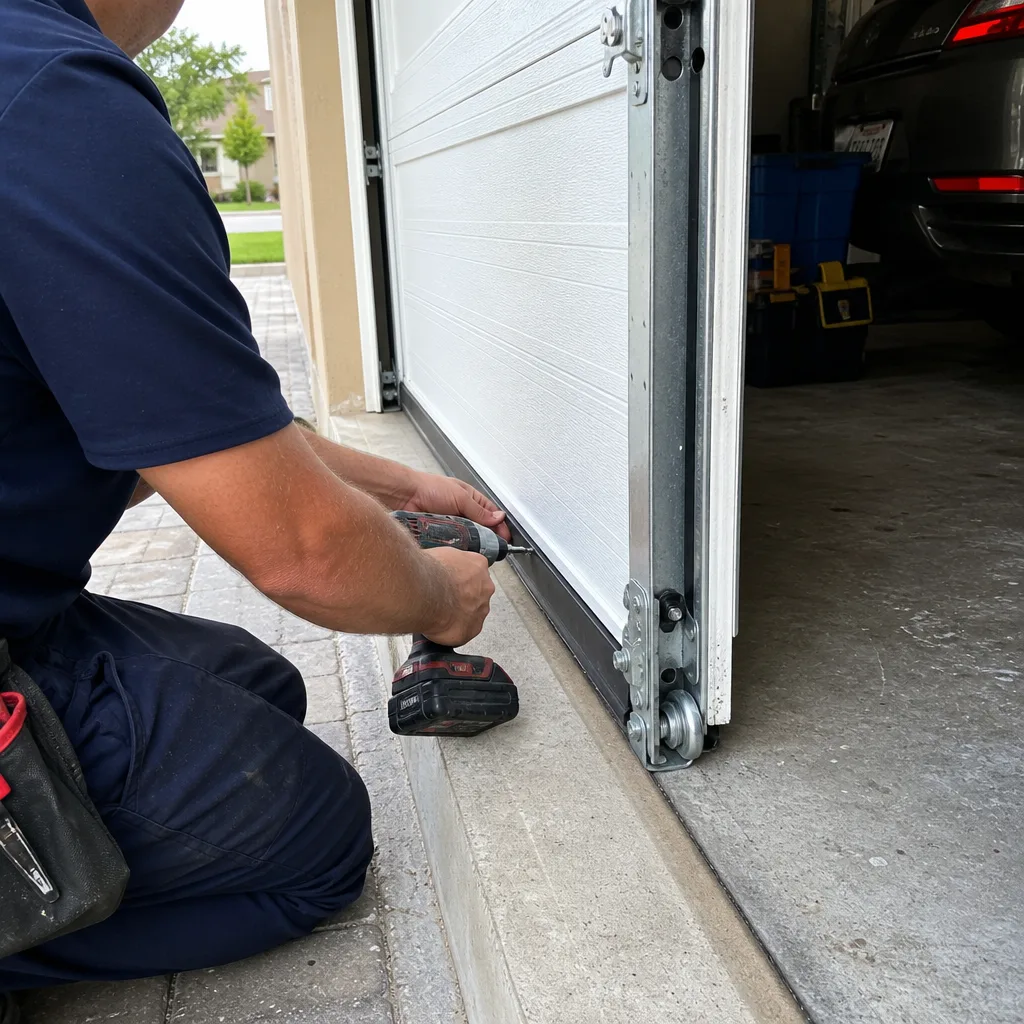
Once a contractor passes the license check and quote stage, you still hold the stronger position if you ask these five questions before the technician begins any work. Write them down. Ask them in person. If any answer is vague, stop the job.
- “Will you put the flat price in writing before any diagnostic work begins?” The answer should be yes, with no conditions. If you’re quoted a range, ask for the top of the range committed to paper. If the diagnosis changes the scope, that’s a new written change order, not a verbal agreement.
- “What permit will be pulled for this job, and what’s the permit number?” No permit number, no work. For a replacement door, the permit should already be pulled or scheduled before the technician arrives. For repairs, most jobs don’t require a permit, but the contractor should be able to explain why.
- “Will you photograph the failed component before you quote the replacement?” This is the question that separates careful operators from volume operators. A contractor who documents the condition before quoting is protecting you from scope creep – and protecting themselves from disputes.
- “What exactly does your warranty cover, and is it in writing?” The answer should name parts, labor, and duration. “We stand behind our work” is not a warranty. Five years on the spring, one year on labor, written on the invoice – that’s a warranty.
- “Who is the technician assigned to my job, and are they background-checked?” You should get a name, not a dispatcher’s promise. In Pembroke Pines, where most garage door companies run two or three crews, knowing which person will be on your property matters.
These five questions take sixty seconds to ask and will eliminate a surprising share of contractors. The ones who answer clearly and provide paperwork are the ones who treat the job as a contract, not a handshake.
Red Flags That Are Contract-Specific, Not Review-Specific
Review platforms are useful for spotting patterns of tardiness or poor communication, but they rarely surface the red flags that indicate a contractor will leave you with an uninspected door and no recourse. Those red flags live in the contract language, not the star rating. Here are the ones we see cause the most expensive problems in Pembroke Pines:
- Verbal scope of work: If the job description isn’t written down, the job doesn’t have a defined ending. Every change, every part, every labor hour becomes negotiable after the fact.
- No permit reference: A written contract for a door replacement that doesn’t mention a permit means the contractor doesn’t intend to pull one. That’s a building code violation on your property, and you’re the one holding the liability.
- “Same-day special” language: Contractors who lead with urgency – “today only,” “if you sign now” – are selling a deadline, not a service. Legitimate garage door companies in Pembroke Pines don’t need artificial scarcity. The work exists year-round, especially after storm season.
- Vague warranty terms: “Warranty included” with no duration, no parts list, no labor terms is not a warranty. It’s a sentence. Ask for the specific terms written on the invoice or contract.
- Subcontractor without disclosure: If the person who shows up isn’t the company you hired, and that wasn’t disclosed in writing, you’ve lost your contract chain. If the subcontractor does bad work, the primary contractor may dispute responsibility.
None of these red flags surface in a five-star review. They surface only when you read the agreement before you sign it. That’s the entire point of hiring by documentation, not by reputation.
Why Photo-Before-Quote Matters Legally
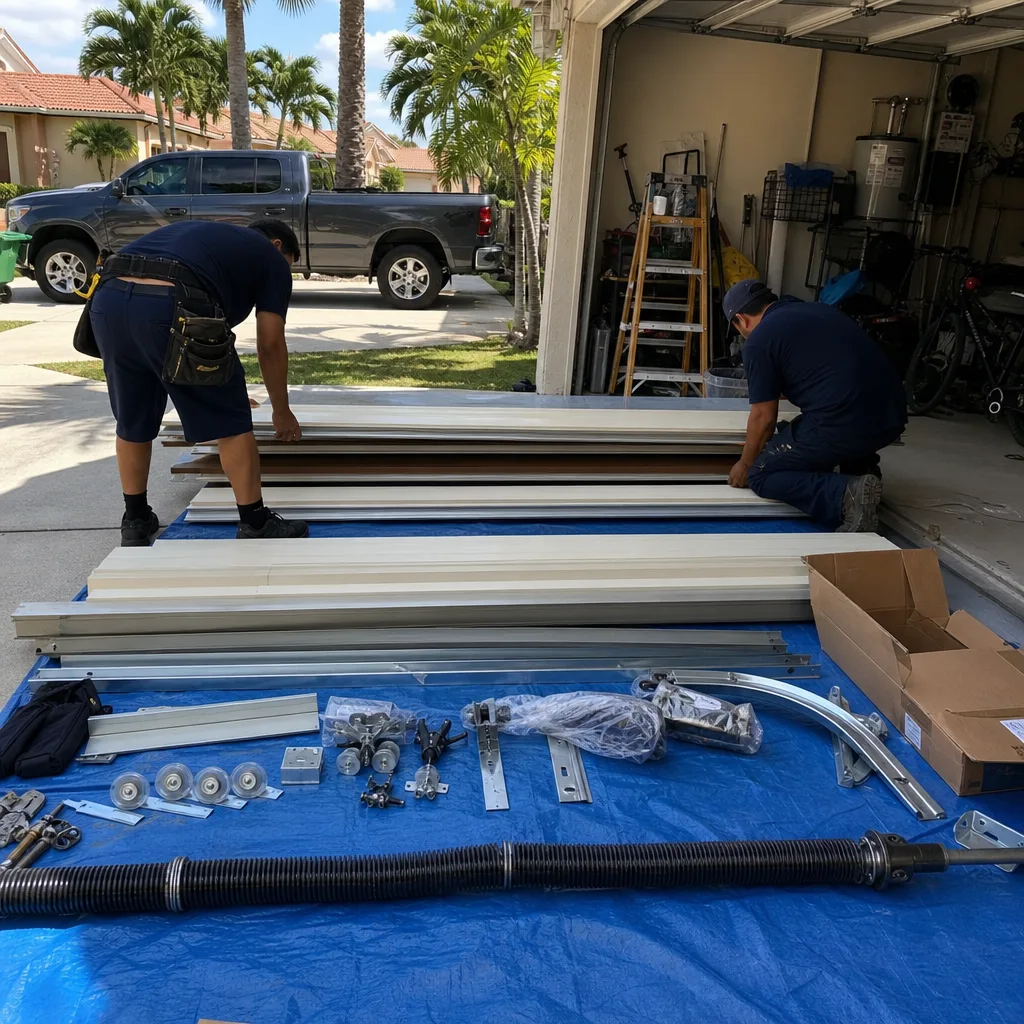
Here’s a scenario we’ve seen repeatedly in Pembroke Pines and the surrounding Broward area: a homeowner calls a contractor for a noisy garage door. The technician opens the door, diagnoses a “bad spring,” quotes $450 to replace it. The homeowner hesitates. The technician then says the track is “bent too” and the opener is “failing” and now the quote is $1,200. Without documentation, the homeowner has no way to verify any of it.
The photo-before-quote practice exists to make that scenario impossible. When a technician photographs the failed component before quoting the replacement, you receive a visual record of what was actually found. If the scope expands mid-job, you have “before” images that support or contradict the expansion. If a dispute develops later, you’re not relying on memory – you have images with timestamps.
Legally, this practice creates a documented condition record that protects both parties. For the homeowner, it means the contractor cannot later claim pre-existing damage was caused by their work. For the contractor, it means a clear baseline that prevents false claims of damage. In an industry where disputes often come down to “he said, she said,” the photo record is the evidence that ends the argument.
Clause 4 of The Haven Standard – the documented operating standard behind Servo Garage Doors Pembroke Pines home – makes this practice mandatory on every visit. The technician photographs the failed part before quoting. You see what they see. That’s not a sales tactic; it’s the only responsible way to quote a repair.
How Written Pricing Protects You in Pembroke Pines
The second fear every homeowner has, right after “is my garage door going to fall on my car,” is “is the final invoice going to be twice the quote.” In Pembroke Pines, where the housing stock ranges from 1970s originals in Pasadena Lakes to new construction in Westfork, door conditions vary wildly, and pricing ambiguity is where homeowners lose money. Written pricing eliminates that ambiguity before it starts.
Here’s what written pricing means in practice:
- A flat price for the repair or replacement, not an hourly rate with an open-ended time estimate.
- A written scope describing exactly what parts will be replaced, what work will be performed, and what is not included.
- The price is quoted and agreed before any work starts. Not after the technician “discovers” something. Not “plus whatever the parts cost.” A number on paper.
- Any change to that price requires a change order – a supplemental written document – signed by you before the additional work proceeds.
Clause 1 of The Haven Standard requires exactly this: a flat, written price and written scope delivered before any work begins, on every job, no exceptions. “Call for a quote” is not how this works. If a contractor cannot or will not put the price in writing before starting, you are dealing with someone whose final invoice is a matter of their discretion, not your agreement.
For garage door work in Pembroke Pines, the typical repair range runs from $150 for a minor track adjustment to $700 for a full torsion spring replacement with labor, while a full door replacement depending on size, material, and wind-load rating can run anywhere from $1,200 to $4,500 installed. Those are useful baseline numbers, but the only price that matters is the one on your written quote before work starts.
Common Mistakes to Avoid
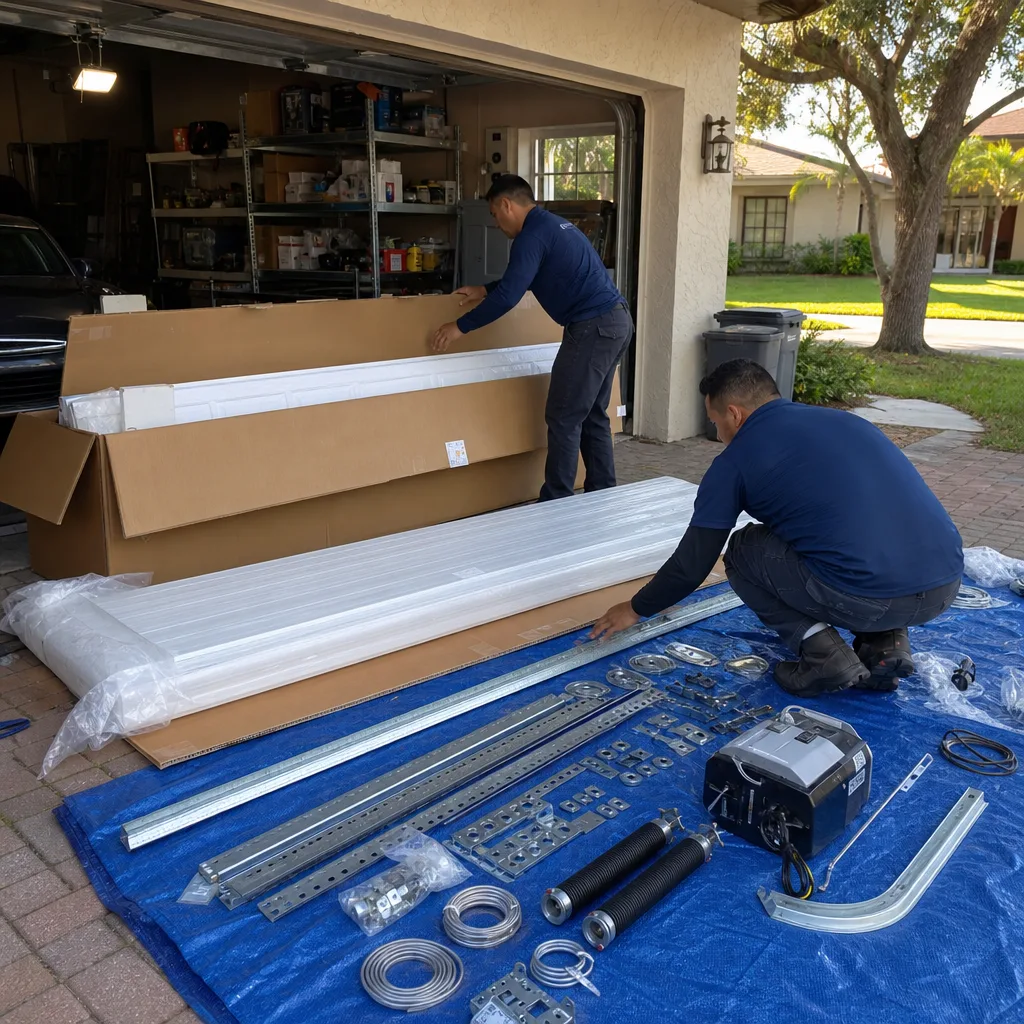
- Hiring the first contractor who answers the phone. Availability is not competence. A licensed, documented contractor may take a day to schedule you. That’s normal. A contractor who shows up in thirty minutes with no paperwork is selling speed, not service.
- Skipping the DBPR license check because “the truck looked professional.” Vehicle graphics cost $200. A state license costs years of work and ongoing compliance. One is decoration, the other is the entire business.
- Accepting a verbal warranty. If the warranty terms aren’t written down, the warranty doesn’t exist. Insist on written terms that name the parts, the labor, and the duration. For Garage Door Repair in Pembroke Pines, the warranty should be itemized on the invoice.
- Paying in full before the final inspection is complete. A deposit on a door order is reasonable. Full payment before the permit closes and the door is tested is not. Hold the final payment until the inspector signs off.
- Buying a door without verifying wind-load compliance. Pembroke Pines sits in a high-velocity hurricane zone. A door without proper wind-load documentation may fail in a storm and may void your insurance claim. For Garage Door Installation in Pembroke Pines, the wind-load documentation should be part of the permit package, not an afterthought.
- Replacing the opener when only the door needs work, or vice versa. A contractor who immediately quotes a full replacement for a fixable component is either lazy or selling upside. Ask what specifically failed, and ask to see it.
- Signing a contract without reading the scope line. If the scope says “repair door” and the technician installs a new door, you’re in a dispute. A written scope should be specific enough that a third party could verify the work against the description.
When to Call a Professional
Garage door work involves high-tension springs, heavy panels under load, and electrical components. A torsion spring under tension carries enough force to cause serious injury if it releases unexpectedly. This is not a DIY repair job, and any how-to video that suggests otherwise is giving dangerous advice. Call a professional when your door makes a different noise than usual, when it opens unevenly, when the opener runs but the door doesn’t move, or when you see a visible gap or crack in a spring. Those are failures in progress, not maintenance items. For Garage Door Opener Repair & Installation in Pembroke Pines, the diagnostic should happen before the quote, and the quote should be in writing before the work. Servo Garage Doors Pembroke Pines offers free estimates in Pembroke Pines – call (954) 280-1425.
Frequently Asked Questions
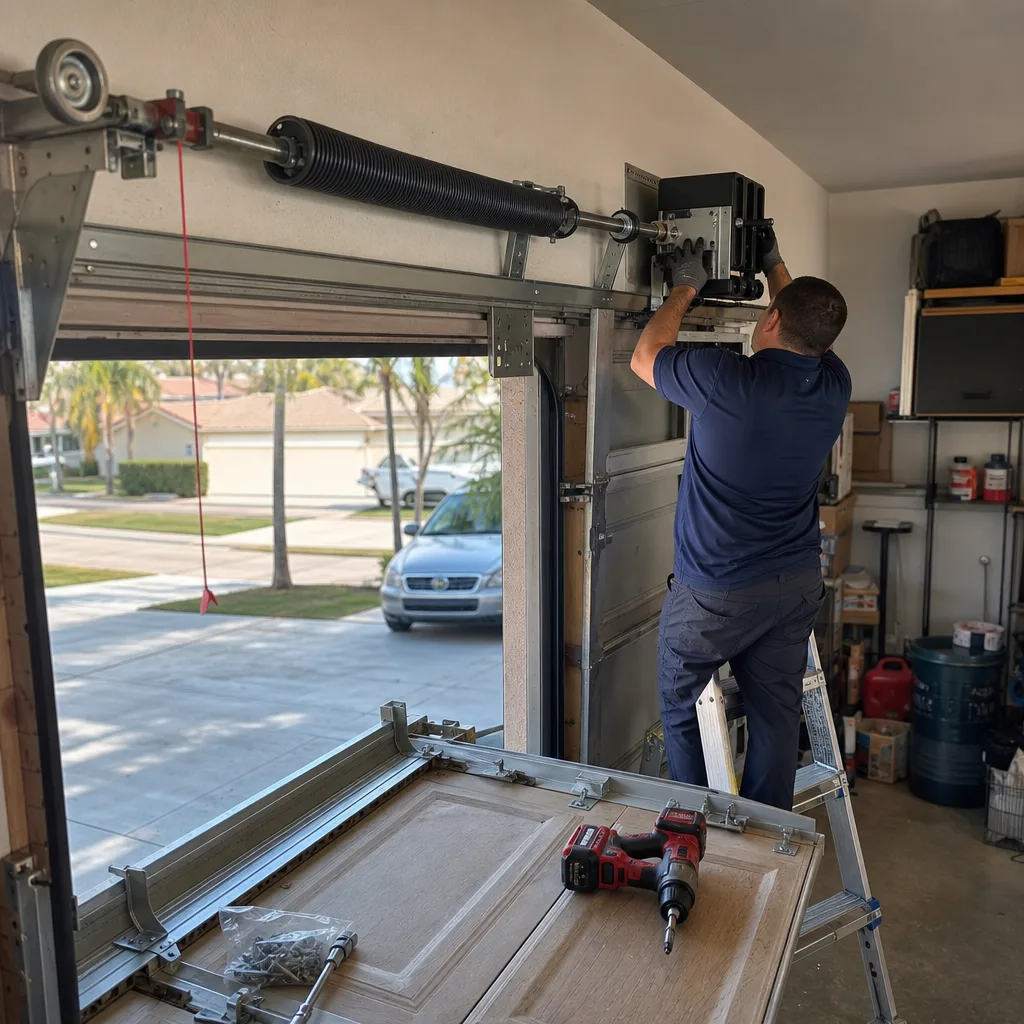
Go to myfloridalicense.com, click “Verify a License,” and search by the contractor’s license number or business name. The license should show “Current, Active” with a qualification that covers the work being performed. The entire check takes under three minutes and should be done before you sign any contract in Pembroke Pines.
Yes, most residential garage door replacements in Pembroke Pines and Broward County require a permit. The permit verifies the door meets wind-load requirements and creates an inspection record. A contractor who says no permit is needed is either misinformed or avoiding the paper trail. Call (954) 280-1425 if you want a contractor who handles permit paperwork as part of the job.
A legitimate garage door warranty covers specific parts for a specific duration, with labor terms included in writing. Typical coverage: up to five years on torsion springs, one year on labor, and manufacturer warranties on door panels and openers running five to fifteen years depending on the brand. “We stand behind our work” is not a warranty – ask for it written on the invoice.
Most garage door repairs in Pembroke Pines run between $150 and $700 depending on the component. A track adjustment runs on the low end, a full torsion spring replacement on the high end. A written quote with a flat price before work starts is the only way to know your number. Free estimates mean no charge for the diagnostic visit.
Photo-before-quote means the technician photographs the failed component before quoting a replacement. It creates a documented condition record that protects you if the scope expands mid-job and protects the contractor if disputes arise. Clause 4 of The Haven Standard makes this mandatory. If a contractor won’t show you the failed part, ask why not.
For Pembroke Pines specifically, the wind-load rating matters more than the brand name. That said, LiftMaster, Chamberlain, and Raynor all manufacture doors and openers that meet Miami-Dade County wind-load requirements with the proper documentation. The brand matters less than whether the contractor pulls the permit and provides the wind-load paperwork. Ask for a written quote on the specific model and confirm the permit references wind-load compliance.
The Bottom Line
Hiring a garage door contractor in Pembroke Pines comes down to documentation. Verify the DBPR license before you sign. Confirm the permit before the job starts. Require a flat, written price and written scope before any work begins – Clause 1 of The Haven Standard makes this non-negotiable. Ask for the photo record, because you deserve to see the failed part before anyone quotes a replacement. The contractor who can produce paperwork before you ask for it is the contractor who will protect you when something goes wrong. The one who can’t is the one who never intended to. Servo Garage Doors Pembroke Pines offers free estimates with written pricing, permit handling, and a documented photo record on every visit – call (954) 280-1425 to schedule yours.
Written by Marcus Deller, Owner at Servo Garage Doors Pembroke Pines, serving Pembroke Pines since 2015.