
Last updated September 20, 2026
Full 25-point door and opener safety check with every visit - springs, cables, rollers, tracks, and your LiftMaster or Chamberlain opener included
You get a price before we start. It does not change when the truck arrives.
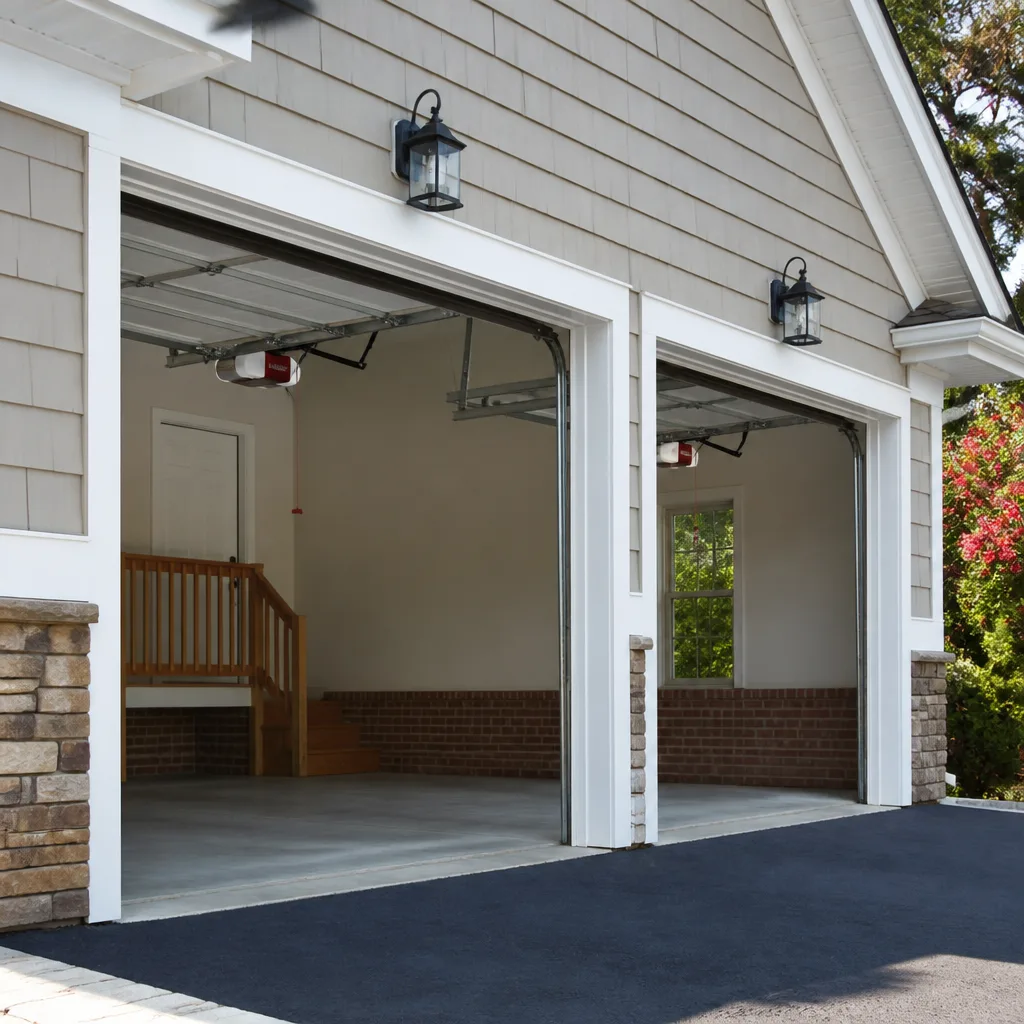
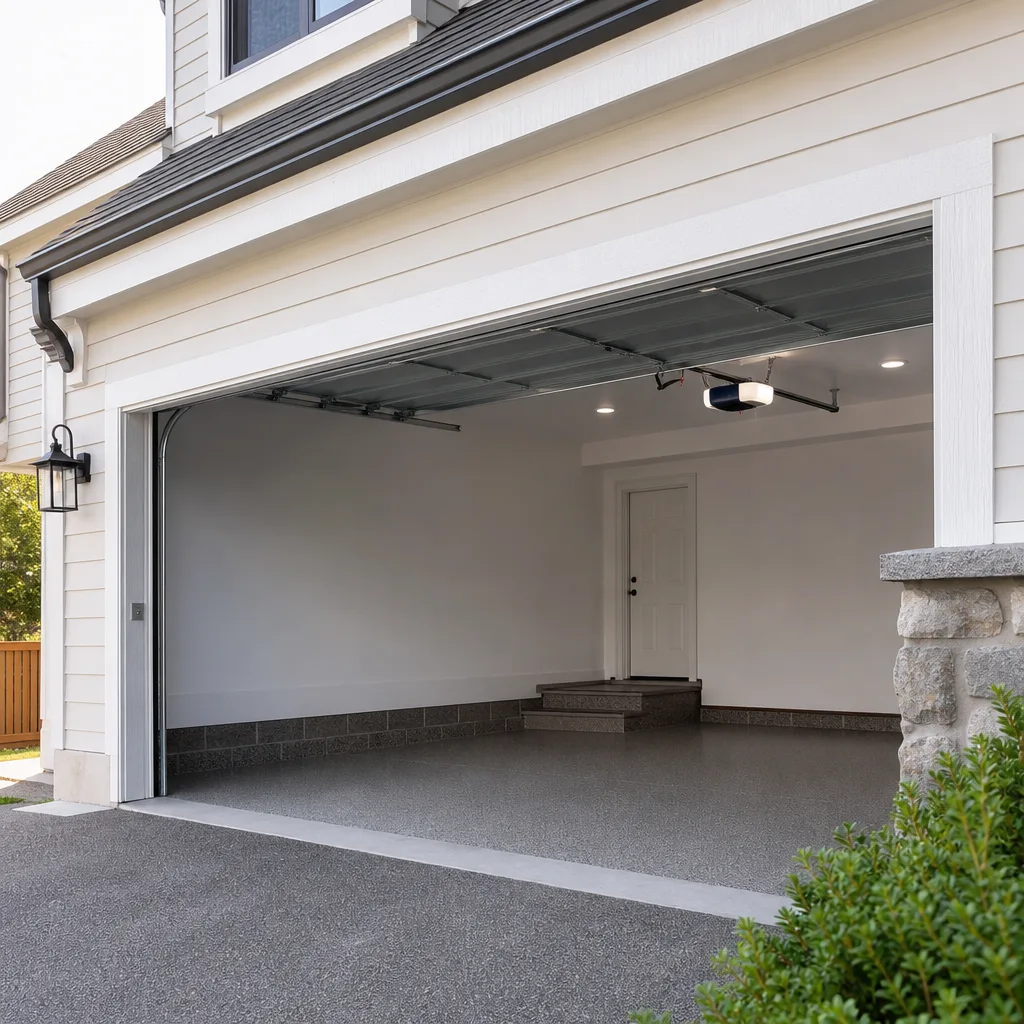
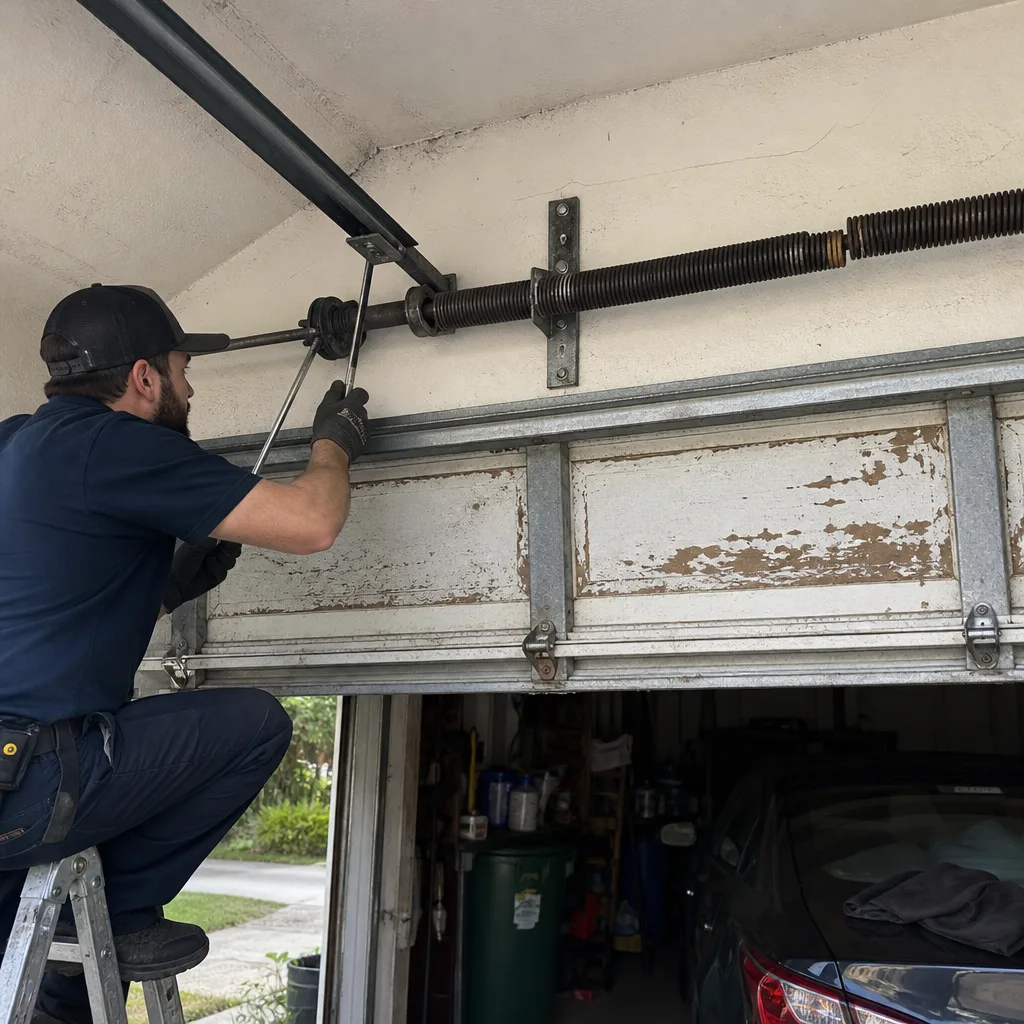 Before
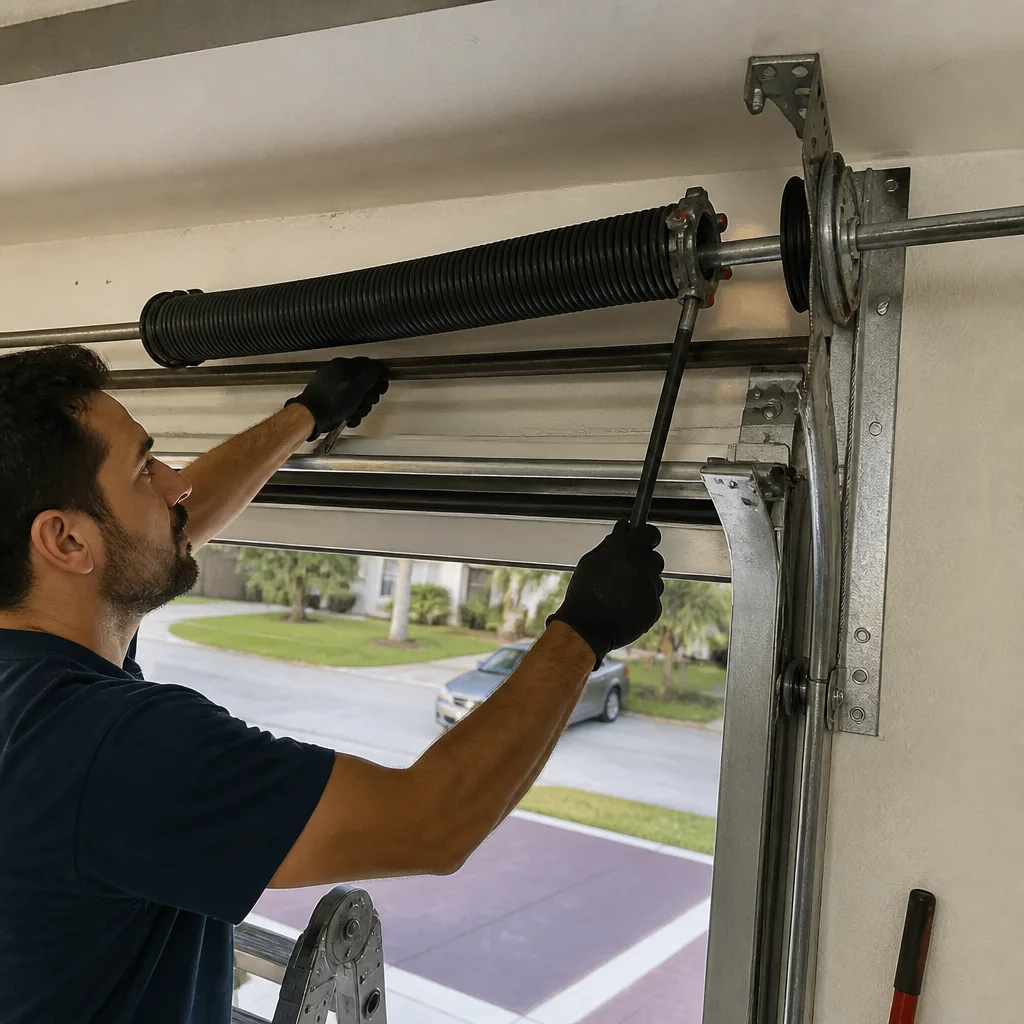 After
After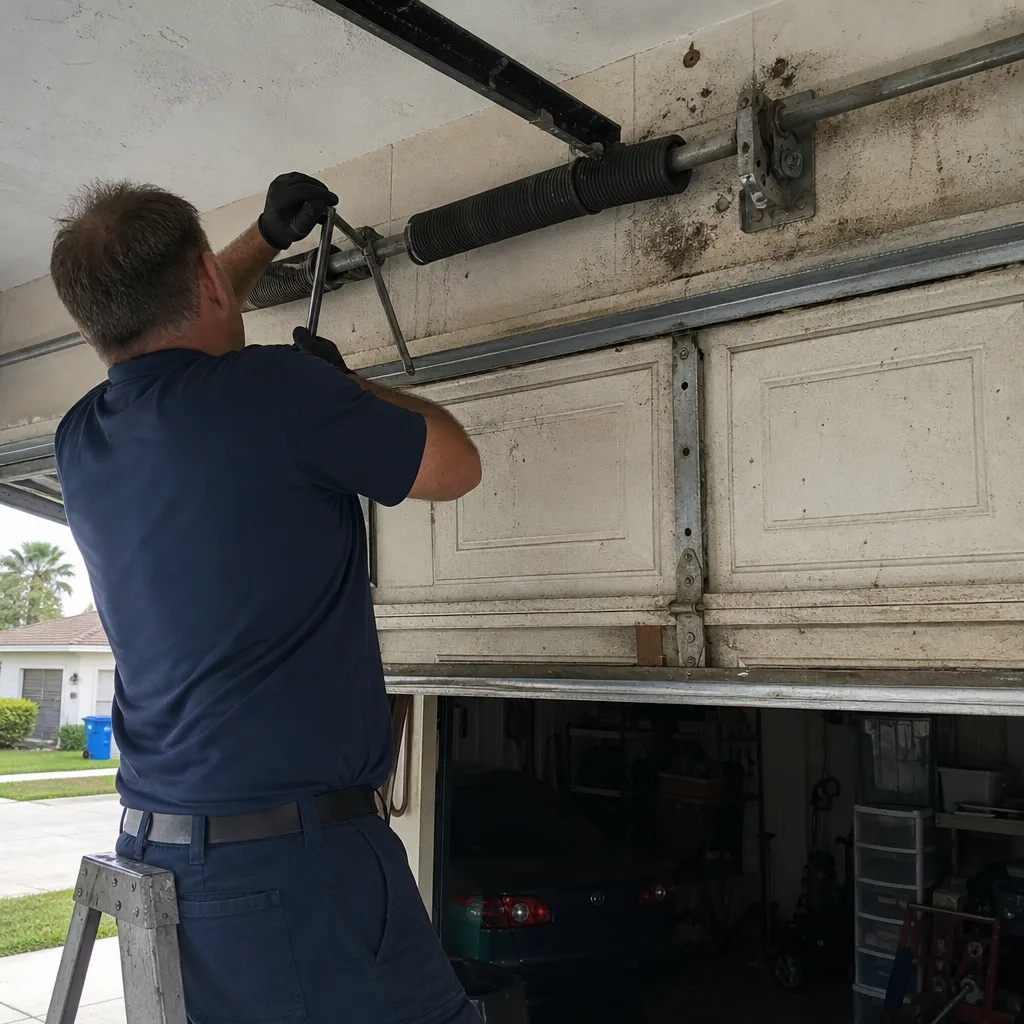 Before
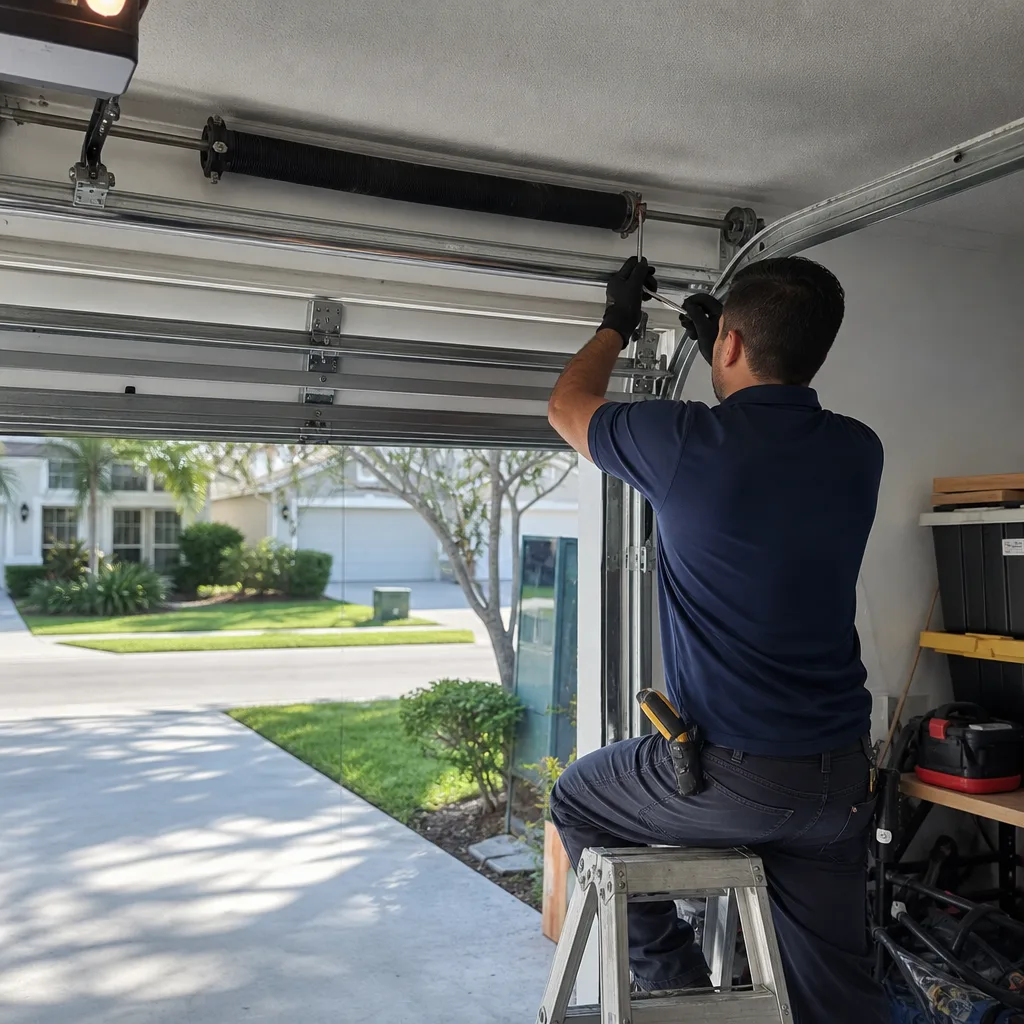 After
After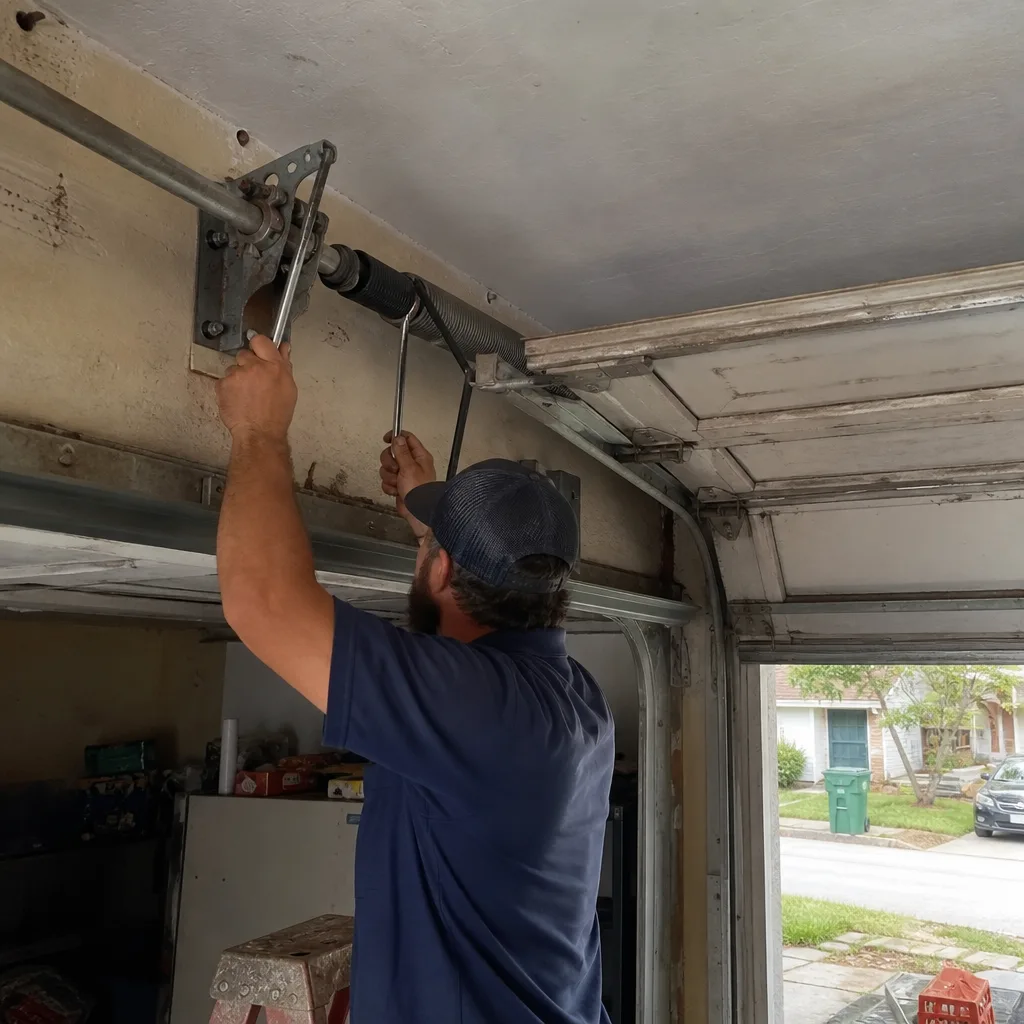 Before
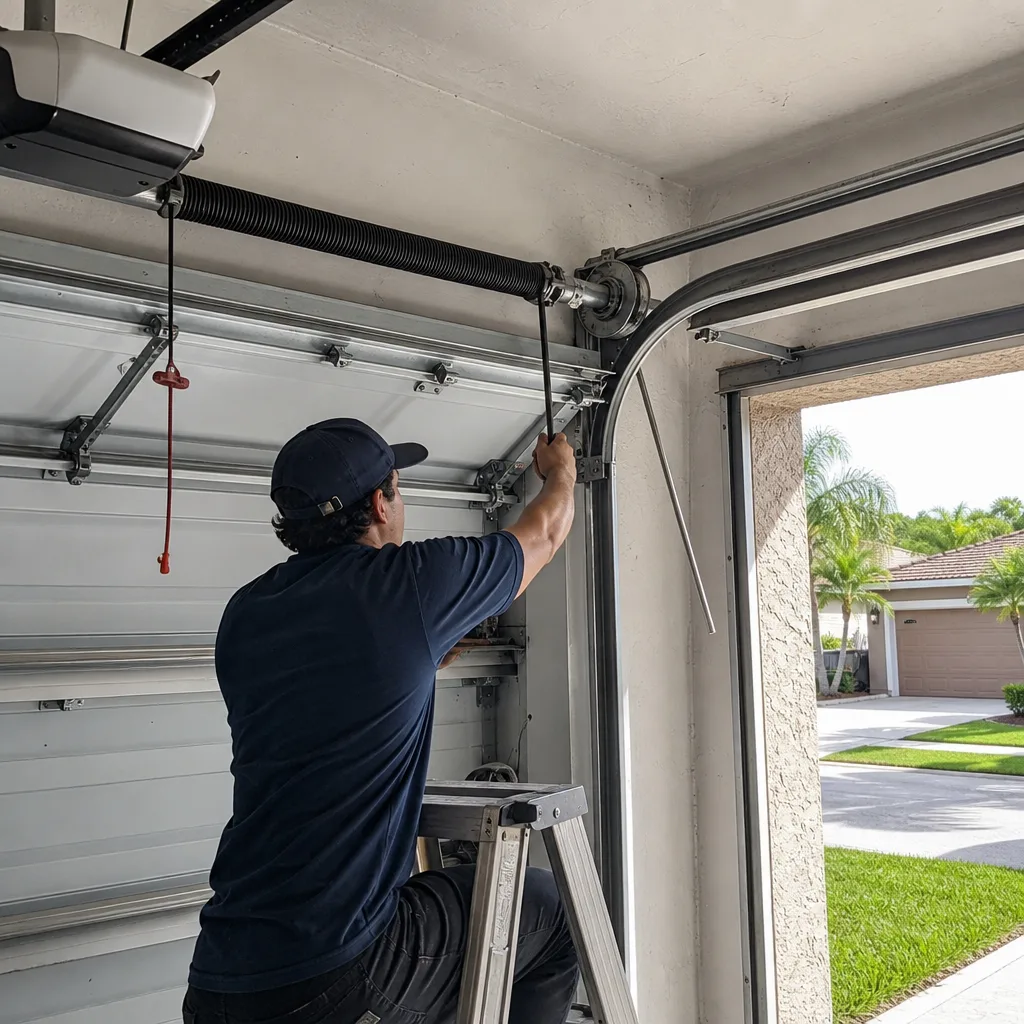 After
AfterSeasonal Garage Door Care for Pembroke Pines: Year-Round Homeowner’s Guide
Pembroke Pines doesn’t have a winter that freezes your garage door shut or a fall that buries it in leaves. What it has is a June-through-November wind season that treats your door like a sail, and a November-through-March dry season that turns lubricant to varnish and rubber seals to chalk. Most garage door failures we see in Pembroke Pines aren’t random. They’re seasonal, predictable, and almost always cheaper to prevent than to repair. This guide covers the two maintenance windows that matter here, what to inspect, what to document, and what to leave to a technician, or see The Complete Guide to Garage Door in Pembroke Pines for a deeper dive.
Quick Answer
Seasonal garage door care in Pembroke Pines comes down to two windows: a pre-hurricane inspection completed before June 1, and a dry-season service block between November and March focused on lubrication and seal replacement. Homeowners should inspect wind-load hardware, cables, springs, and weatherstripping each spring, then re-check the same six components within 48 hours after any named storm passes. Budget $90 to $230 per year for seasonal maintenance, or $0 if you handle the basic checks yourself and call a professional only for spring tension and wind-load adjustments.
Table of Contents
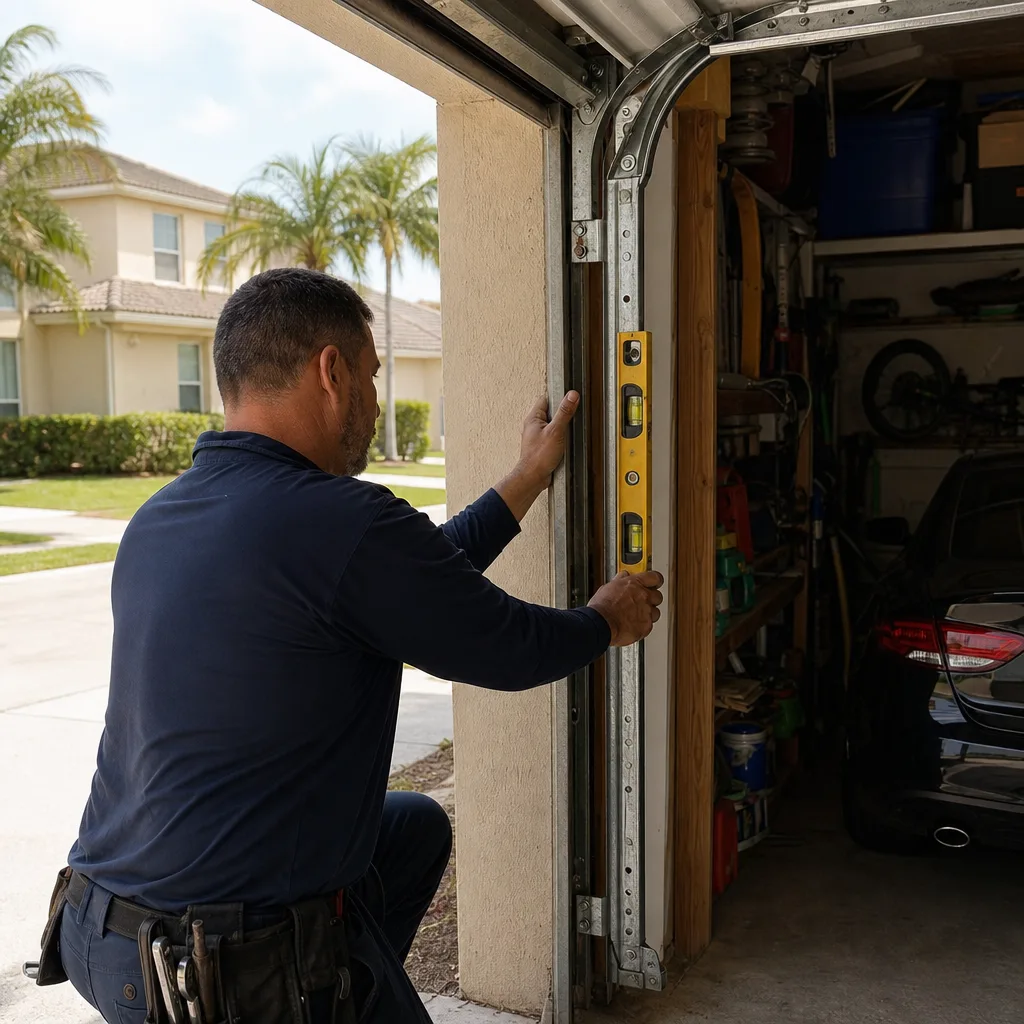
- The Two Seasons That Actually Matter in Pembroke Pines
- Pre-Hurricane Season Checklist (April-May)
- The 48-Hour Post-Storm Inspection: Six Components to Check
- Dry Season Maintenance (November-March): Lubrication and Seals
- Documenting Seasonal Inspections Before the Adjuster Asks
- Spring Tension: The One Adjustment You Don’t Touch
- What Seasonal Garage Door Care Costs in Pembroke Pines
- Common Mistakes to Avoid
- When to Call a Professional
- Frequently Asked Questions
- The Bottom Line
BeforeAfterThe Two Seasons That Actually Matter in Pembroke Pines
Garage door maintenance guides written for a national audience talk about four seasons. In Pembroke Pines, that’s noise. A homeowner in Chapel Trail or Silver Lakes isn’t prepping a door for snow load or de-icing a keypad. The two seasons that affect a garage door in this city are hurricane season and dry season. They stress different components, they demand different maintenance responses, and conflating the two is why so many doors fail at the worst possible moment.
Hurricane season (June 1 through November 30) is a wind-load event. When sustained winds push against a two-car garage door, that door becomes the largest structural opening in the house. A 16-by-7-foot door is roughly 112 square feet of surface area. At 90 mph, the pressure against that surface is measured in thousands of pounds. The door doesn’t fail because the panels are weak. It fails because a hinge pin has corroded, a roller has worn into an oval, or a cable has frayed enough to snap under cyclic loading. The maintenance response before hurricane season is inspection: hardware torque, cable condition, spring balance, and the emergency disconnect path.
Dry season (November through March) is a material degradation event. Relative humidity in western Pembroke Pines developments can sit near the low end for weeks. Lubricants evaporate. Nylon rollers dry out. Rubber bottom seals lose their plasticizer and crack along the fold line where the door meets the concrete. The maintenance response during dry season is relubrication and seal replacement. Same door, different failure mode, different fix.
If you only do one thing from this guide, make it the pre-hurricane inspection, done before June 1. The June 1 hurricane season start date is also the deadline by which a Pembroke Pines garage door’s wind-load hardware should have already been inspected, not scheduled, because a storm doesn’t wait for an appointment. After that, the post-storm check and the dry-season lubrication schedule carry you through the year.
Pre-Hurricane Season Checklist (April-May)
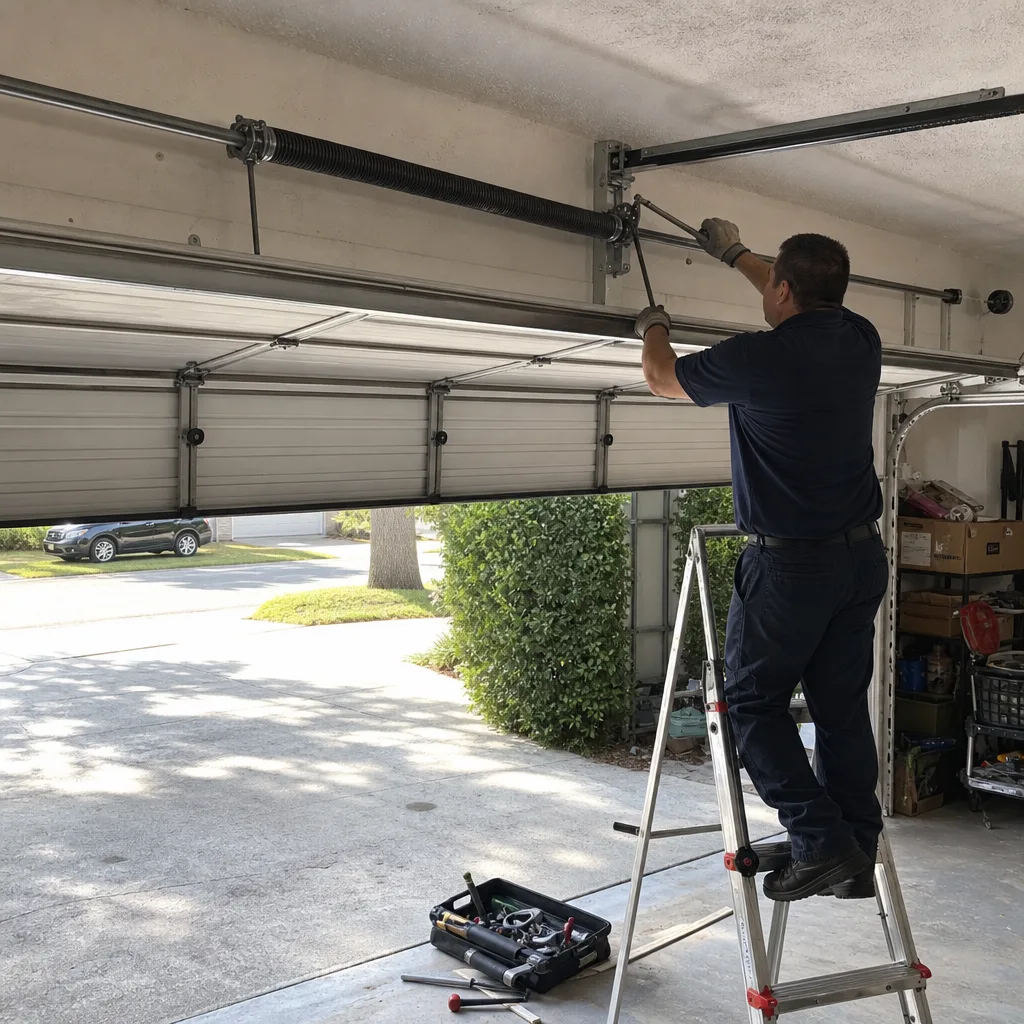
The goal of the pre-hurricane check is simple: find the component that will fail under wind load before the wind shows up. In Pembroke Pines, we recommend completing this inspection by mid-May. That leaves two weeks to order parts and book a technician before the June 1 window closes.
What to check, in order of consequence if it fails:
- Extension spring safety cables. If your door uses extension springs (the long springs that stretch along the horizontal tracks), the safety cable that runs through the center of each spring should be taut and rust-free. This cable exists to catch the spring if it snaps. A missing or rusted safety cable turns a spring break into a projectile event.
- Rollers. Inspect all rollers where they ride in the track. Steel rollers develop flat spots. Nylon rollers crack. A worn roller binds under side-load and transfers stress to the hinges. Look for visible wear on the roller stem where it enters the hinge barrel.
- Hinge torque points. Every hinge on a sectional door has bolts and rivets. On doors with steel hinges, bolts loosen over thousands of cycles. Using a socket wrench, check that each hinge bolt is snug. If a hinge has play, that play is multiplied across the panel joint under wind pressure.
- Lift cables. The cables that run along each side of the door should have no visible fraying, no kinks, and no rust-colored staining at the bottom bracket. A cable that has lost individual strands is a cable that fails under dynamic load. This is a visual inspection only. Do not touch a cable under tension.
- Bottom seal condition. The vinyl or rubber seal along the bottom edge degrades fastest at the corners where the door closes against the track. Inspect along the entire length with the door closed. A torn seal is a water and debris entry point during a storm, and on homes in west Pembroke Pines, it’s also a fine-dust entry point year-round.
- Emergency disconnect test. With the door closed, pull the red emergency release cord. You should be able to lift the door manually with reasonable effort. A door that’s too heavy to lift manually indicates a spring problem and should be checked by a technician before the season starts.
If you want to check spring balance yourself, disconnect the opener (leave the door closed), pull the release cord, and lift the door to about waist height. Release it. A balanced door stays roughly in place. A door that drops is undersprung. A door that rises is oversprung. Either condition means the opener is working harder than designed, which shortens its life and increases the risk of a spring or cable failure during the season.
For homeowners who want a documented pre-season inspection, we write a flat price and a written scope before any work starts, and we leave a photo record of what we found. That record matters more than most people realize, which we’ll get to in the documentation section below.
The 48-Hour Post-Storm Inspection: Six Components to Check
After a named storm passes, most homeowners do a quick visual sweep: any dents in the panels? Any water on the floor? That’s a start, but it misses what actually fails. What fails on a garage door after wind-cycling isn’t always visible from the driveway. The components that absorb wind-cycle stress fatigue in ways that show up days or weeks later.
Within 48 hours after a named storm passes over Pembroke Pines, check these six components:
- Track alignment. Wind pressure pushes the door against the track and can bow a vertical track inward by an eighth of an inch. Run the door up and down and listen for a change in noise or a hitch in the travel. A track that’s out of true will wear rollers unevenly and can bind the door mid-cycle.
- Springs, both sides. Torsion springs sit on a shaft above the door. Each spring should show an even coil gap. If one spring has a visible gap or has shifted on the shaft, the door is loading unevenly. Don’t touch a spring that looks off. A torsion spring on a 16-foot door carries enough stored energy to cause serious injury.
- Lift cable seating. With the door open, look at how the cables wrap onto the drums at each end of the spring shaft. A cable that jumped a groove or wrapped unevenly will affect balance and can snap during the next cycle.
- Bottom seal integrity. Water intrusion during the storm can push the seal out of its retainer channel. A seal that’s dislodged does nothing. Check that the seal is fully seated along the entire bottom edge.
- Hinge pin wear. Open the door to shoulder height and examine the hinges at each panel joint. Hinge pins that have shifted or show scoring indicate the panels moved under load. This condition worsens with every cycle and should be replaced before the next storm.
- Opener carriage and limit function. Run the door through a full open and close cycle and watch the carriage travel. If the door reverses before fully opening, or stops short and reverses on close, the limits or force settings may have been knocked out of calibration by power flickers during the storm.
If any of these six checks turns up something you can’t identify or don’t want to adjust, a professional inspection is the move. At Servo Garage Doors Pembroke Pines, the inspection is flat-priced up front, and you get a documented photo record of exactly what was found before anyone quotes a repair. Clause 4 of The Haven Standard is why our technician photographs the failed part before quoting a replacement, and you get a copy of that record whether or not you proceed with the work.
Dry Season Maintenance (November-March): Lubrication and Seals
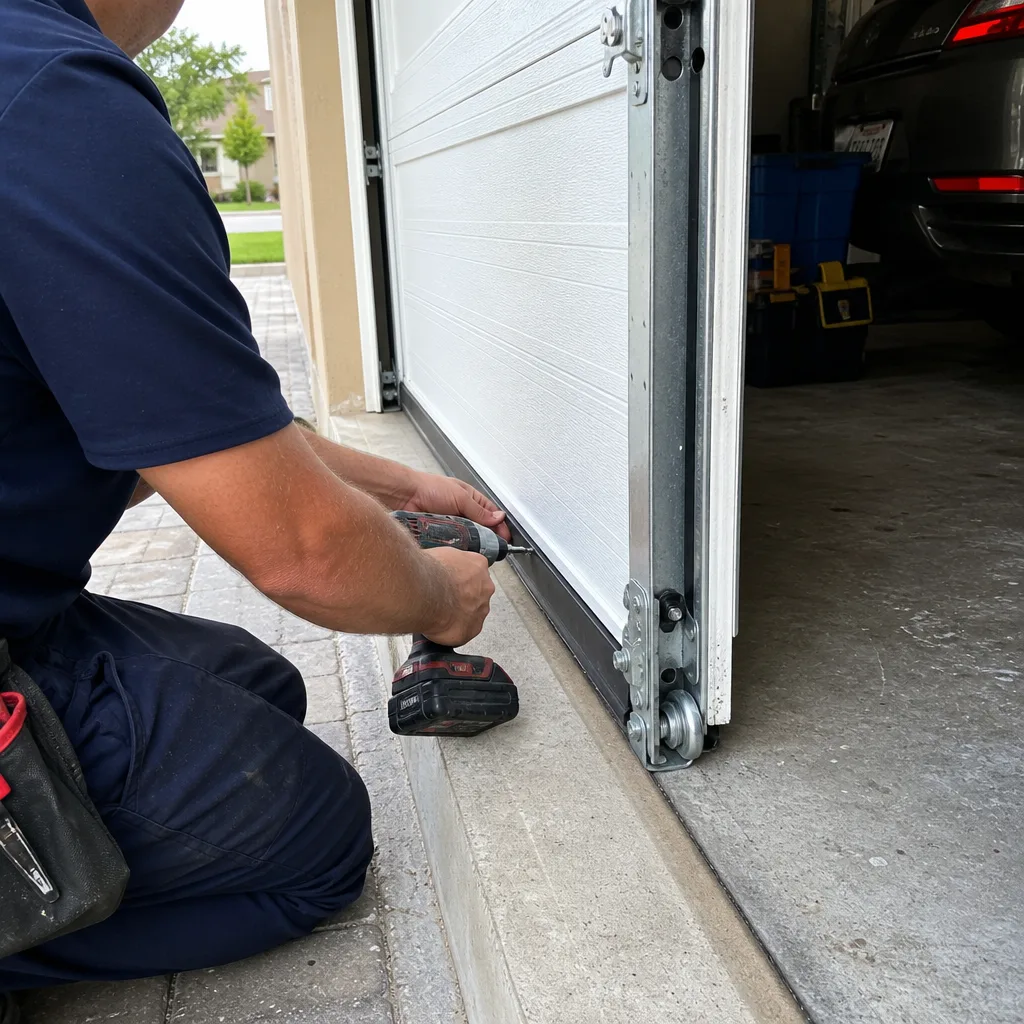
Dry season in Pembroke Pines runs roughly November through March, when dew points drop and the air holds less moisture. For a garage door, this is a slow desiccation event. The maintenance response is relubrication of the metal-to-metal contact points and replacement of seals that have lost flexibility.
What to Lubricate, and With What
In the low-humidity, high-heat conditions common in western Pembroke Pines developments, product selection matters more than the lubrication schedule itself. What doesn’t hold up: WD-40. It’s a solvent, not a lubricant, and it evaporates within days in this climate, leaving metal dry. Also problematic: heavy greases that attract and hold the fine limestone dust common in newer developments where construction adjacent to residential lots means airborne particulate matter. That dust turns grease into grinding paste.
What works in both the heat and the dust:
- White lithium grease or a dedicated garage door spray lubricant for the torsion spring coil faces. The goal is to coat the spring surface so coils don’t grind against each other.
- Silicone spray for rollers, hinges, and the lock mechanism. Silicone doesn’t attract dust and holds up at the 90-degree-plus surface temperatures a closed garage door reaches in direct afternoon sun.
- Powdered graphite for the lock cylinder, never oil. Oil in a lock attracts dust and gums the tumblers within a season.
What to Replace
The bottom seal is the first casualty of dry season. In Pembroke Pines, a vinyl bottom seal exposed to hot concrete and low humidity typically loses flexibility after two to three years. Inspect it by running your hand along the seal with the door closed. A healthy seal is pliable and returns to shape when pressed. A failing seal is stiff, shows surface cracks, or has tears where it folds against the track.
The second dry-season replacement item is weatherstripping around the frame. The PVC trim around the top and sides shrinks in dry conditions, pulling away from the jamb and leaving gaps. Those gaps let in hot air and dust during dry season and driven rain during storm season, so fixing them in dry season serves both windows.
For doors with nylon rollers, inspect the roller bearings during dry season. A roller that spins freely is fine. One that hesitates or feels gritty has dried-out bearing grease. Replacement rollers with sealed bearings last longer in this climate than unsealed units.
Documenting Seasonal Inspections Before the Adjuster Asks
Here’s a scenario that plays out regularly in Pembroke Pines after a storm: a homeowner files a claim for garage door damage. The adjuster reviews the claim and asks whether the door was maintained before the event. The homeowner says yes, of course. The adjuster asks for records.
Most homeowners have nothing. And when a claim involves a mechanical component, the absence of a maintenance record can be used to argue that the failure was pre-existing wear and tear, not storm damage. The single best defense is a dated, documented inspection record that exists before the claim.
What a useful seasonal maintenance record includes:
- The date of the inspection
- What was checked, component by component
- The condition of each component at the time of inspection
- What was lubricated, adjusted, or replaced
- Photos of any component showing wear
- Photos of completed work after any replacement
If you’re doing your own seasonal checks, a notebook or a phone camera roll works. Photograph the springs, cables, hinges, and bottom seal twice a year. If a claim ever comes up, those dated photos are evidence of maintenance.
If a professional does the work, ask what documentation they provide before you book. This matters. A company that doesn’t provide a written scope, a dated record, and photos of findings leaves you with nothing to show an adjuster. At Servo Garage Doors Pembroke Pines, the documented photo record is included on every visit, not optional. It traces back to the founding rule that the customer sees the failed part before anyone quotes a replacement. When we leave a job, you have a written price, a written scope, and a dated photo record of what was found and what was done.
That paper trail is also the basis of our Free Second Opinion. If another company has given you a written estimate, bring the paperwork. We’ll assess the same components and tell you what we find. No coupon, no code, no games.
Spring Tension: The One Adjustment You Don’t Touch
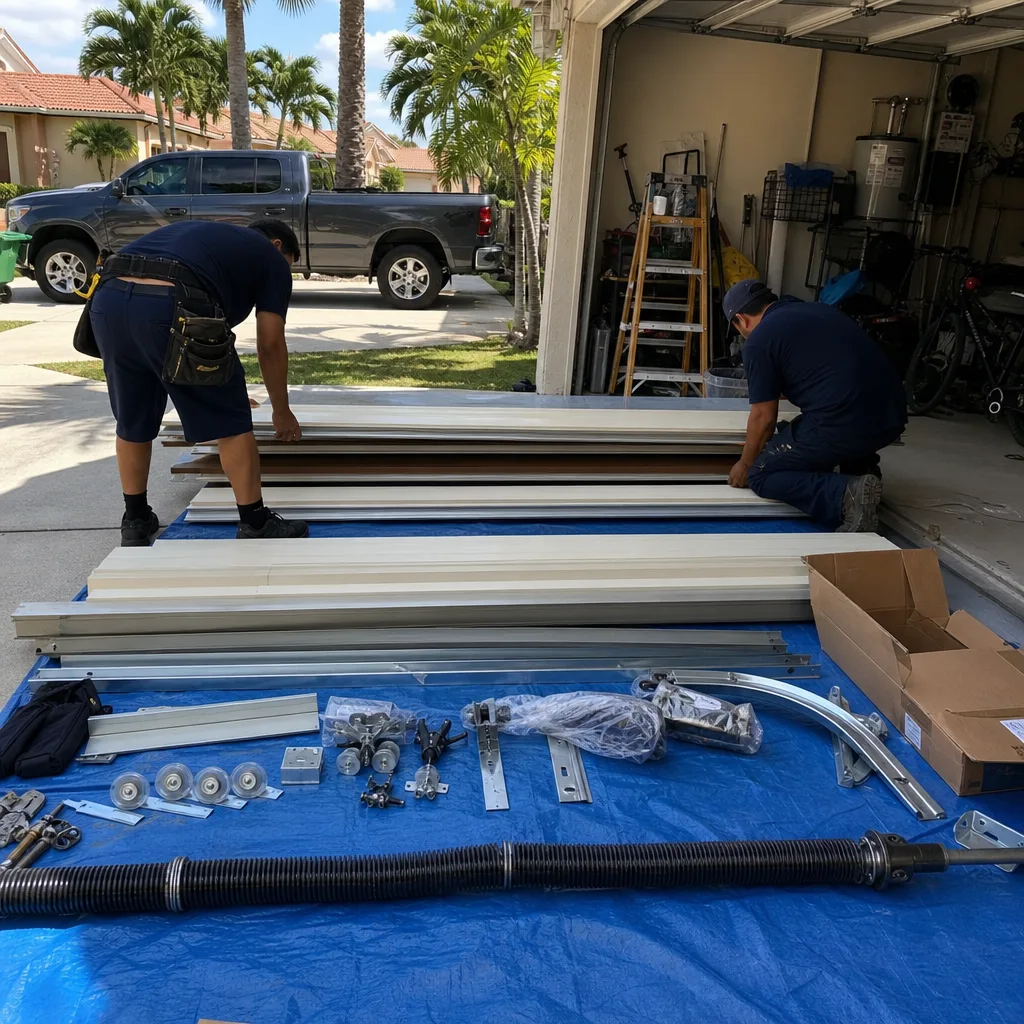
Every seasonal guide to garage door care eventually arrives at the same fork in the road: what can the homeowner safely do, and what should they leave to a technician? Our DIY vs Professional Garage Door: The Pembroke Pines Homeowner’s Decision Guide explores this in full. Most of what we’ve covered so far, inspections and lubrication and seal replacement, is within reach of a competent homeowner. Spring tension adjustment is not.
A torsion spring on a typical two-car garage door stores enough energy, when fully wound, to lift roughly 300 pounds. When that spring breaks, it unwinds in milliseconds. The winding bars used to adjust or remove these springs are not a substitute for training; they’re the tool the training is built around. Attempting to adjust a torsion spring without the correct winding bars is the most common cause of serious injury in DIY garage door work, and the injuries we’re describing are the kind that end a person’s ability to use a hand.
Even the assessment of whether spring tension needs adjustment is the kind of thing best left to a technician for one simple reason: the spring can look fine and still be wrong. An undersprung door puts strain on the opener’s head unit and the lift cables. An oversprung door doesn’t seem like a problem until it bounces at the top of the travel or, worse, until the cables go slack and come off the drums, which is a failure that happens without warning.
Our technicians use a winding bar, not a substitute tool, and the torque is set to manufacturer spec for the door’s weight and height. The spring evaluation is part of a seasonal inspection, and the inspection is flat-priced before any work starts. What a homeowner should do is this: once a year, ideally during the pre-hurricane window, have a technician check spring balance and wire diameter. A spring that measures at 0.25-inch wire diameter and shows evidence of cycling fatigue is a replacement candidate with a written price, a written scope, and a photo record before anyone picks up a wrench.
What Seasonal Garage Door Care Costs in Pembroke Pines
Seasonal maintenance prices in Pembroke Pines run from free to a few hundred dollars, depending on how much of the work you do yourself and what needs replacing; see our Garage Door Cost Breakdown: The Pembroke Pines Homeowner’s Reference for 2026 for detailed numbers. Here’s the range based on what we see in the market:
| Service | Typical Cost Range | Frequency |
|---|---|---|
| DIY seasonal inspection and lubrication | $15 to $40 for supplies (lubricant, rag) | Twice per year |
| Professional seasonal inspection and tune-up | $90 to $130 | Once per year |
| Bottom seal replacement (parts and labor) | $85 to $160 | Every 2 to 3 years in dry season |
| Roller replacement (set of 10 to 12 rollers) | $120 to $230 | Every 5 to 7 years, or as wear dictates |
| Torsion spring replacement (pair, parts and labor) | $180 to $340 | Every 8 to 12 years, or as measured wear dictates |
| Weatherstripping replacement (top and sides) | $75 to $150 | Every 3 to 5 years |
These are flat ranges, not “starting at” numbers. What you see on a written quote from us is the price you pay. Clause 1 of The Haven Standard is the written price and written scope delivered before any work starts. There’s no “well, it turned out to be more work than we thought” moment. The price on the page is the price on the invoice.
For a full seasonal inspection, which is the best starting point if you haven’t done one in a few years, a professional tune-up is the move. It’s the same work we do on thousands of doors throughout Pembroke Pines, from older sections like Pembroke Falls to the newer developments further west, and the inspection report becomes your maintenance record.
Common Mistakes to Avoid
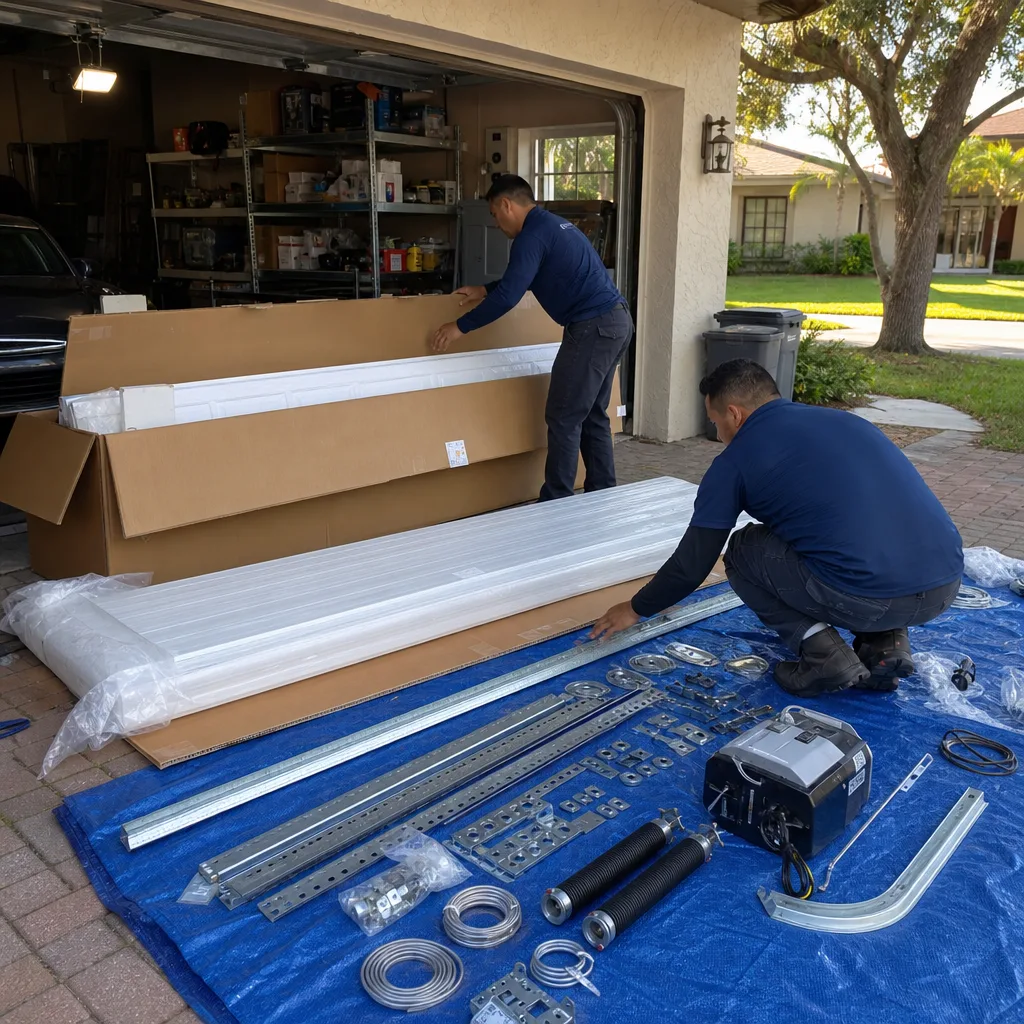
- Lubricating everything with WD-40. WD-40 is a solvent and a moisture displacer. It is not a garage door lubricant. It strips whatever lubrication is there and evaporates in a Pembroke Pines dry-season week. Use a lithium grease or silicone spray instead.
- Checking the springs by touching them. Looking at a spring is fine. Touching it under tension is not. A torsion spring under load can move in a way that’s not visible from the outside. If a spring looks off, a technician with a winding bar is the only safe next step.
- Waiting until June 1 to book. Every year, the first week of June produces a backlog of inspection requests in Pembroke Pines. The pre-hurricane window in April and May exists for a reason. Book it like you’d book a dental cleaning: in advance, not in an emergency.
- Ignoring the emergency disconnect. The red cord that disengages the opener exists so you can open the door manually when the power is out. If you’ve never tested it, you don’t know whether it works. Test it twice a year, ideally during each seasonal service window.
- Replacing one spring on a two-spring door. Torsion springs wear as a pair. If one has broken, the other is at end of life. Replacing only the broken spring creates an unbalanced door and a second repair within a year. Replacing the pair costs more up front and less over the life of the door.
- Skipping the photo record. A seasonal inspection with no photos is a memory. A seasonal inspection with dated photos is a maintenance record. In a city where wind claims are a fact of life, the difference matters.
- Using oil-based lubricant on bearings in dry season. Oil-based products thin out in the surface heat of a closed garage door and attract the limestone dust that’s common in western Pembroke Pines developments. Silicone spray or a dry-film lubricant is the better choice for roller bearings and hinges.
When to Call a Professional
Seasonal maintenance is doable for most homeowners, but some situations call for a trained eye and a torque wrench. Call a professional if a spring measures visibly different from its pair, if a cable shows fraying or displacement, if the door doesn’t hold its position when manually lifted to waist height, or if you hear a change in noise that you can’t trace to a specific component. A torsion spring replacement or tension adjustment is never a DIY job. Neither is any work that requires adjusting the spring shaft or the drums.
Servo Garage Doors Pembroke Pines offers free estimates in Pembroke Pines. Call (954) 280-1425. We write the price before any work starts, and the documented photo record is part of the visit. If you have a written estimate from another company, bring it in for a Free Second Opinion.
For more on what a repair visit looks like, start with Garage Door Repair in Pembroke Pines. If the door itself is beyond seasonal maintenance, Garage Door Installation in Pembroke Pines covers what replacement involves. For opener issues that surface during seasonal checks, see Garage Door Opener Repair & Installation in Pembroke Pines. Or return to the Servo Garage Doors Pembroke Pines home page for an overview of how we work.
Frequently Asked Questions
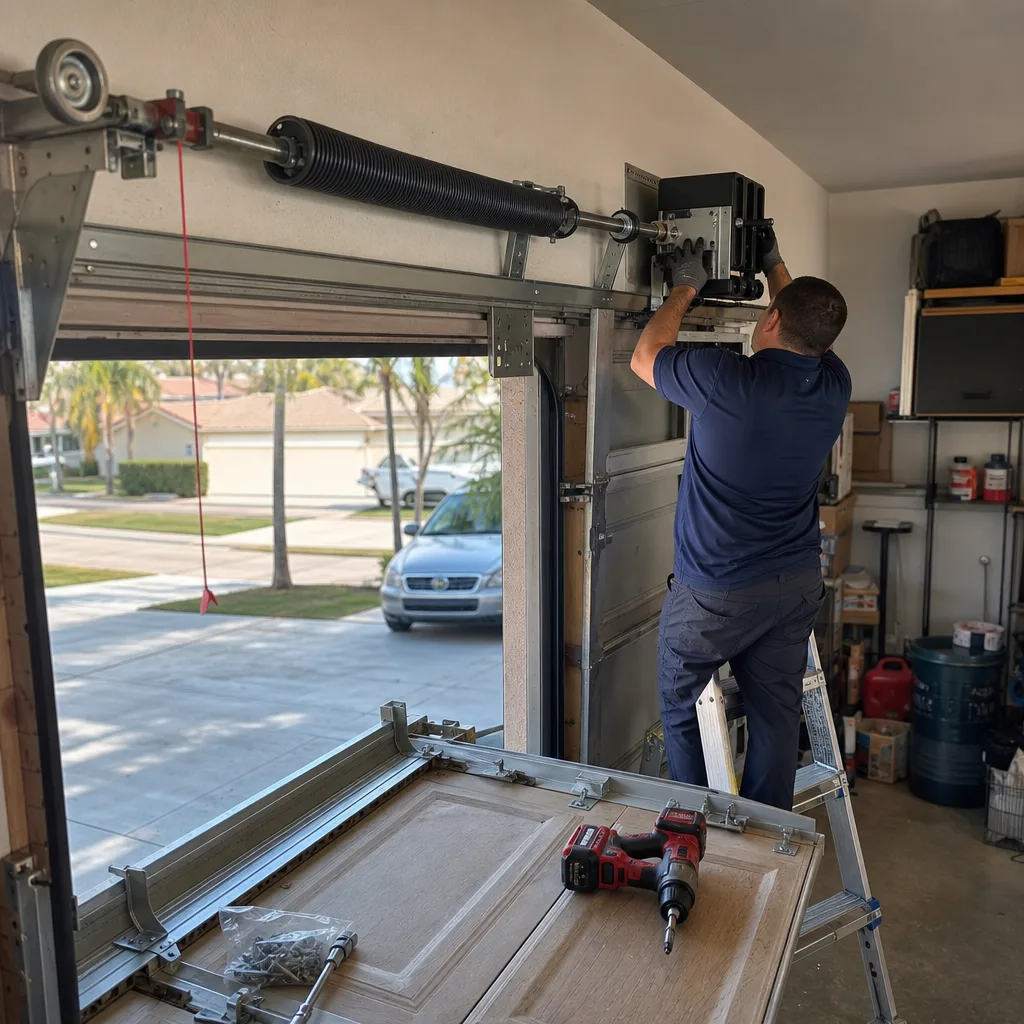
Twice per year is the right cadence for Pembroke Pines: once in the April-to-May window before hurricane season begins, and once during dry season between November and March. The pre-hurricane visit focuses on wind-load hardware like tracks, hinges, cables, and springs. The dry-season visit focuses on lubrication and seal replacement. If you do the inspections yourself, schedule a professional tune-up once per year. Call (954) 280-1425 for a flat-priced seasonal inspection.
A professional seasonal inspection and tune-up in Pembroke Pines typically costs $90 to $130. That price covers inspection of all mechanical components, lubrication, adjustment of the opener’s limit settings, and a documented record of what was found. The price is written before any work starts. Any repair recommendation that comes from the inspection is quoted separately, in writing, before the work proceeds.
For most repairs, yes. We answer calls 24/7 with a live person, and we keep common failure parts on the truck: rollers, hinges, cables, springs for standard door sizes, and weatherstripping. If the repair is something we can’t complete same day, you’ll know before we leave, in writing, with a photo record of why. Call (954) 280-1425 and you’ll be speaking to a person, not a voicemail tree.
No. The quoted price is the price, flat. Clause 1 of The Haven Standard requires a written price and written scope before any work starts. If the scope of work needs to change for a reason we didn’t anticipate, the additional work is quoted and approved by you before any of it happens. There’s no surprise on the invoice.
Within 48 hours, check the six components that absorb wind-cycle stress: track alignment, both springs, lift cable seating, bottom seal integrity, hinge pins, and the opener’s travel limits. If any of those checks turns up a problem you can’t identify, a professional inspection is the next step. Don’t assume no visible panel damage means no damage. If you’re filing an insurance claim, a documented inspection record strengthens the claim.
Yes. Our trucks carry rollers, hinges, cables, bottom seals, weatherstripping, and torsion springs for standard residential door sizes. That’s why same-day service is possible for most repairs in Pembroke Pines. For non-standard doors or specialty hardware, the required part is ordered and scheduled with a written price before the work is booked. Call (954) 280-1425 for an exact quote. Estimates are free.
The Bottom Line
Seasonal garage door care in Pembroke Pines is a two-window proposition. April and May are for wind-load preparation: hardware torque, cable inspection, spring balance, and the emergency disconnect test. November through March are for material preservation: re-lubrication with products that survive 90-degree heat without attracting limestone dust, and replacement of seals that dry out in low humidity. The physical inspection itself takes under an hour, twice a year. The documentation of that inspection, whether it’s date-stamped photos on your phone or a written record from a professional visit, is what protects you when a storm passes and an adjuster asks whether the door was maintained. Most of this guide is within a homeowner’s reach. For more guides & resources, visit our blog. The spring tension check is the one seasonal task to hand to a technician with a winding bar and the training to use it. In a city where the door faces a different test every six months, the maintenance schedule doesn’t have to be complicated. It just has to exist.
Written by Marcus Deller, Owner at Servo Garage Doors Pembroke Pines, serving Pembroke Pines since 2015.