
Last updated September 20, 2026
Full 25-point door and opener safety check with every visit - springs, cables, rollers, tracks, and your LiftMaster or Chamberlain opener included
You get a price before we start. It does not change when the truck arrives.
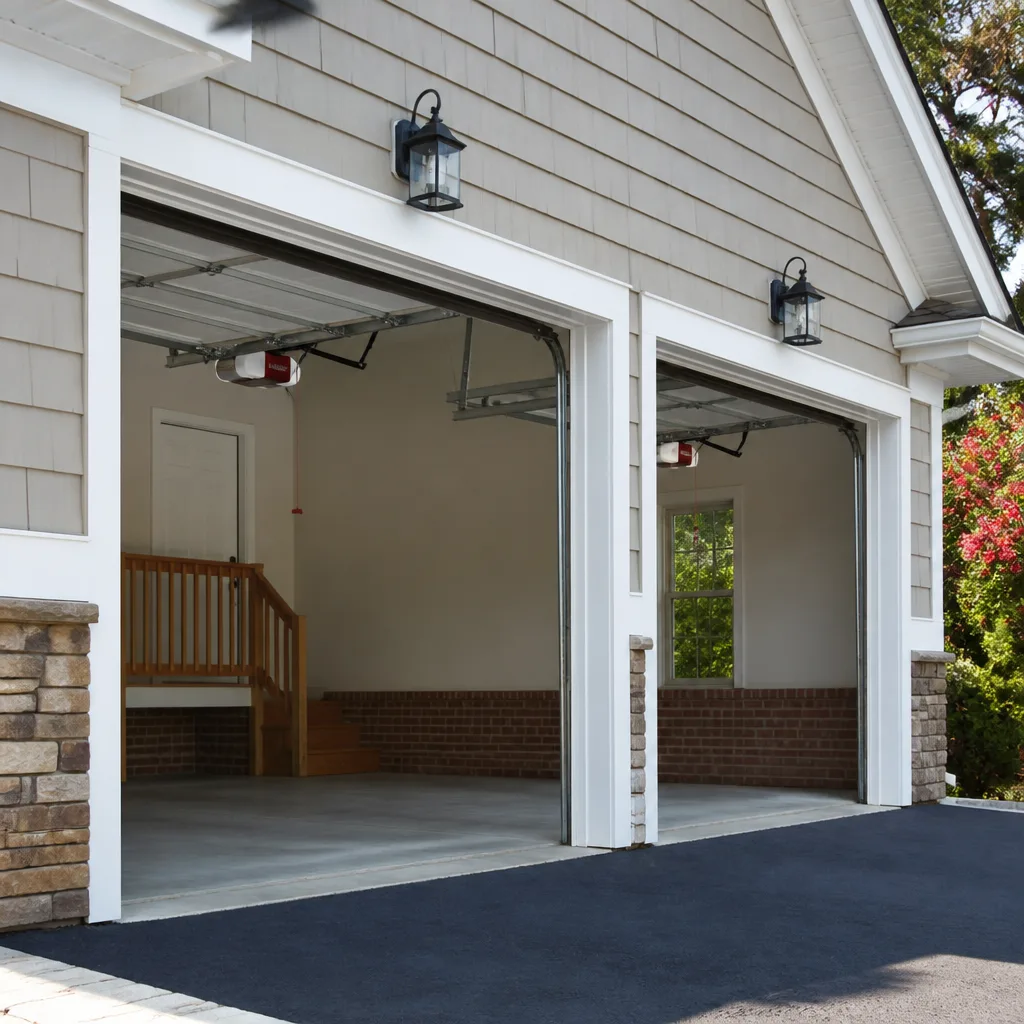
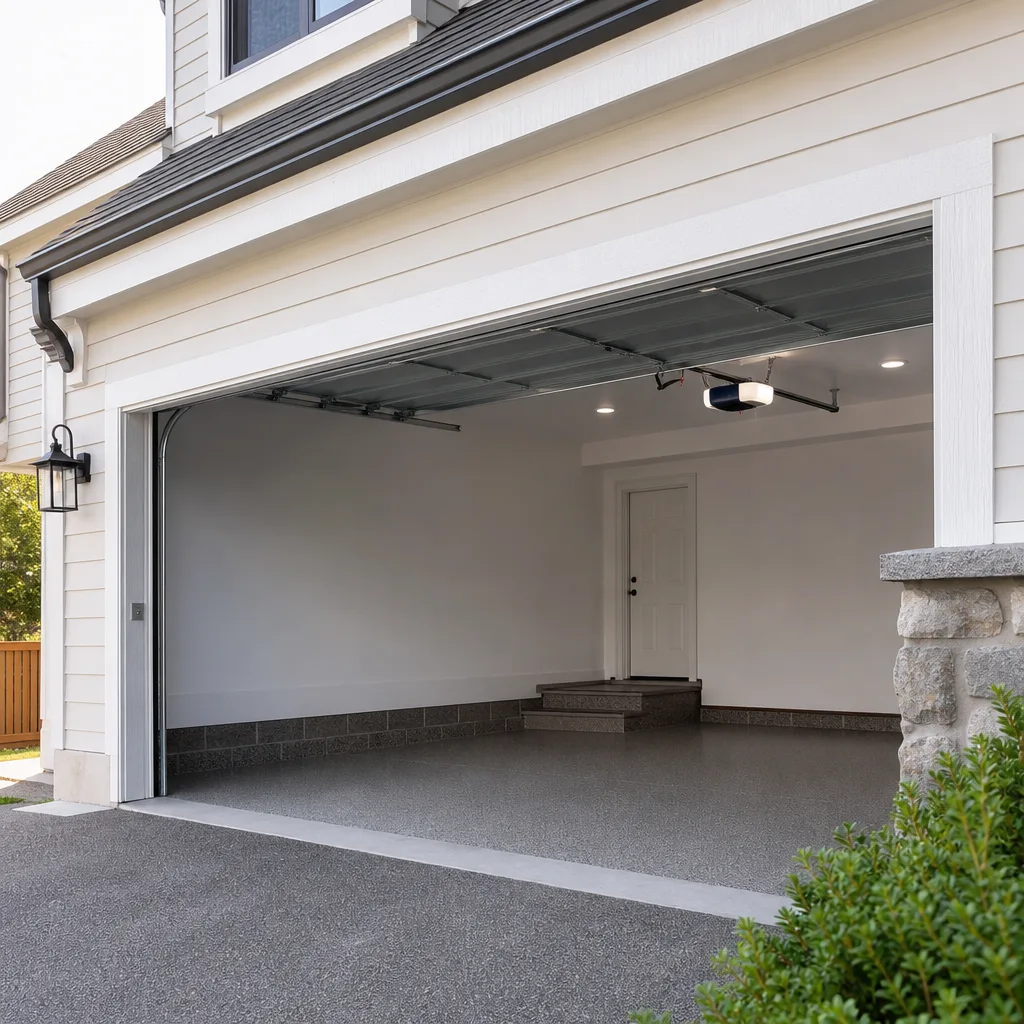
 Before
 After
After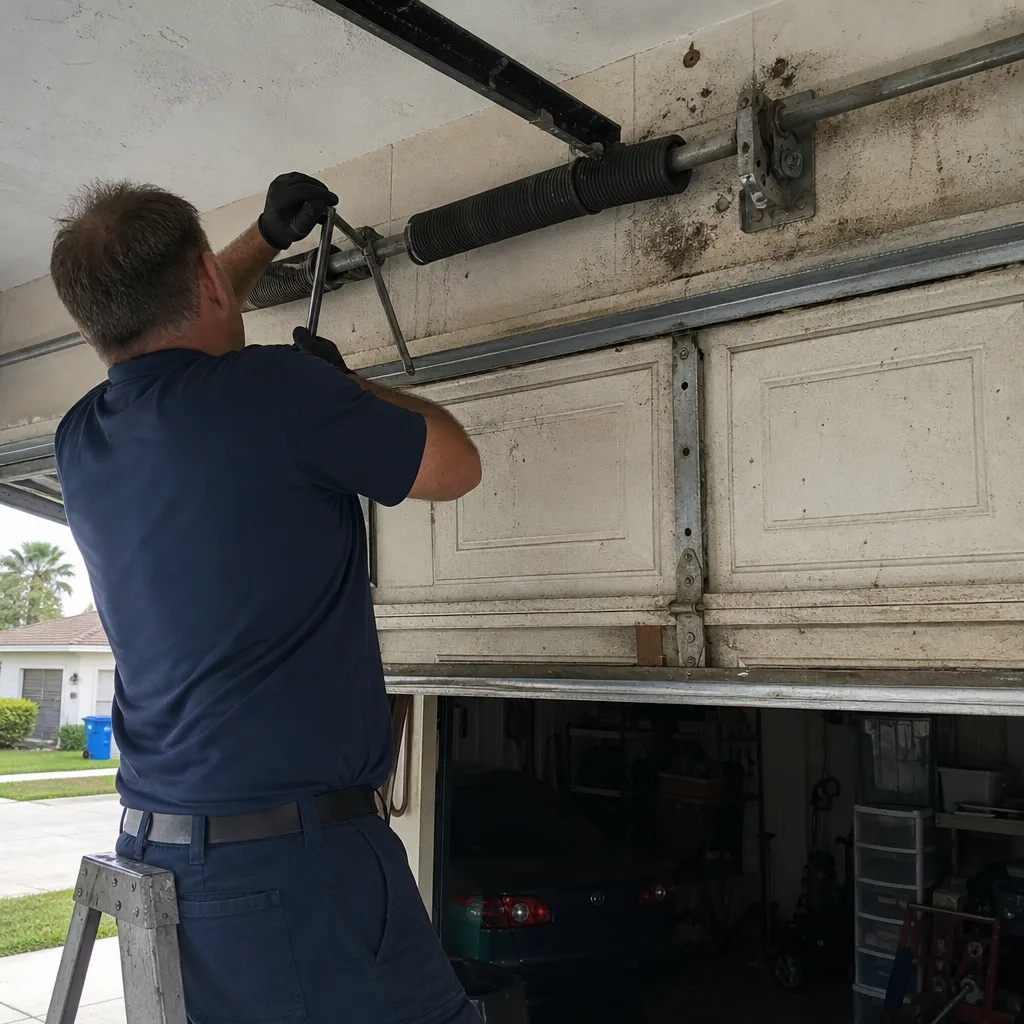 Before
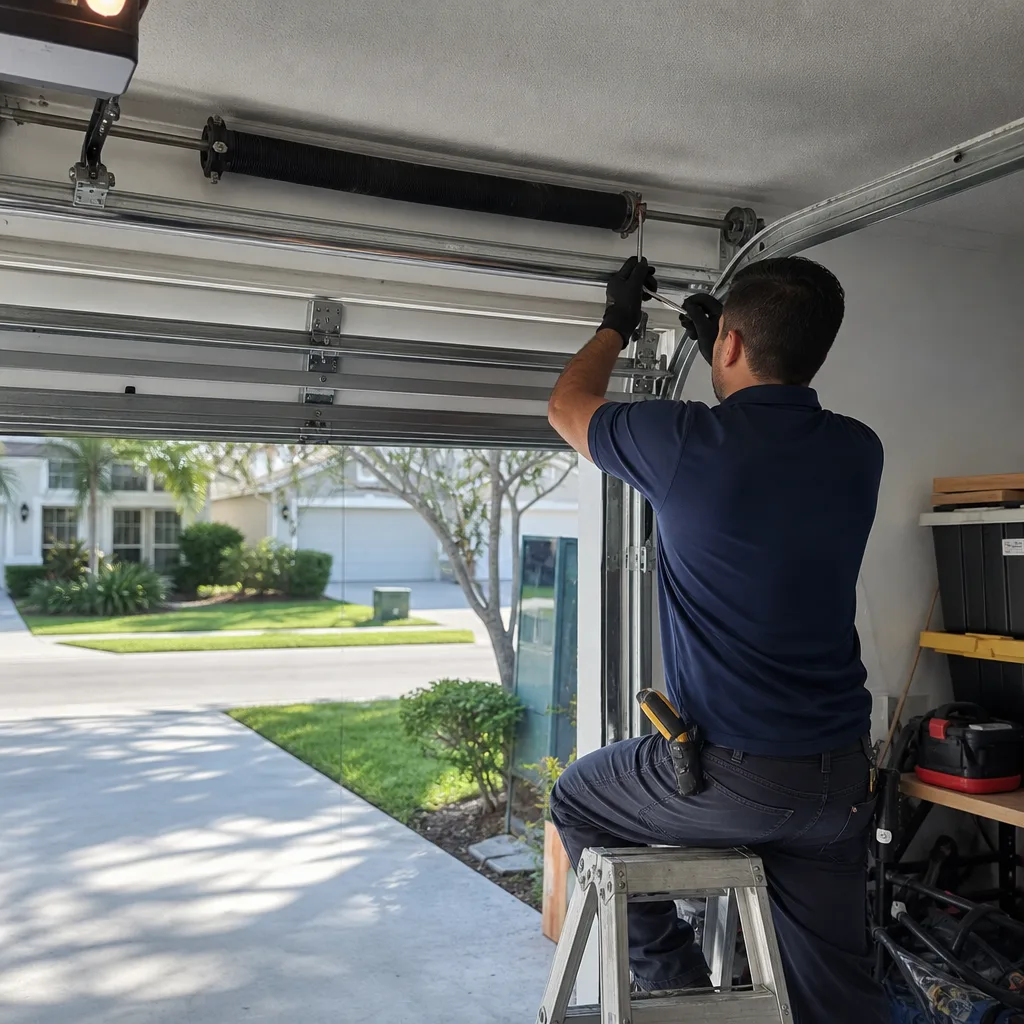 After
After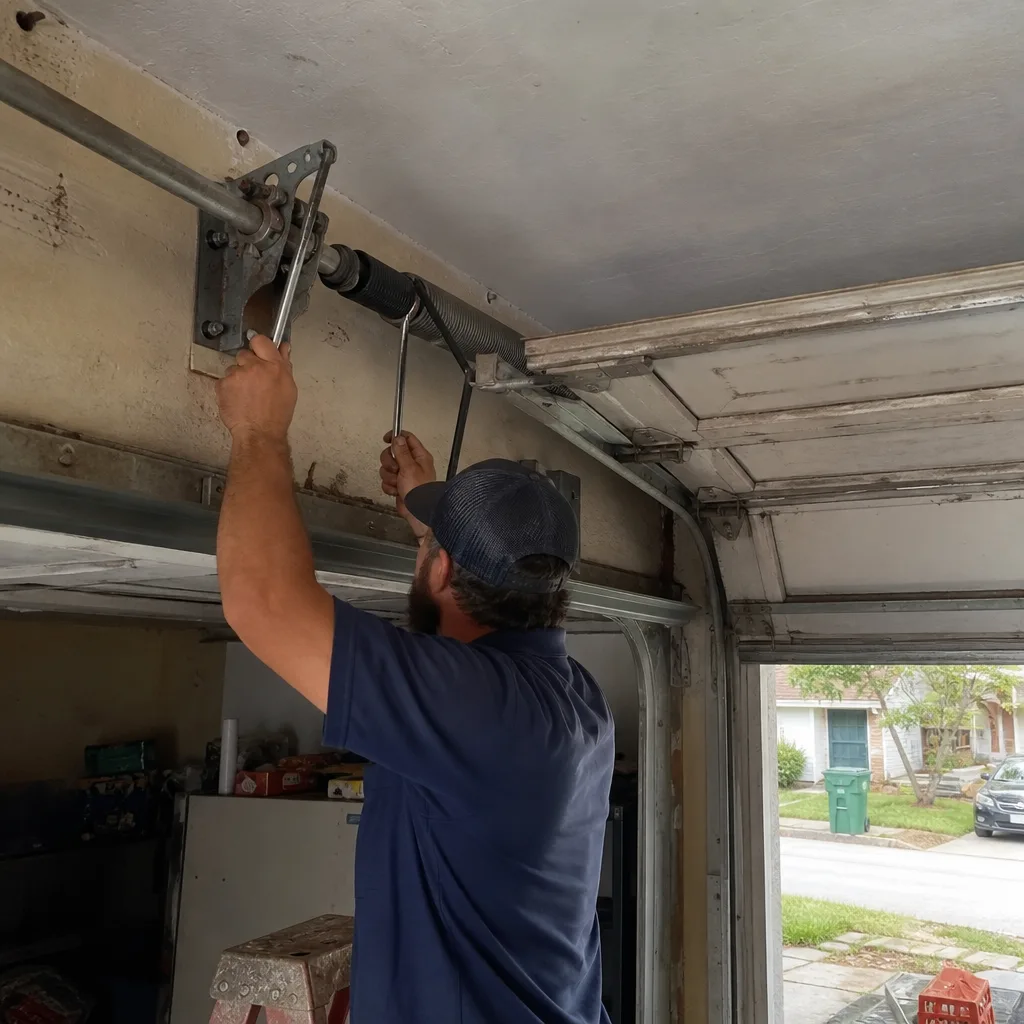 Before
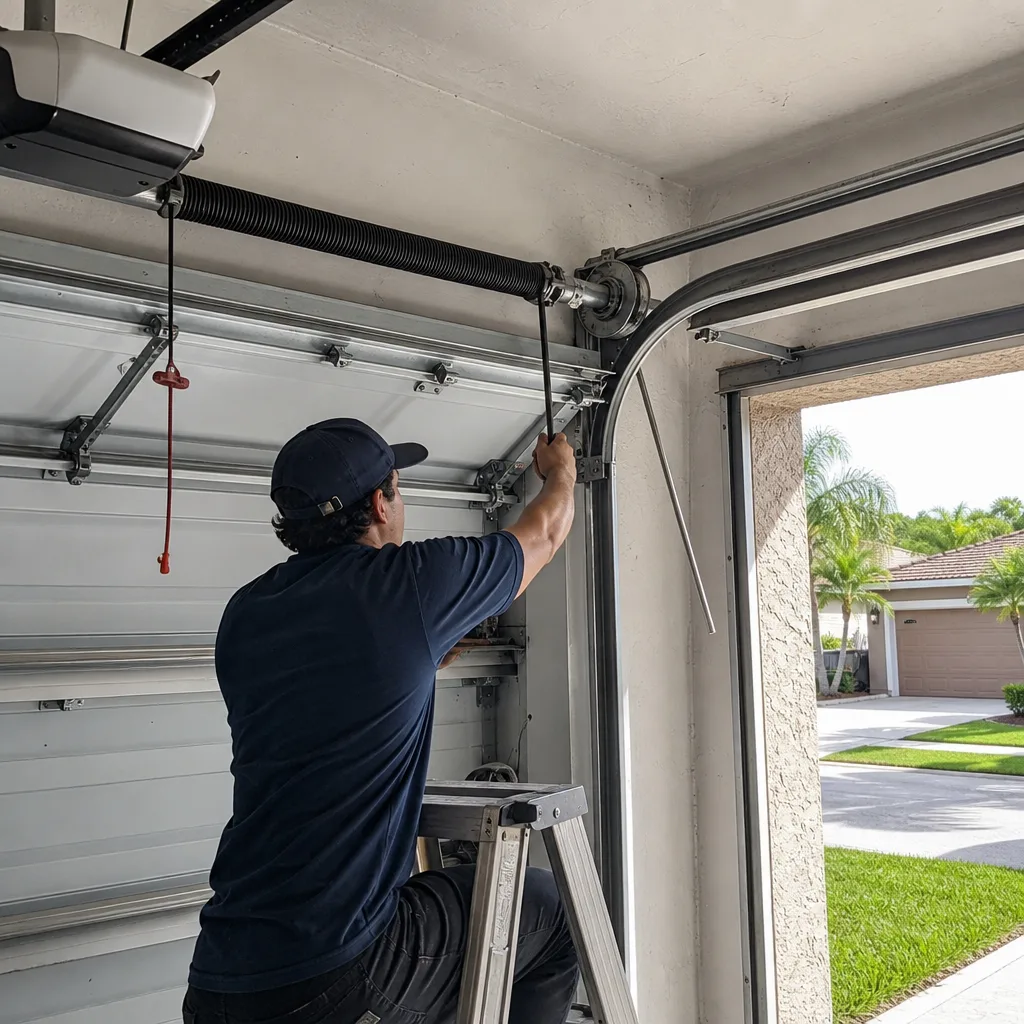 After
AfterDIY vs Professional Garage Door: The Pembroke Pines Homeowner’s Decision Guide
Torsion spring replacement sits under approximately 150 to 200 foot-pounds of stored torque. That is enough force to fracture a wrist or orbital bone if a winding bar slips mid-turn. Emergency room records in South Florida show garage door springs among the most common DIY injuries involving household hardware, and Pembroke Pines homeowners are not exempt from that statistic. This guide separates the tasks you can own safely from the ones Florida law and basic physics reserve for a licensed contractor. You will learn what triggers a permit, what voids a manufacturer warranty, what documented maintenance looks like, and where the real cost difference lies between doing it yourself and hiring a pro in Pembroke Pines.
Quick Answer
Most garage door maintenance tasks are safe for a prepared Pembroke Pines homeowner: lubrication, sensor alignment, limit switch adjustment, and weatherstripping replacement do not require a license and rarely void anything. But torsion spring replacement, cable re-spooling, track repair, and full door replacement sit outside the homeowner exemption in Florida Statute 489 when done for compensation, and several are dangerous enough that no warranty covers the aftermath of a DIY failure. The practical line is this: if the task involves stored mechanical energy, load-bearing cables, or a permit, hire a licensed garage door contractor. If it involves wear parts and adjustments, do it yourself with documentation.
Table of Contents
- What Florida Law Actually Says About DIY Garage Door Work
- The Binary Task List: Safe DIY vs. Call a Contractor
- Why Torsion Springs Are the Line You Do Not Cross
- Warranty Clauses That Trigger on DIY Work
- How to Document DIY Maintenance So It Does Not Read as Unpermitted Work
- The Real Cost Comparison: DIY Plus Rework vs. Contractor With Warranty
- What the Pembroke Pines Climate Does to Garage Door Hardware
- How to Hire a Contractor in Pembroke Pines Without Getting Burned
BeforeAfterWhat Florida Law Actually Says About DIY Garage Door Work
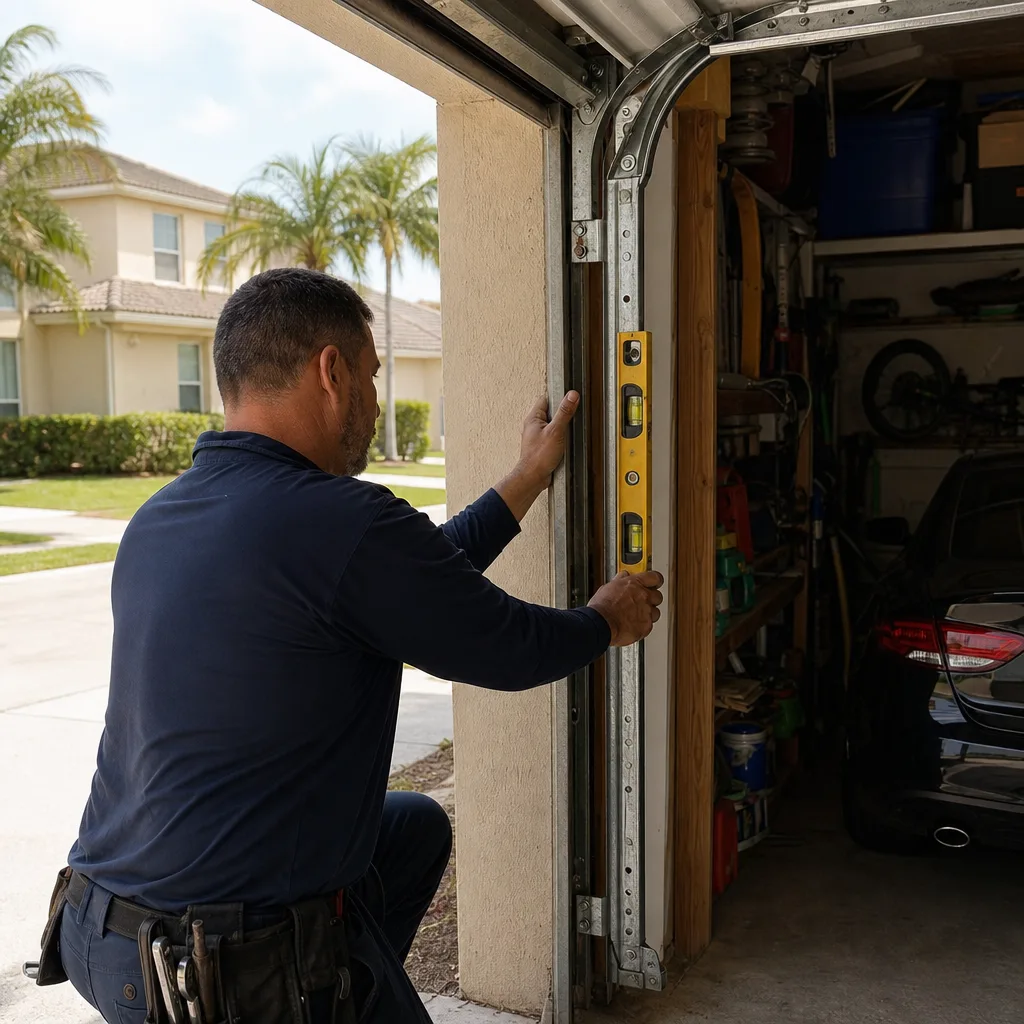
Florida Statute 489 defines contracting as work performed for compensation that requires a license. The homeowner exemption in Section 489.103 allows a property owner to act as their own contractor on their own residence, as long as the work is not performed for sale, lease, or rent within one year. That exemption is what makes DIY garage door repair legal in Pembroke Pines when you own the home and do the work yourself.
But the exemption has a hard boundary, and it is not where most homeowners think it is. The moment you hire an unlicensed person to do any garage door work that requires a contractor license, you are no longer protected by the homeowner exemption. That person is performing contracting work for compensation without a license, which is a first-degree misdemeanor in Florida. This is why Pembroke Pines code enforcement responds to unlicensed contractor complaints differently than to a homeowner replacing their own weatherstripping.
What qualifies as contractor-level garage door work in Florida:
- Torsion spring replacement: This is not a grey area. The state classifies it as contractor work because of the injury risk and the calibration involved.
- Cable replacement and re-spooling: Cables carry door weight under tension. A cable failure during DIY replacement drops the full door weight, and fire-rated doors exceed 400 pounds.
- Track modification or replacement: Track geometry controls door balance and safety reversal. Getting it wrong creates a pinch hazard and a code violation.
- Full door replacement: Pembroke Pines requires a permit for structural door replacement, and the Florida Building Code governs wind-load ratings for garage doors. A homeowner can pull their own permit, but the install must still pass inspection.
The practical reading: the homeowner exemption protects you when you maintain your own door. It does not protect someone you pay who lacks a license. It also does not protect you from liability if a DIY modification fails and injures someone on your property. Marcus Deller has seen the aftermath in Pembroke Pines: a homeowner who re-spooled a cable without a tension check, then had the door drop on a car. Insurance covered nothing because the work was unpermitted and unlicensed.
The Binary Task List: Safe DIY vs. Call a Contractor
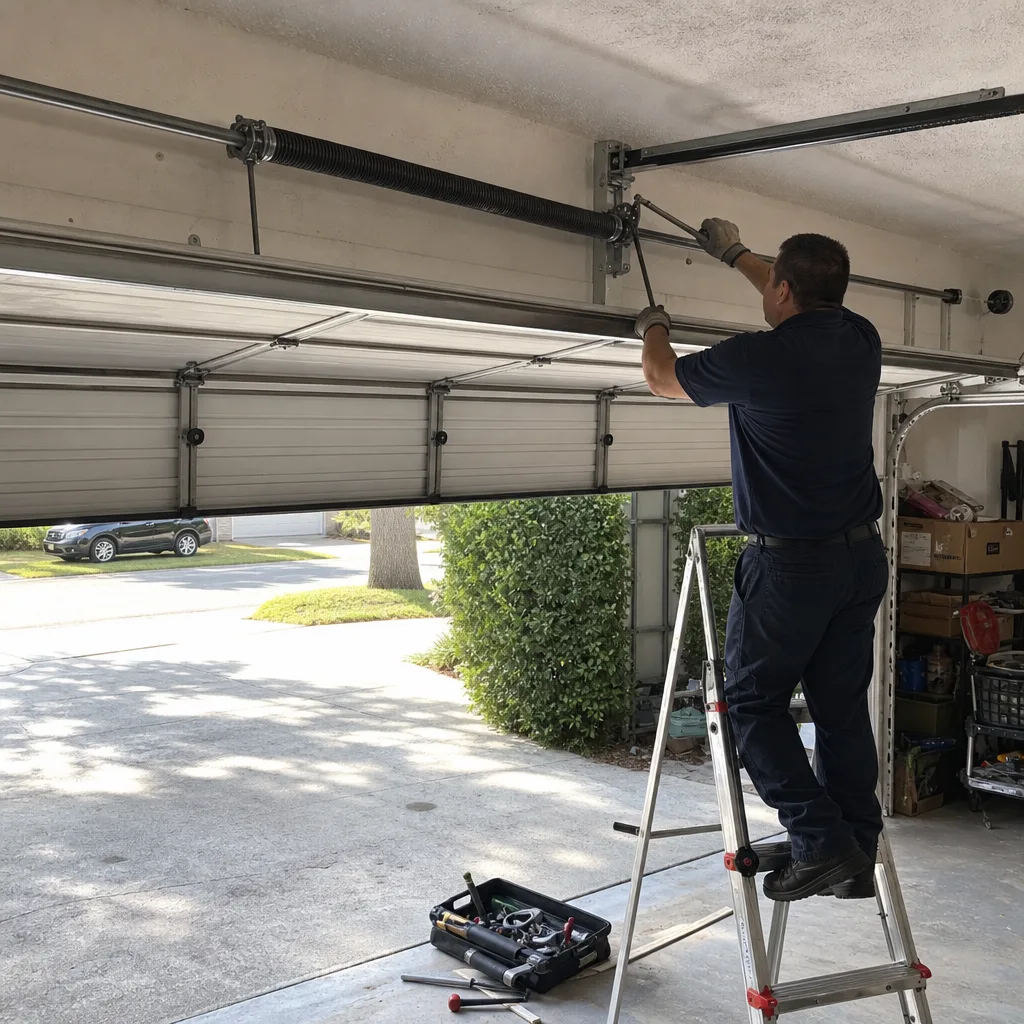
This list removes the ambiguity. If a task appears in the left column, you can do it this weekend with basic tools. If it appears in the right column, the risk profile changes entirely.
Safe, Legal, and Warranty-Neutral DIY Tasks
- Lubrication of rollers, hinges, and springs: Use a lithium-based garage door lubricant, not WD-40. Apply to the roller bearings, hinge pins, and along the spring coils. This is the single highest-value maintenance task in Pembroke Pines, where salt-laden humidity accelerates corrosion.
- Photo eye sensor alignment: If the door reverses or refuses to close, check that the sensors on each track face each other and the indicator lights are solid. Loosen the wing nut, adjust, tighten. No tools beyond your hands.
- Limit switch adjustment: On a LiftMaster or Chamberlain opener, the limit screws control how far the door travels. A quarter turn fixes a door that stops two inches short of the floor. Follow the opener manual exactly.
- Weatherstripping replacement: The rubber seal on the bottom of the door degrades in the South Florida sun within three to five years. Replacement costs under $40 and takes 20 minutes. This is the most common DIY task we see done correctly in Pembroke Pines.
- Faceplate and remote programming: Reprogramming remotes, keypads, and the opener’s travel limits is a homeowner task. The manual for any major brand, including Raynor and Craftsman, walks through it in plain language.
Not DIY: Call a Licensed Contractor
- Torsion spring replacement: 150 to 200 foot-pounds of torque. This is the task that appears in ER records. Never attempt it.
- Cable replacement or re-spooling: Cables under tension carry the full door weight. A snapped cable in your hands is a projectile.
- Track repair or replacement: Bent tracks require re-alignment with the door under tension. The geometry has to be precise or the door binds and the opener burns out.
- Opener logic board replacement: Diagnosing a failed logic board versus a limit switch or sensor issue requires testing with a multimeter. Guesswork here is expensive.
- Full door replacement: Requires a permit in Pembroke Pines and wind-load compliance under the Florida Building Code. This is a measured, ordered, scheduled job, not a weekend project.
Why Torsion Springs Are the Line You Do Not Cross
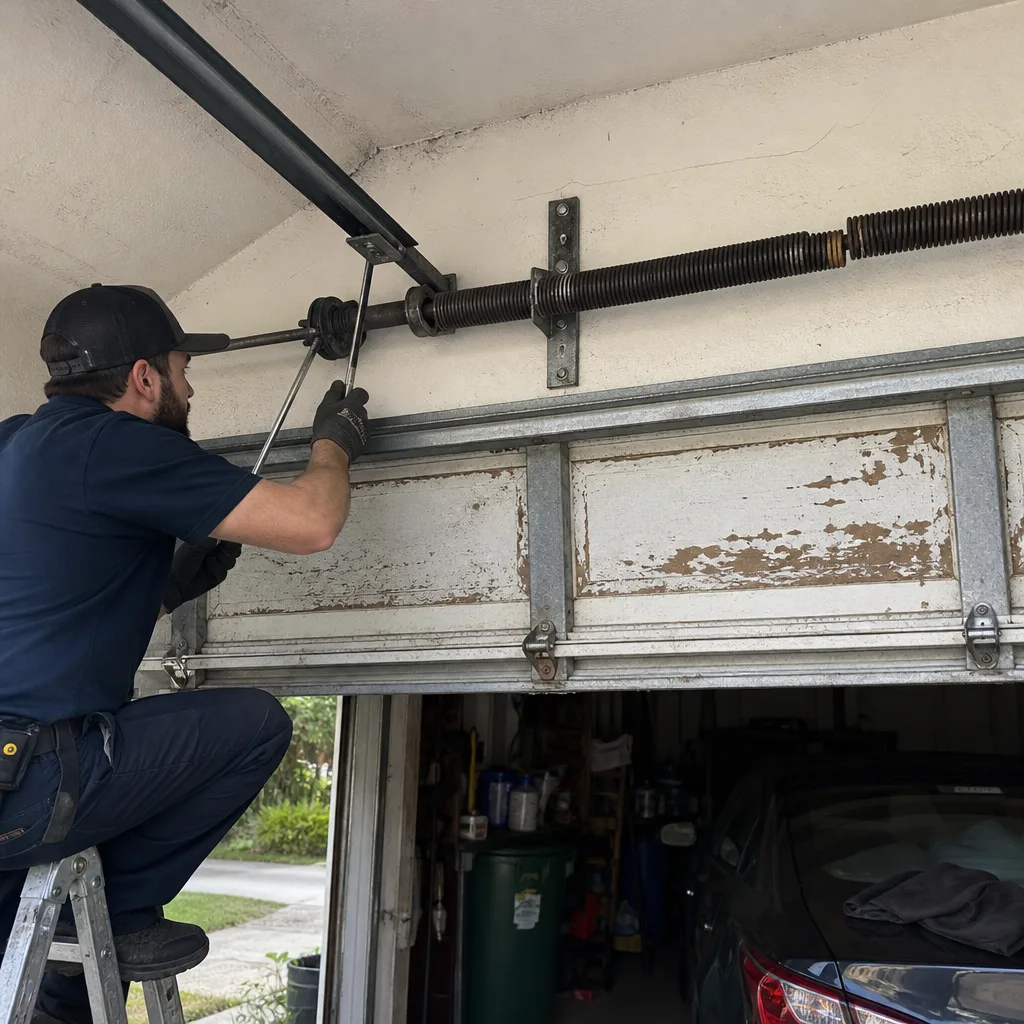
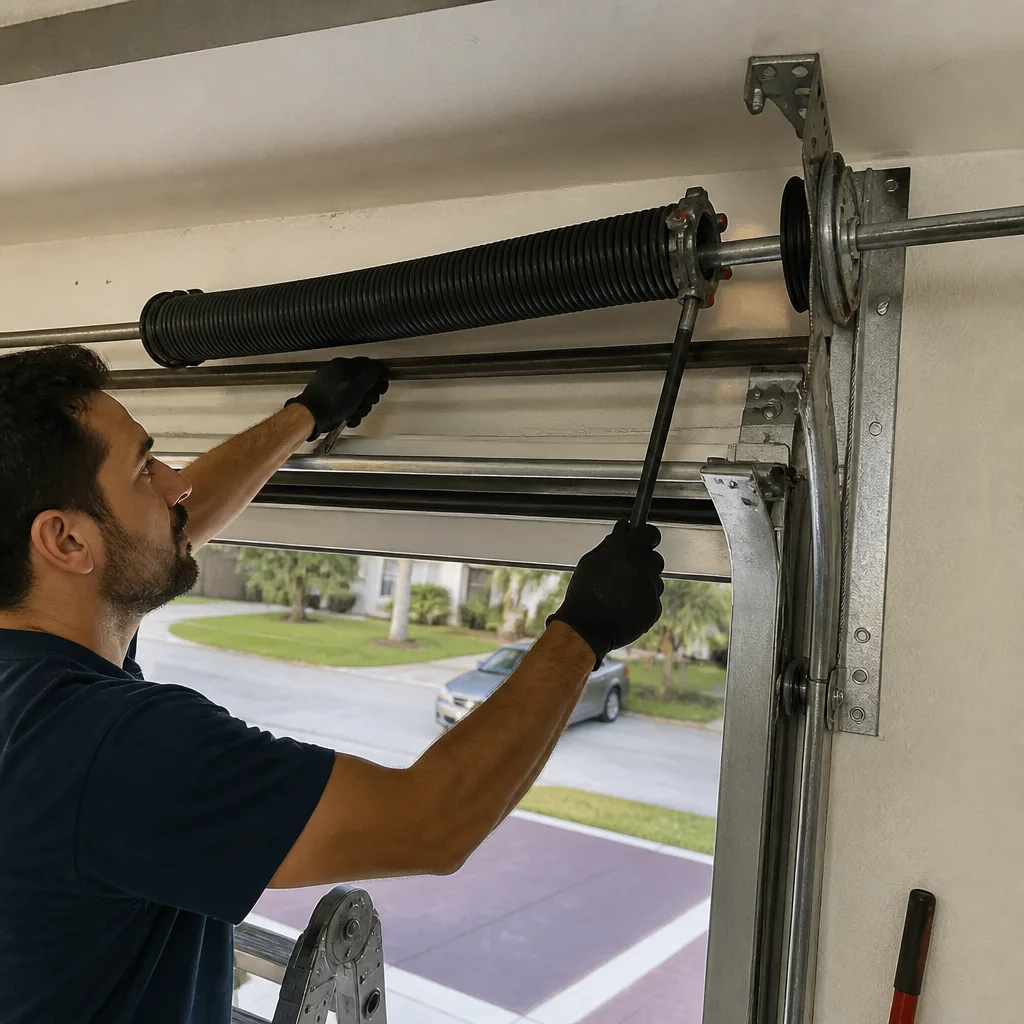
A torsion spring is a steel coil mounted above the door that stores the energy needed to lift it. The average residential door weighs between 150 and 250 pounds, and the spring balances that weight so the opener only moves a fraction of it. When a torsion spring breaks, it fails catastrophically: the coil snaps at a stress point, releasing all stored torque at once. If you are standing near the winding cone when that happens, the cone becomes a projectile.
The replacement process involves winding the new spring with two 18-inch steel bars, turning it to a precise number of quarter turns based on door height and cable drum size. A 7-foot door typically requires 7.5 to 8 quarter turns. If a bar slips at quarter turn six, the bar flies out at high velocity. The injury statistics are consistent: orbital fractures, wrist fractures, degloving injuries, and the occasional fatality. This is not a hardness rating competition between DIYers and professionals. This is a physics equation with a narrow margin for error.
In Pembroke Pines specifically, torsion springs fail faster than in drier climates. Salt air from the Atlantic, combined with 70 percent average humidity, accelerates corrosion at the coil surface. A spring that would last 10 years in Phoenix lasts 5 to 7 here. Many Pembroke Pines homeowners face their first broken spring within three years of buying their home. If you bought between 2015 and 2022, your original springs are likely at or past their service life right now. Garage Door Repair in Pembroke Pines covers spring failure diagnosis and replacement with a written price before any work starts.
Warranty Clauses That Trigger on DIY Work
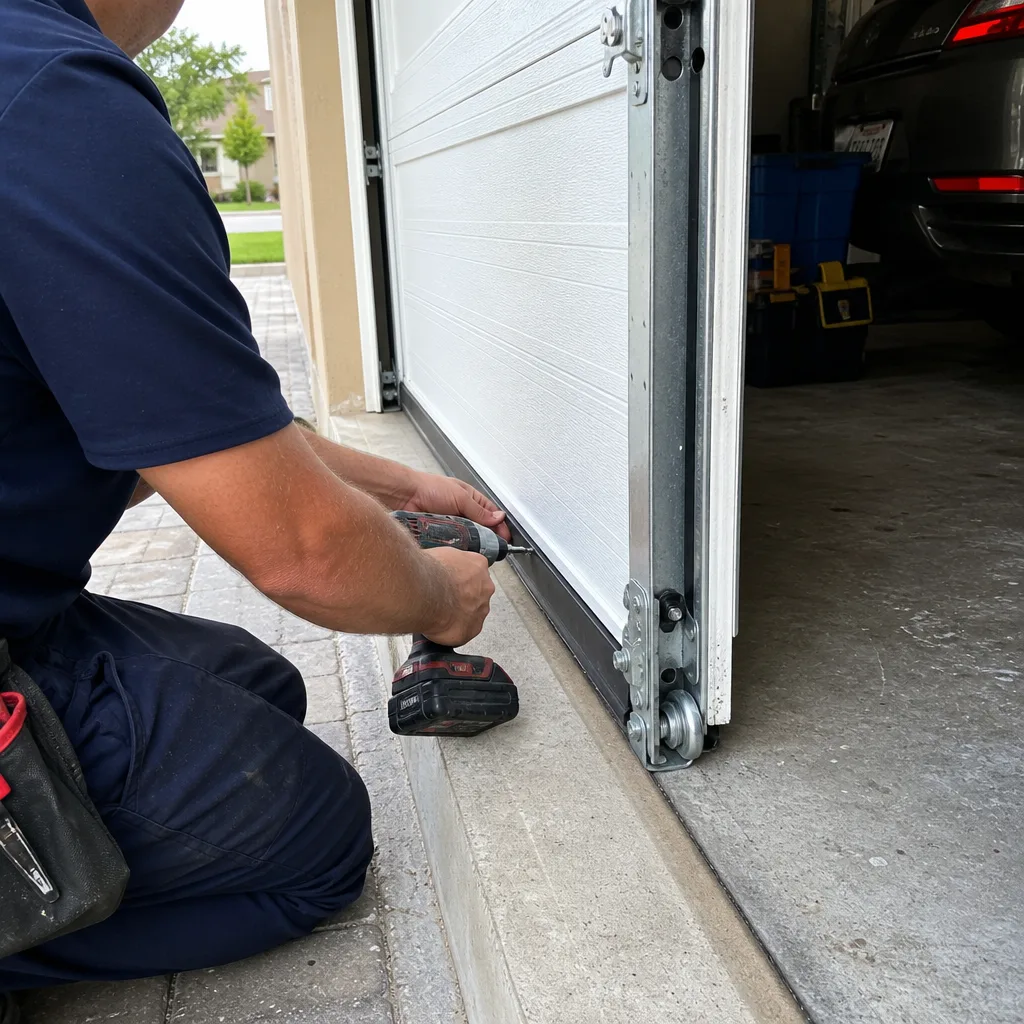
Most homeowners never read the warranty until they need it. Then they discover that the fine print in the opener manual and the door manufacturer’s warranty document specifically disclaims coverage for damage caused by unauthorized service. Here is what the major agreements actually say in plain terms.
Opener Warranties
LiftMaster, Chamberlain, Genie, and Craftsman opener warranties cover the motor and drive mechanism for a defined period (lifetime on the motor for some LiftMaster models, 1 to 5 years on parts for others). All of them contain a clause voiding coverage when the unit is “serviced by anyone other than an authorized service provider” or “modified in a manner not consistent with the owner’s manual.” Replacing a logic board yourself, rewiring the safety sensor circuit, or adjusting the force settings beyond the manual’s specified range all fall under this exclusion. We have seen Chamberlain deny a replacement motor claim because the homeowner had rewired the sensor bypass to keep the door closing after a sensor failure.
Door Warranties
Clopay, Amarr, Wayne Dalton, and Raynor door warranties cover the door sections, hardware, and springs for periods that vary by product line. The spring warranty on most builder-grade doors is 1 to 3 years. On premium lines from Clopay and Amarr, spring coverage can extend to 10 years, but only if the springs are installed and serviced by an authorized dealer. The clause that matters: “damage resulting from improper installation, modification, or unauthorized repair” is excluded. A homeowner who replaces a spring, gets the torque wrong, and then has the door sag and scrape a section has just created a warranty denial for the section damage, even though the original spring was warrantied.
The practical rule: before you touch anything on a garage door still under warranty, read the warranty document. If the task is not explicitly listed as homeowner maintenance in the manual, it can be used to deny a later claim. Documented maintenance from a licensed contractor does not void anything; see our Garage Door Repair Maintenance Checklist for Pembroke Pines Homeowners for what to track. Undocumented DIY work is a claim-risk you may not discover until the claim is denied.
How to Document DIY Maintenance So It Does Not Read as Unpermitted Work
When you sell a Pembroke Pines home, the buyer’s inspector checks the garage door. When you file an insurance claim after a hurricane, the adjuster checks the garage door. In both cases, the question is not whether the door works. The question is whether the door has been modified in a way that creates liability or a code issue. Documentation is what separates routine maintenance from a red flag.
Here is the documentation protocol we recommend to homeowners who do their own maintenance:
- Photograph everything before and after: A dated photo of the sensor alignment you fixed, the weatherstripping you replaced, or the rollers you lubricated shows the work was maintenance, not modification. Store photos in a folder named for the house, not the repair.
- Keep receipts for parts: A receipt for a $35 weatherstripping kit from a Pembroke Pines hardware store proves you replaced a wear item. It also proves you did not install a salvage part from a junkyard, which is a real code concern in Florida for wind-rated doors.
- Write down the date and what you did: One paragraph in a note app works better than nothing. “Replaced bottom seal on 16-foot double door. Old seal had 4-inch split at center. New seal seated fully in retainer.” That reads as maintenance. The absence of any record reads as unaddressed deferred maintenance.
- Never document a modification as maintenance: If you adjusted the limit switch, that is maintenance. If you removed a reinforcement strut to fit a wider opener rail, that is a modification, and omitting it from the record does not protect you from a future inspection finding. It creates the appearance of concealment.
- Know your door’s wind-load rating: Pembroke Pines sits in a High Velocity Hurricane Zone, and the Florida Building Code requires garage doors to meet specific wind-load standards. Your door’s rating is on a label on the inside of the bottom section. If you do anything that changes the door’s structural profile, you have changed the wind-load compliance. That is not a documentation issue; that is a permit issue.
For any work you hire out, the documentation standard should be higher than what you keep for your own maintenance. Garage Door Installation in Pembroke Pines walks through what a wind-load-compliant installation includes and what documentation you should receive when the job is done.
The Real Cost Comparison: DIY Plus Rework vs. Contractor With Warranty
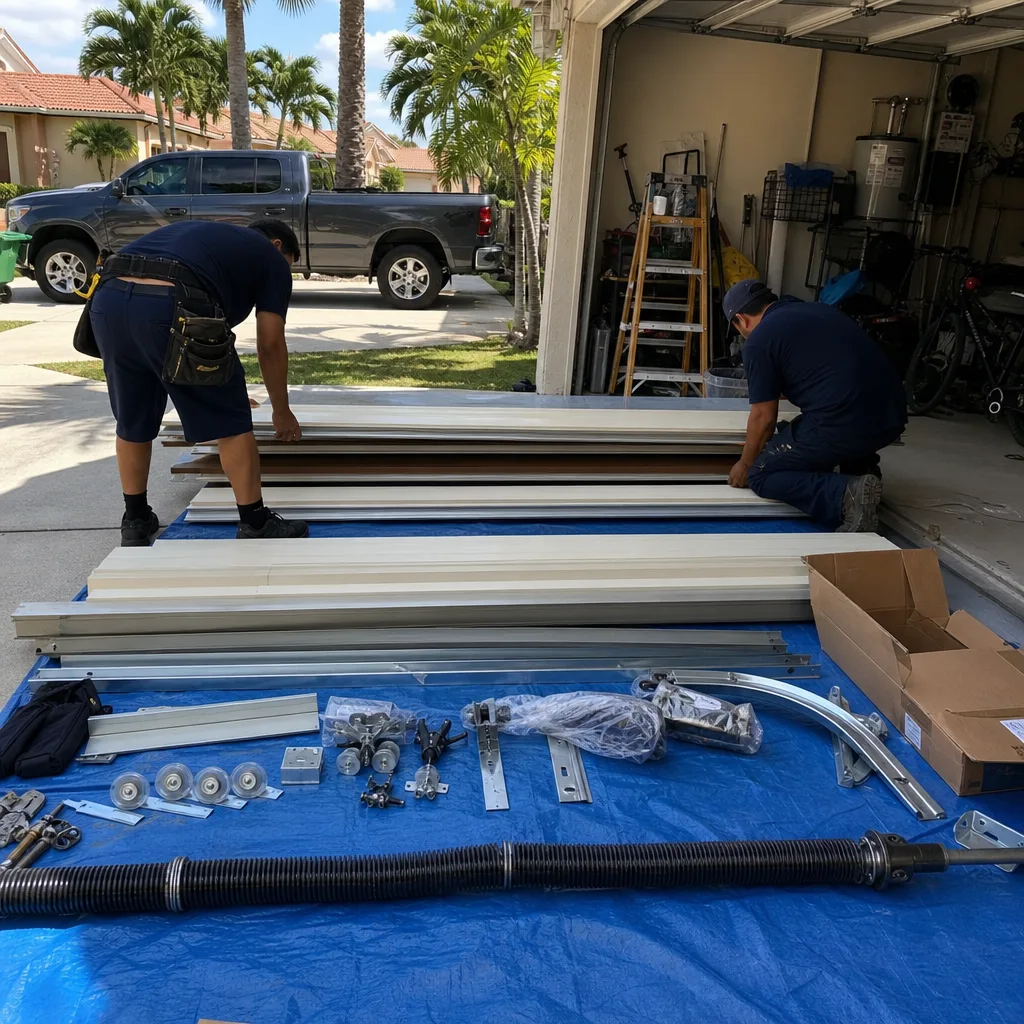
The mistake most cost comparisons make is comparing the price of parts to the price of a contractor invoice and calling the difference “savings.” That math only works if the DIY attempt succeeds on the first try, creates no secondary damage, and needs no follow-up. In Pembroke Pines, where the climate shortens hardware life and wind-load compliance is unforgiving, that math fails often enough that we can put numbers to it.
What DIY Actually Costs in Pembroke Pines
- Torsion spring from a local supply house: $120 to $200 for a pair, plus $40 for winding bars if you do not own them. If the replacement goes wrong and you call a contractor anyway, you have paid for the parts twice: once for the spring you bought, once for the one the contractor brings (contractors do not install customer-supplied springs, for liability reasons). Total wasted: $160 to $240.
- Cable replacement attempted DIY: $30 for cables, $25 for new drums if the old ones are gouged. If the door drops during re-spooling, the repair bill includes a new door section, which on a 16-foot double door in Pembroke Pines runs $400 to $700 installed and matched. Total wasted: $455 to $755.
- Logic board guessed wrong: $80 to $150 for a board that did not fix the problem because the issue was a limit switch or a sensor. Now the board is not returnable because it is electrical, and the actual repair is still $150 to $300. Total wasted: $80 to $150, plus the original repair.
- Track tweaked by a pry bar: $0 in parts, but a door that binds, then a service call to re-align. Track adjustment runs $80 to $150 in Pembroke Pines. Total wasted: the time, plus the $80 to $150, plus opener wear from running against a bound track.
What a Contractor Job Costs With Warranty
Pembroke Pines labor rates for garage door work sit in a predictable band. Torsion spring replacement, including parts and labor, typically runs $180 to $340 depending on spring size and door weight. That price includes the spring, the winding, the balance check, and a warranty on the work. Servo Garage Doors Pembroke Pines home prices the job in writing before anything is touched, per Clause 1 of The Haven Standard. The customer sees the line-item price, agrees to it, and then the work starts. No phone call for a quote, no invoice after the fact.
The comparison that matters is not DIY cost versus contractor cost. It is DIY cost plus rework cost versus contractor cost with a written warranty and a photo record. When the DIY attempt fails, the rework cost almost always exceeds the contractor price because the contractor has to undo the DIY attempt before starting the real repair. We have quoted $450 to $600 for jobs that would have been $250 had the homeowner called first.
What the Pembroke Pines Climate Does to Garage Door Hardware
Pembroke Pines sits 10 miles from the Atlantic. The air is humid, the heat is relentless, and the rainy season runs from May through October. All of that lands on your garage door hardware every single day.
Rust is the primary killer. Roller bearings corrode, hinge pins seize, and torsion springs develop surface rust that concentrates stress at the coil surface. A spring that has been lightly rusted for years is a spring that will eventually snap. The break usually happens at the coil where the rust has eaten deepest, which is why the two halves of a broken spring tell a story if you look at the fracture surface: clean metal with a rusty outer ring means a fatigue crack started at the corrosion point.
Humidity also attacks the opener’s electronics. The logic board inside a LiftMaster or Genie opener is not sealed against South Florida humidity unless the opener is rated for coastal conditions. West Pembroke Pines neighborhoods, including SilverLakes and Chapel Trail, see more corrosion-related logic board failures than inland communities because of the proximity to the Everglades’ moisture outflow. East Pembroke Pines gets the Atlantic breeze, which carries salt. Salt and electronics do not mix.
The practical implications for the DIY versus professional decision are simple. The climate here shortens the life of everything, which means more maintenance occurs, which means more opportunities to do work over the life of the door. If you own your home in Pembroke Pines for 10 years, you will face spring replacement at least once, probably twice, plus sensor issues, weatherstripping replacement, and possibly an opener replacement. Each of those moments is a decision point. The more of them you can own safely, the more you save. The ones you cannot own safely are not worth the ER visit.
How to Hire a Contractor in Pembroke Pines Without Getting Burned
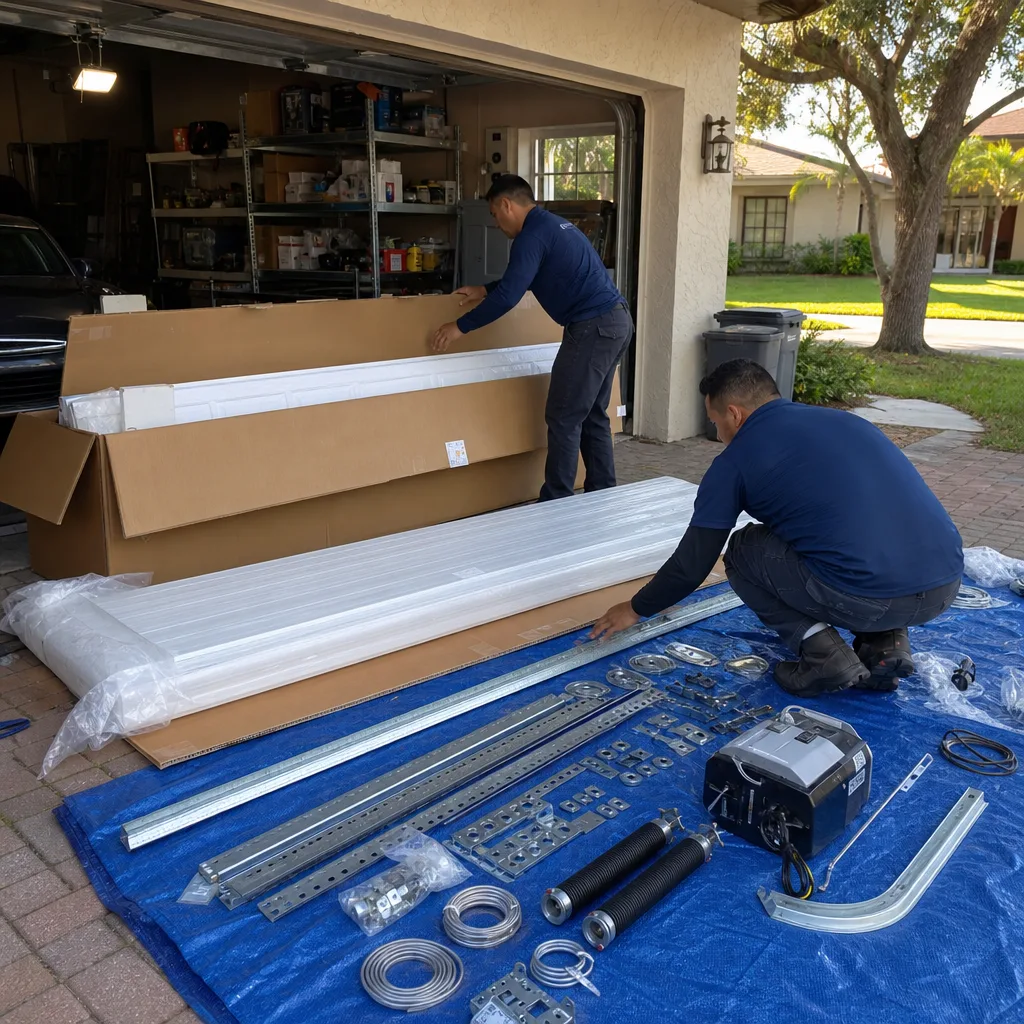
The garage door trade in South Florida has a reputation problem for a reason. There are contractors who will quote a spring at $89 over the phone, then find $400 of “necessary” work once the door is open. There are contractors who sell new doors to people who need a $30 limit switch adjustment. The reader who researches before calling-starting with more guides & resources-is the one who avoids all of this. Here is the screening method that works.
- Require a written price before the technician arrives: If a company will not give you a flat price range over the phone for common repairs, they are planning to price it after they see the door and your desperation. The Haven Standard Clause 1 exists specifically because this tactic is widespread. A legitimate contractor knows what a spring replacement costs and will tell you.
- Ask for photo evidence of the problem: This traces to Servo’s founding rule: the customer sees the failed part before anyone quotes a replacement. The Haven Standard Clause 4 codifies it: the technician photographs the failed component, shows it to the homeowner, and then writes the scope. If a contractor will not show you a photo of the broken spring, they may not be looking at a broken spring.
- Verify the license: Florida contractor licenses are public record through the DBPR. Ask for the license number. It should be printed on the estimate, not shared verbally. If the number does not verify, end the conversation.
- Get the scope in writing: “Replace spring” is not a scope. “Replace both torsion springs with 0.25-inch wire, 2-inch inside diameter springs, wind to 7.5 quarter turns, re-balance door, test safety reversal” is a scope. The written scope is what you hold the contractor to when the work is done.
- Ask what warranty accompanies the work: A contractor who writes a warranty on paper and hands it to you is a contractor who expects the work to hold. The 365-Day Done Right Promise at Servo means if the repair is not right, it gets made right. That is a terms page, not a handshake.
For opener-specific work, Garage Door Opener Repair & Installation in Pembroke Pines covers what a diagnostic visit should include and what the common failure modes look like across the major brands.
Common Mistakes to Avoid
- Using WD-40 on garage door tracks: WD-40 is a solvent, not a lubricant. It cleans and then leaves the metal dry, which accelerates wear. Use a lithium-based garage door lubricant on rollers, hinges, and springs only, and leave the track clean and dry.
- Attempting spring replacement with the door still connected to the opener: The opener carriage adds resistance and masks the spring’s true tension. Disconnecting the opener is step one for a reason, and this is the step most often skipped by first-timers.
- Replacing one spring instead of both: Both springs wear at the same rate. If one snapped, the other is near failure. Replacing one means paying for the second replacement within months. This is the most common false economy we see in Pembroke Pines.
- Buying the cheapest opener on sale: A builder-grade opener rated for 10 years in a dry climate may last 5 in coastal humidity. Look for openers rated for coastal conditions, which typically means sealed logic boards and corrosion-resistant hardware.
- Skipping the permit on a door replacement: Pembroke Pines code enforcement does check permits when a complaint is filed or when a sale is pending. An unpermitted door replacement creates a title issue that has to be resolved at closing, usually at a premium.
- Trusting a contractor who will not write the price down: If the price is not in writing, it does not exist. Every legitimate contractor in Pembroke Pines writes the price before touching the door. The ones who do not are the ones you read about in reviews.
- Documenting nothing: A garage door you maintained without documentation is indistinguishable from a garage door you neglected. Both read the same to an inspector or adjuster. Write it down, photograph it, keep the receipt.
When to Call a Professional
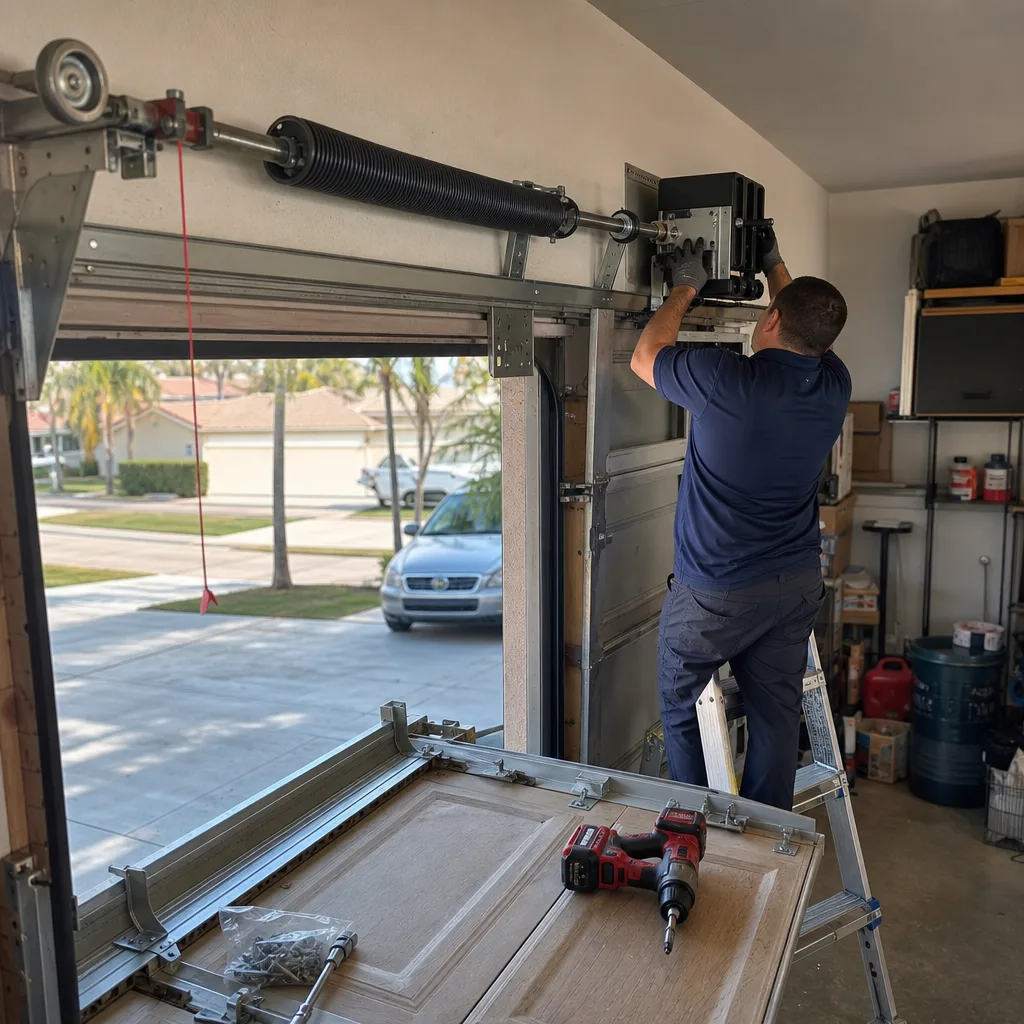
Call a professional when the spring is broken, the cables are frayed or off the drum, the track is bent, the door is off balance, or the opener is making grinding noises that did not exist last week. Call a professional when the task requires a permit, when the warranty hinges on authorized service, or when you have already attempted the repair once and it did not hold. In each of these cases, the cost of the professional is lower than the cost of the professional after a failed DIY attempt, and the liability picture changes entirely. Servo Garage Doors Pembroke Pines offers free estimates in Pembroke Pines. Call (954) 280-1425 and a live person answers, with a named technician and an on-the-way text, not a callback window.
Frequently Asked Questions
Yes, the Florida homeowner exemption in Statute 489 allows you to act as your own contractor on your own residence, which legally permits spring replacement. The law permits it; physics strongly discourages it. Torsion springs hold 150 to 200 foot-pounds of stored torque, and the injury risk is well documented. Legal does not mean safe, and most homeowners who attempt it later tell us they would not do it again.
Lubrication, sensor realignment, limit switch adjustment, weatherstripping replacement, and remote reprogramming are all safe, legal, warrant-neutral homeowner tasks. Each requires basic tools and no exposure to stored mechanical energy. Do these yourself, document them, and you will extend the life of the door without risking an ER visit.
Routine maintenance described in your owner’s manual will not void the warranty. Unauthorized repairs and modifications almost always will, and the exclusion language appears in the warranty documents for LiftMaster, Chamberlain, Genie, Craftsman, Raynor, Clopay, Amarr, and Wayne Dalton. If the task is not listed as homeowner maintenance in the manual, assume it is a warranty trigger and get professional service instead.
Spring replacement in Pembroke Pines typically runs $180 to $340 for both springs, including parts, labor, winding, and balance check. That is the price range, written down before any work starts. Call Servo at (954) 280-1425 for an exact quote, which is free and comes with a written scope per The Haven Standard Clause 1.
Yes. Full garage door replacement requires a permit through the City of Pembroke Pines, and the door must meet Florida Building Code wind-load requirements for the High Velocity Hurricane Zone. A homeowner can pull their own permit under the exemption, but the installation still has to pass inspection. This is one of the reasons full replacement is not a weekend DIY project.
Photograph the door from both sides, document any maintenance you have performed, and repair anything that is visibly broken before the inspector arrives. A broken garage door is one of the most common inspection findings in Pembroke Pines, and it gives the buyer leverage. If the spring is broken or the door is off balance, call (954) 280-1425 for a free estimate before you list.
The Bottom Line
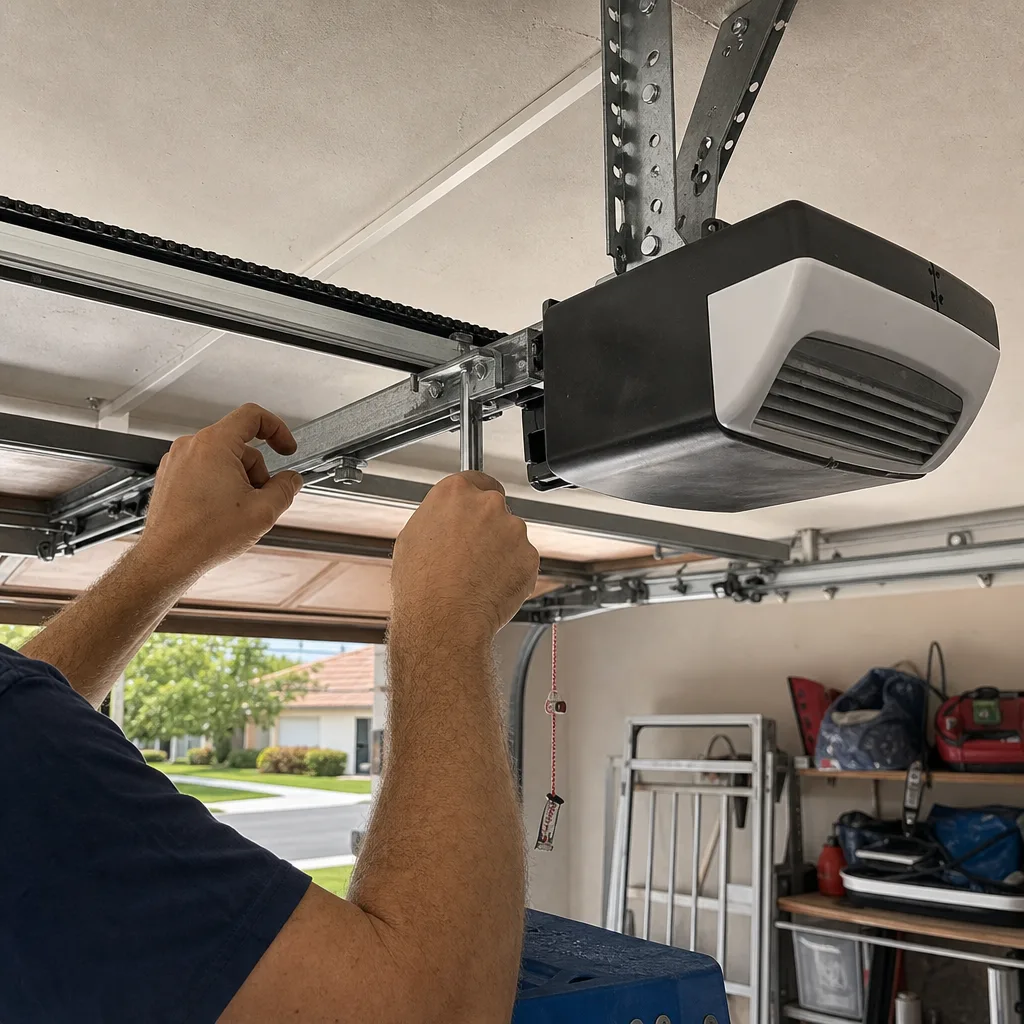
The DIY versus professional decision on a garage door reduces to two questions: does this task expose me to stored energy or load-bearing failure, and does this task require a permit or trigger a warranty exclusion? If the answer to either is yes, hire a licensed contractor in Pembroke Pines, not a handyman, and get the price and scope in writing before work starts. If the answer to both is no, do the maintenance yourself, document it, and keep the receipts. The goal is not to prove you can do everything. It is to own the house without owning a medical bill or a warranty denial. That is the practical line, and it is drawn in the same place by physics, Florida law, and the manufacturers themselves.
Written by Marcus Deller, Owner at Servo Garage Doors Pembroke Pines, serving Pembroke Pines since 2015.